


In my school days, I played pickup baseball and football, not so much hockey and rarely soccer. The sports I’ve really enjoyed as an adult were skiing, windsurfing, running and, in recent years, biking — all individual sports, my favorite being skiing because of the beauty of snow-covered mountains and ski runs in Europe, the U.S. and Canada and carving turns.
In 1970, my wife and I were in Oxford when Brazil won the World Cup and the great Brazilian player Pelé caught my imagination with his brilliant play-making and goal scoring. Many years later, one of my patients at McMaster was a former teammate of Pelé when they played for a professional team in New York in an ill-fated attempt to sell soccer to America.
After I sorted out his problem, he gave me a whiteboard lesson on how to watch soccer games, what to look for and how to analyze players and the game. That gratis lecture was a pure gift for someone who knew so little about the game. That was then, and now, most of the world is mesmerized by the World Cup and its star players.
Readers may have noticed that over the last few years I’ve become interested in the aging process and especially how that affects performance in sports.
This past week, Novak Djokovic, now 39, lost in the Wimbledon Championships semifinals in straight sets to Jannik Sinner. Such was Sinner’s mastery — the outcome was never in doubt.
Djokovic may be the best male tennis player in history, continues to train intensively and remains a top 10 or better player but, in the end, there is an end to being the very best.
He’s been unable to win major slam events for several years in the face of the likes of Sinner, Carlos Alcaraz and a bevy of other much younger highly skilled players. The same might be said for other high-skill sports that demand stamina, mental toughness, speed, power and agility from gymnastics to basketball to hockey and major league football.
True, some individuals manage to hang on, though few as successfully as Tom Brady, who performed well as quarterback in the 2021 Super Bowl at the age of 43 years and 188 days (to be precise). Brady’s team, the Tampa Bay Buccaneers, won that year.
What about soccer?
For this article, I checked the age distribution of players participating in this year’s World Cup. The youngest was 17, Mexican midfielder Gilberto Mora, and the oldest 43, Scottish goalkeeper Craig Gordon. In between, most players were clustered in the mid-to-late 20s, with the number in their late 30s dropping off steeply. Only eight were 40 or over. The distribution speaks volumes.
Most soccer players, like tennis players, begin learning as children and play a lot in their teen years. Two processes are going on: first, development and maturation of the neuromuscular system and brain; and second, learning skills specific to the sport.
They obviously overlap and shape one another but are distinct. For example, the neocortex reaches peak thickness in the first decade and begins to shrink in the late 20s and early 30s — not much mind you, but noticeable in MRI studies of over 100,000 subjects.
Complementary studies of function in the brain reveal a similar age-related trend. These studies suggest that that the nervous system may be at its best with respect to processing speeds and connections in the first two to three decades. Noticeable overall shrinkage of the brain begins in the 40s and is very noticeable by the 60s.
Performance in any sport depends on physical and neural fitness, acquired skills and stamina. Stamina is a key at least in tennis when players are tested every two to three days and is one area where, for example, Novak has lost his edge in recent years.
There’s also the factor of the cumulative effects of injuries affecting muscles and joints. The last was a big factor in why Roger Federer and Rafael Nadal retired when they did and certainly plays a part in rough contact sports like North American football.
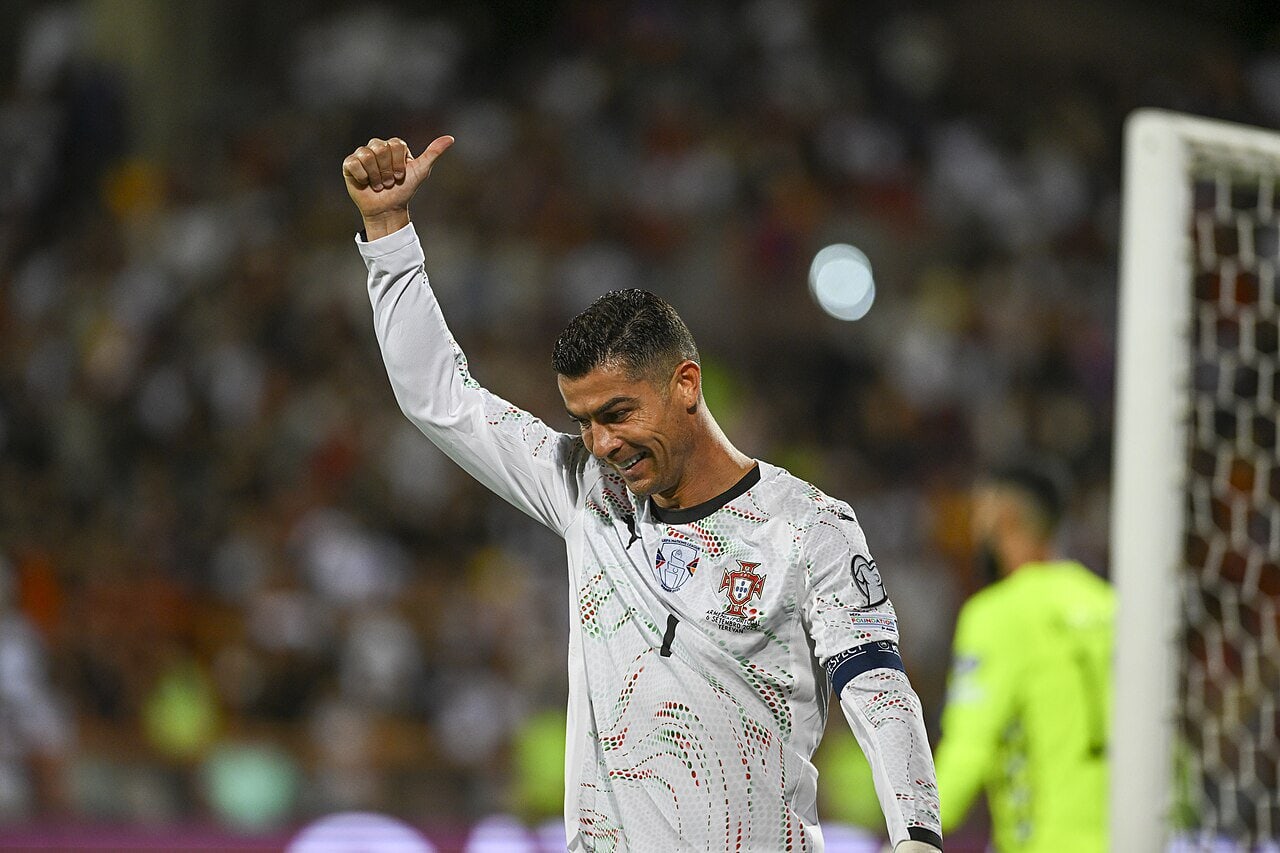
To return to the World Cup, what about the performance of 41-year old Cristiano Ronaldo and 38-year old Lionel Messi, both well-established superstars?
Ronaldo has been shadow of his former self while Messi managed to score eight goals in six matches. That doesn’t tell the whole story, though, because Messi also missed two penalty kicks. Ronaldo played in his last match in this year’s tournament on July 6. His team, Portugal, lost to Spain 1-0.
But as Novak’s recent history suggests, even a year or two can make a big difference in performance, however hard he trains. Suffice it to say, we won’t be seeing any 50-year-olds playing at Messi’s level and him and Ronaldo has confirmed he won’t be on the field for the next World Cup in 2030.
And you sure won’t be seeing me on this side of life performing even remotely like any of the names I’ve used in this article.
Takeaway point: stay as fit as you can, as long as you can.
Dr. William Brown is a professor of neurology at McMaster University and co-founder of the InfoHealth series at the Niagara-on-the-Lake Public Library.