

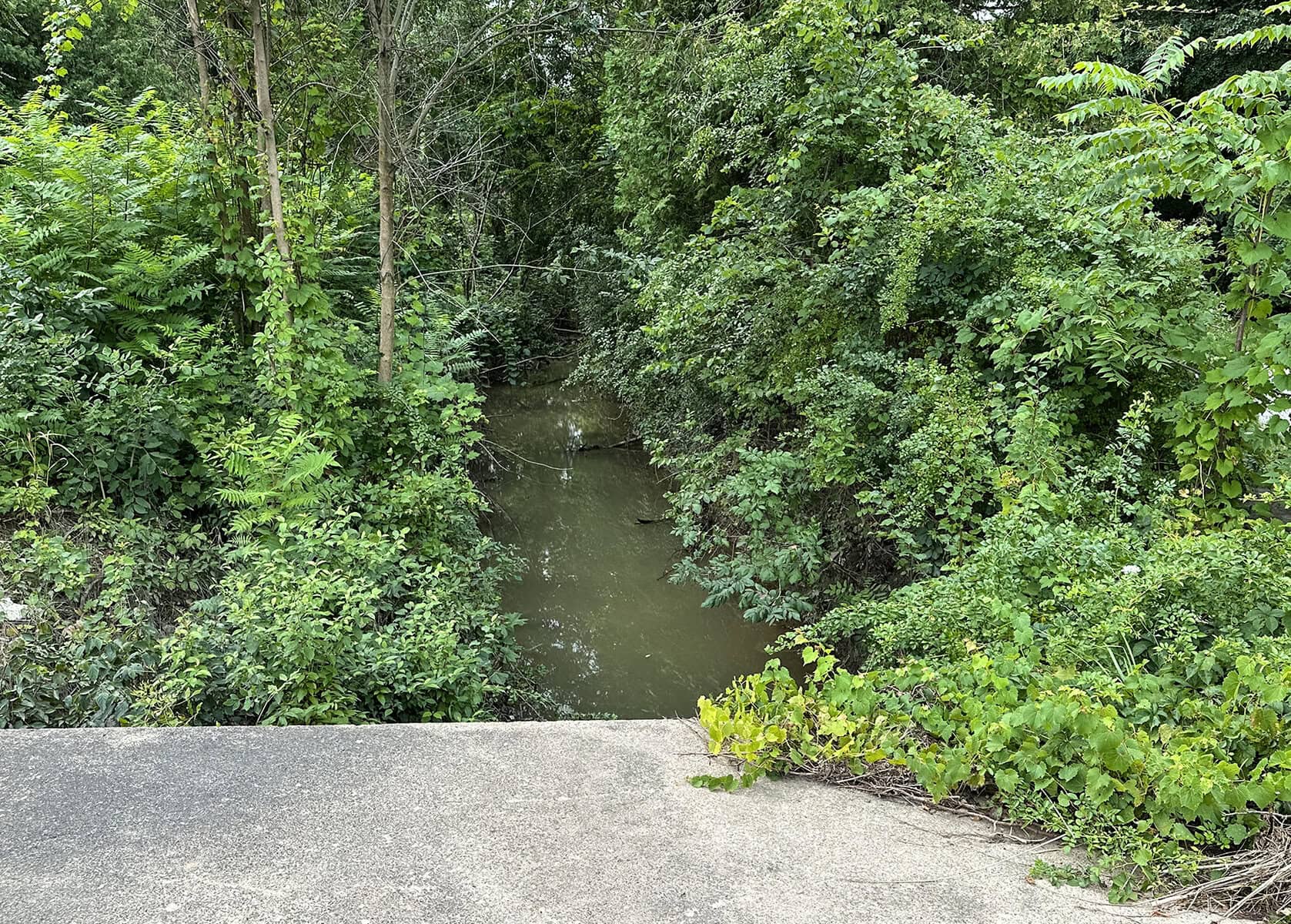


Below the base of the escarpment, this town rivals the prairies for being flat. Although our topography slopes down toward the lake, it is very gentle. Consider that over the 7.3 kilometres from the outskirts of St. Davids to the crossroads in Virgil the elevation changes a mere 21 metres.
That sounds like a big drop but, in reality, that’s a mere 0.29 per cent slope (2.88 millimetres per metre). Compare that to the optimum slope for a large pipe — one that ensures liquid flowing through the pipe is flowing freely, neither too fast or too slow — being 0.8 per cent or 8 millimetres per metre.
In other words, surface water flowing across NOTL is running at far below optimum speed, moving sluggishly with a tendency to drop any sediments or suspended matter that may be carried by the water.
This town has always had a challenge with water — Niagara Stone Road was originally called the Black Swamp Road — and historically has engaged in multiple significant investments focused on managing water.
The cumulative result is many, many kilometres of municipal drains that run across the town.
For example, the Harrison Drain, which has 14 branches running into the principal drain and covers an area roughly bordered by Concession 3 and Concession 1 starting at York Road and finishing by connecting into Two Mile Creek north of East and West Line. This single complex drain system literally services hundreds of rural and agricultural properties and it is only one of many.
To get a full picture of just how extensive the drain infrastructure is, do a Google search for the Town of Niagara-on-the-Lake’s Municipal Drains & Irrigation Key Map.
This infrastructure requires ongoing and diligent maintenance in order to work effectively.
Over time, the sluggish water deposits sediments in the drain course and the build-up gradually reduces the capacity of the drain and promotes the growth of invasive water plants (like phragmites) which further impede water movement.
Further, shrubs and trees find root along the banks of the drains; adding to the problem creating blockages and trapping debris during rain events.
Without proper maintenance — which typically includes bottom clean-out to remove siltation, brushing the banks to remove plant growth and trees, and clean-out, repair and/or replacement of pipes and culverts — in a short period of time, a drain can lose its effectiveness to manage water and help to prevent flooding.
Another component in the municipality’s infrastructure system are stormwater management facility ponds. Unfortunately, none of my research has turned up an official list of the existing ponds.
Essentially, these ponds are engineered basins designed to temporarily hold or retain water that falls during a storm event. Each pond acts to accumulate and subsequently slowly release water into the drains and/or natural waterways thereby prevent flooding, reduce erosion, and trap pollutants and sediment.
Stormwater management facility ponds fall into two categories: wet and dry.
A wet pond maintains a permanent pool of water throughout the year. They remove pollutants by allowing sediment to settle and through biological uptake, as plants absorb excess nutrients. Because they permanently hold water on an ongoing basis, wet ponds are also called retention ponds.
Alternatively, a dry pond is designed to hold water for a short period of time (48 to 72 hours) before allowing the water to discharge to a nearby stream or drain. Dry ponds control peak flows of runoff, help improve water quality and lessen the effects of erosion.
Between rain events, a dry pond looks like a large, grassy low area. Because they detain water for a brief time before allowing it to flow out, dry ponds are also called detention ponds.
Obviously, the water levels in both types of ponds can increase dramatically as a result of a storm event. However, since the total volume of a wet pond is already partially occupied by permanently retained water, to manage an equal amount of rainfall, a retention pond will need to be larger and/or deeper than its detention pond equivalent.
Moreover, just like the drains, these ponds require regular ongoing maintenance, which is easier and cheaper with a dry pond since it doesn’t have to be periodically drained for clean-out.
In all reality, proper ongoing annual maintenance of our drains and stormwater management facility ponds would cost a very healthy chunk of change — that’s the price for protecting our properties.
Unfortunately, this vital work has been chronically underfunded and largely neglected by our elected councils for decades. We have a legacy debt, which must be paid.
So, while declaring a state of emergency doesn’t automatically free up provincial funds, it certainly is a clear statement to the province of our crisis in terms of funding our failing infrastructure.
If Premier Doug Ford wants “more homes built faster,” the province needs to step forward to underwrite creating infrastructure in NOTL that will support that build-out.
The other alternative? Freeze all developments until the infrastructure will ensure it doesn’t drown in the next storm.
Brian Marshall is a NOTL realtor, author and expert consultant on architectural design, restoration and heritage.