
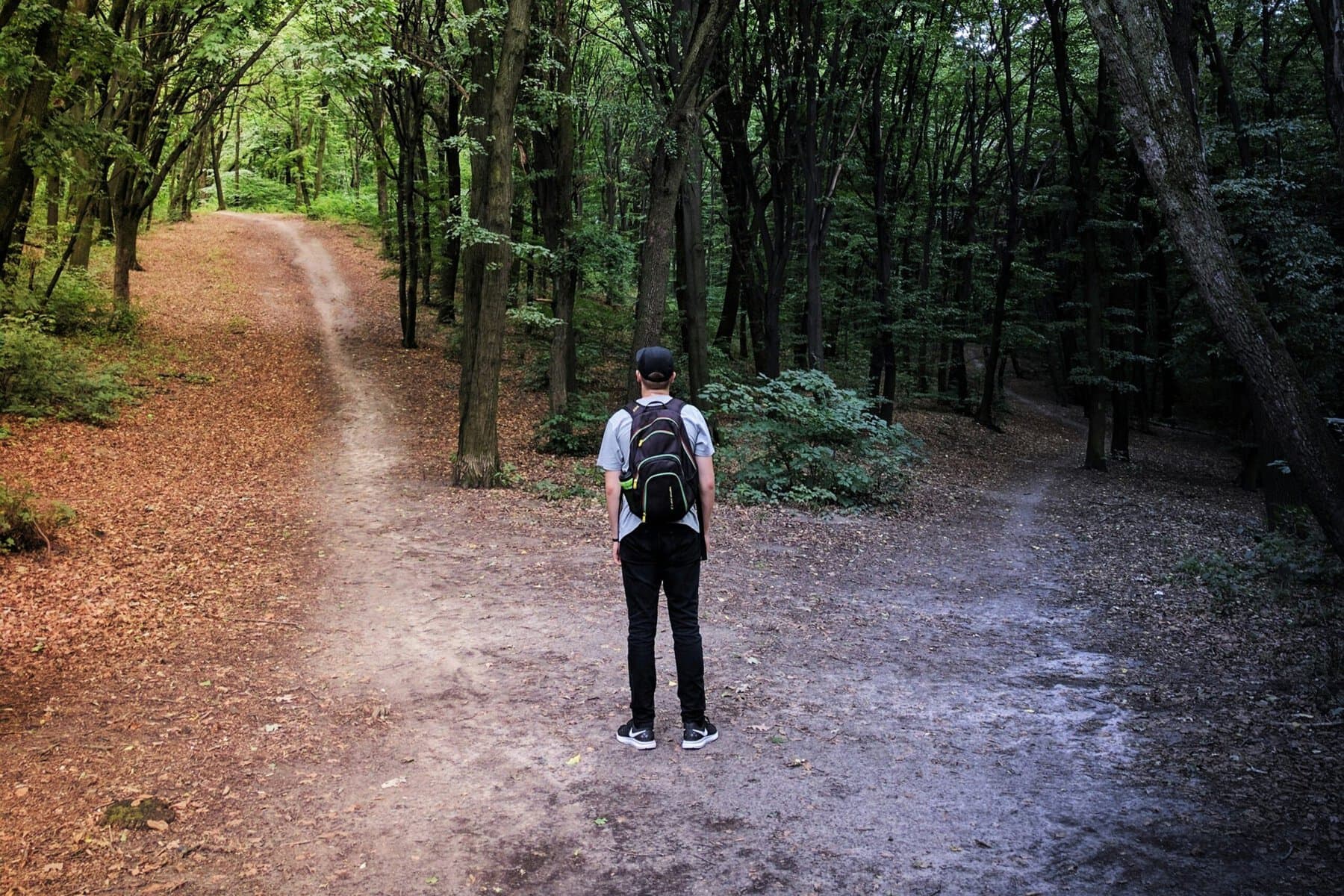


C. S. Lewis, the author of the Chronicles of Narnia series, suggested that we are the product of the choices we make in life. We all make mistakes in our choices from time to time, but Lewis and others since, suggest that the aggregate of our choices in life, whether for good or ill, shape who we become.
One example of which was picked up by brother David Vryhof in one of his homilies. Vryhof is an episcopal monk in the Society for St. John the Evangelist in Boston. He and his fellow monks counsel visitors to the monastery, students attending nearby universities, community members, prisoners, the ill and others with a variety of needs.
To illustrate the cumulative effect of bad or good decisions, Vryhof recounted the Biblical story of the wayward son, who brought up in a home of wealth and privilege, was eager to strike out on his own and asked his father for his inheritance to take with him. His father, worried about what might happen to such an impulsive inexperienced young man, nontheless granted his son’s wish to make his own choices, despite reservations.
What followed were a series of bad choices by the son who squandered his inheritance by wasting it on a lavish style of anything goes and like-minded companions, only too happy to help him waste his money. The result over a long series of bad choices was that eventually he lost everything including his fly-by-night friends and eventually was reduced to working in a pigsty for pittance, if that.
Eventually he came to his senses and began to make better decisions: the most important was to return home, whatever penalties he might pay in rank, influence and recompense. To his surprise, his father spotted him far off, ran to him with open arms, embraced and loved him, and lavished new clothes, shoes and a ring on him.
What made matters far worse for the older brother who stayed home and toed the line, was that his father threw a great party to celebrate his younger son’s return. Not surprisingly, the stay-at-home son’s nose was out of joint with indignant jealousy. Why wasn’t his brother punished for his stupidity and wilfulness?
The lesson Vryhof drove home is that we get in to trouble through a series of bad choices and we get out of trouble by beginning to make better choices. Which makes sense but isn’t the whole story, is it?
Many choices we make are not choices we are free to make. That’s the case in infancy, and early childhood when our brains soak up language, behavioral and cultural norms from their family and in later years from peers, teachers and other influence-makers, who shape the opinions and mindsets of children, often for a lifetime, and whose choices are made in the context of those acquired biases and influences.
Imagine for a moment what must be happening in trouble spots like Israel, the Gaza strip, Lebanon, Ukraine and Sudan these days to the young brought up in the midst of terror, loss or wounding of family and community members, the survivors of which children will be poisoned for life against those who caused the death or wounding of those dearest to them.
Past conflicts create and feed future conflicts in a vicious cycle of blamings for wrongs in the past. That’s been the history of Europe, and certainly the Middle East for millennia. And look where we’re at now. Future conflicts are breeding now because of what happened in the past and continues in the present and will be bitterly remembered in the future. The human flaw is that as a species we are intensely tribalistic.
Witness the opposition to those of differing colour, race, ethnicity and culture. What else explains border crises, racial violence and the rise of the far-right in the politics of much of Europe, the U.S. and so many other places in the world where those perceived as different are seen as foreign, “not us,” and hence kept at border’s length or if within borders, may be subjected to continued prejudice and violence?
Humans possess brains capable of solving the greatest mysteries in the universe and our own evolutionary history yet fail time and time again to solve the pernicious problem posed by tribalism.
Tribalism may have worked in small early groups distant from other groups but fails when it comes to regional or national groups with differing stories, histories, beliefs and cultures, especially when they compete for scarce resources and power.
To return to Vryhof, while its probably true that we sometimes get in and out of trouble by a series of incremental bad or good choices, the tilt of those choices is often shaped by what was impressed on us by the cultures and beliefs to which we were exposed when we were young, and which together with accrued experiences, continue to shape our day-to-day choices — for better or worse.
In that sense, freedom of choice, as suggested by Carlo Rovelli and Edward O. Wilson, is an illusion.
Dr. William Brown is a professor of neurology at McMaster University and co-founder of the InfoHealth series at the Niagara-on-the-Lake Public Library.