


My brilliant wife has a mantra that she used in her career as a very successful CEO and it goes:
“If you always do what you’ve always done, you’ll always get what you’ve always gotten.”
Now, she applied that saying to problem-solving — envisioning new, better processes and outcomes for the business. Far too often, she believes, human beings become complacent and the security of repetition wins over the opportunity for improvement — even continuing to do things that are ineffective or simply do not work anymore.
So, as a collective, we fall into the rut of repeating the past simply because it is familiar and comfortable.
But, then there are those who step out and create new and wonderful alternatives.
Consider the advent of mass timber construction which began in Europe about 20 years ago using cross-laminated timber that had been developed in the 1990s.
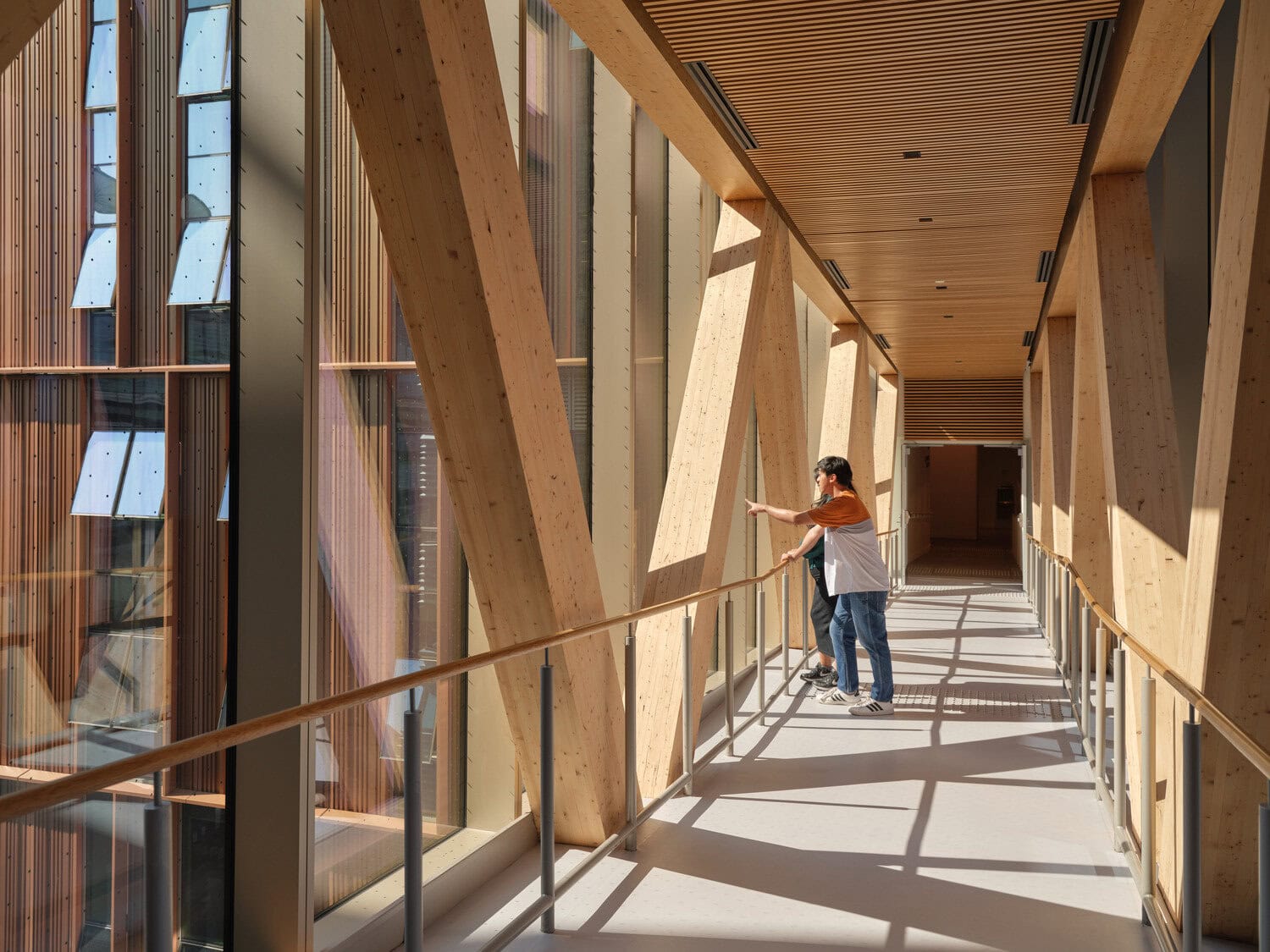
For reference, cross-laminated timber is an engineered wood product made by using thin layers of hardened, kiln-dried lumber, which are arranged in a perpendicular pattern of alternating grain patterns then glued together under high pressure. Remarkably stable and extremely strong, cross-laminated timber is a viable alternative to steel and structural concrete.
Why is this important?
According to the United Nations Environment Programme’s report “Building Materials And The Climate: Constructing A New Future” published in September 2023, “The building and construction sector is by far the largest emitter of greenhouse gases, accounting for a staggering 37 per cent of global emissions.”
The concrete industry alone is responsible for approximately eight per cent of global carbon dioxide output. To put it in other terms, if this industry were a country, it would be classified as one of the top five worst contributors to pollution on the planet.
Despite this, it continues to be a dominant structural material for the construction of any large building simply because it is a familiar and traditional methodology.
Ontario provincial legislation allows for mass timber buildings up to 18 storeys, however if you are still shaking your head over the concept, allow me to provide a few quick examples.
Located in Milwaukee, Wis., the Ascent MKE building completed in 2022 is currently the world’s tallest mass timber at 25 storeys (284 feet). With the exception of the hybrid construction of the first six floors, the structure is completely comprised of mass timber elements made from sustainably sourced wood.
Construction took 22 months — about 25 per cent faster than traditional construction — and was no more expensive to build than its concrete and steel equivalent.
Finished in 2014, the 160-metre-long Mistissini Bridge in northern Quebec spans the Uupaachikus Pass. With the exception of the concrete piers that act as its foundation, mass timber replaced all of the traditional concrete and steel that would historically have been used.
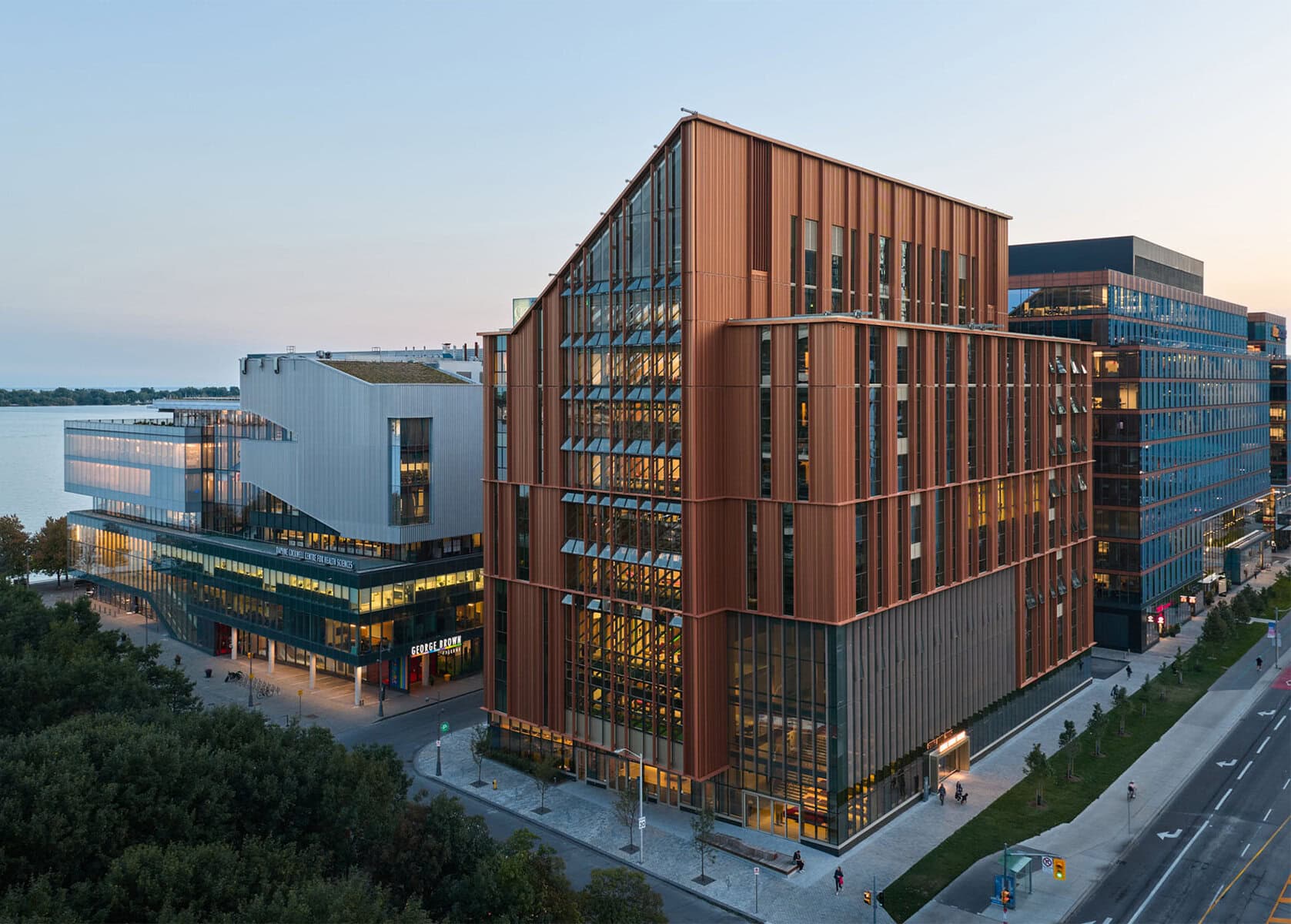
In Toronto, located at 185 Queens Quay E., Limberlost Place is a 187,500-square-foot mass timber building that opened late last year to serve as George Brown College’s waterfront campus.
The PNE Amphitheatre in Vancouver was opened this year just prior to the FIFA World Cup. At this point in time, its arched, 100-metre-long roof (capable of sheltering 10,000 people) resting on only three points is documented as the longest free-span mass timber roof in the world.
Moreover, mass timber elements are manufactured here in Canada and the warmth of the natural wood renders the mass timber buildings just plain beautiful.
Let’s turn a page and visit Prince Edward Island where an outfit named Aslan Renewables has introduced what the company’s founder and CEO refers to as “a hydro power plant with IKEA instructions.”
Essentially, this brainchild was birthed to take advantage of the approximately 64,000 small dam sites sprinkled across Canada and the company has developed a modular unit (think a 20-foot sea container) that holds up to 12 turbines capable of producing four megawatts of electricity which can be shipped to a site and activated within two days — no excavation, no concrete and zero environmental impact.
In addition, each unit is fully autonomous — constantly monitored/controlled by an integrated AI component — and can be installed, actively feeding the grid for only about $115,000. Furthermore, there is no need for any alterations to the existing electrical grid. It’s completely plug and play.
Will this technology replace the major electrical generation installations? Well, no.
However, consider the fact that the province of P.E.I. has 170 small dam sites. According to Murray, if each these sites were producing hydro-electric power, the output would be “upwards of 20,000 megawatt hours per year.”
That’s enough to power somewhere between 2,000 and 2,500 homes in that province — simply by putting these old dams back into production.
And, if every old dam in Canada were similarly equipped, that 20,000 becomes somewhere north of 7.5 million megawatt hours per year. That’s power enough for roughly 650,000 to 700,000 homes.
Thank God for those who embrace innovation and change — a better future depends on them.
Brian Marshall is a NOTL realtor, author and expert consultant on design, restoration and heritage.