



Off the top, to those loyal readers who have waded through my last three columns: while I did my best to boil down the architectural precepts into an embraceable framework, it still might have been heavy slogging. And I truly appreciate your investment to stick with me.
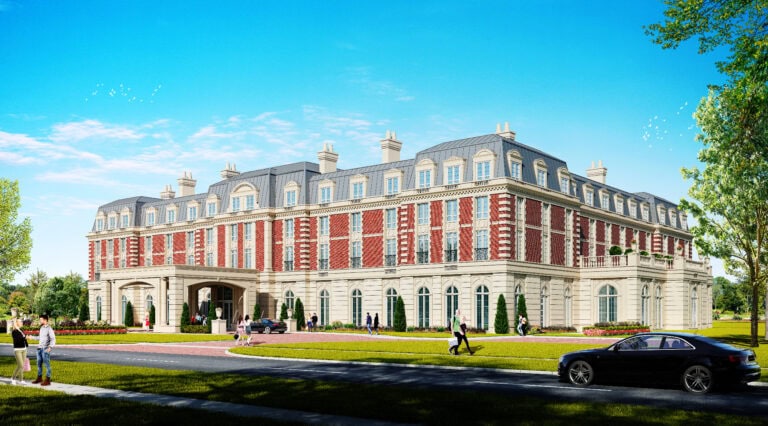
Last week’s column left off by suggesting that overtures such as the Parliament Oak hotel and the Royal George redevelopment — both egregious examples of inappropriate design — might never have been approved under a properly written, provincially acceptable community planning permit system enacted in our municipal bylaws.
Yep, Ontario municipalities (and residents as represented by their elected councils) have a concrete and legal alternative to our current, sadly broken and very complicated planning process for new development applications.
Ontario introduced the development permit system in 2007. Changes under the Smart Growth for Our Communities Act led to the current community planning permit framework, which took effect in 2016. Its rules, though tweaked now and again, remain in place under Ontario’s Planning Act.
In short, this system combines what would otherwise be handled by several separate approval processes into a single, integrated permit process within a geographically defined area.
Instead of an applicant navigating multiple separate applications and hearings for items like zoning, site plan control and minor variances to obtain the required approvals for a project, one permit application under the system shall encompass the combined requirements specified for that area.
Municipalities that adopt a community planning permit system need to pass a bylaw that clearly identifies the boundaries of the specific area to which it will apply.
Further, this bylaw will contain the standards and criteria that will govern permit decisions therein, with the result being actual scope and rules that are entirely local, rather than following a single provincewide template.
Yes, you read that right — a largely local system that can be couched in all the things that really matter when contemplating development within a given neighbourhood or area.
But why would the Ford government — infamously renowned for underwriting centralized decision-making control at the provincial level and consistently eroding municipal authority — allow for this apparent outlier?
The answer is quite simple: if the municipality has not made a decision within 45 days of receiving the required information, materials and fee, the applicant may appeal to the Ontario Land Tribunal.
So, should an application conform to the specifications defined in the community planning permit system bylaw, the time it takes to get shovels in the ground can be shortened by months (or even years) compared with the established application process — conforming to the “build homes faster” central pillar of Doug Ford’s platform.
But let’s drill down a little further on what might be included in a community planning permit system bylaw for a given area (settlement or rural) in NOTL.
Any bylaw must include the allowable and prohibited land use requirements. Further, development standards — such as minimum and maximum density, height provisions, setbacks, parking requirements, lot coverage and so on — are necessary inclusions.
That said, there is a wide variety of provisions that may be embedded in the bylaw.
Urban design requirements are one such option. They may include detailing exterior design elements in accordance with provisions in the official plan regarding the preservation of community character (e.g., scale, massing, appearance and design features).
Another might be required sustainability inclusions like permeable pavement, mini-forests, transportation facilities and green roofs, among others.
Co-ordination of the construction timeline with the completed provision of infrastructure service delivery (something which may include conditions relative to required infrastructure investments from the municipality and/or developer) can be incorporated.
Speaking of timelines, to limit land speculation (i.e., the acquisition of raw land, then obtaining development permits that significantly enhance the property value and subsequently selling the “improved” lands at a substantial profit) in favour of actual building starts, the bylaw can specify a defined period in which construction must commence on an approved application before the permit expires.
If the permit expires, the owner can no longer market the land with that approval in hand.
And this is only the tip of the iceberg in terms of identifying many other opportunities that might be embraced to define a truly resident-driven “local” planning platform, while framing a clear, simple and efficient process for both town staff and applicants to follow.
This shift from the prevalent broken planning system is neither cheap nor easy.
Despite the fact that there are several successful examples of community planning permit systems in Ontario municipalities that might be cribbed from, the shift will require a significant upfront investment to establish a workable — easily modifiable for our municipal complex of unique villages and rural environs — template for the municipality of Niagara-on-the-Lake.
However, sometimes one must simply bite the financial bullet when implementing a proven system that is likely to result in higher returns.
Of course, no matter how good a system might be, it is completely dependent on support by the executive (the council and lord mayor) to underwrite its success. And while I’ve been very favourably impressed with our new lord mayor during recent discussions, we shall have to wait and see if the newly elected executives live up to their promises.
For more insight into community planning permit systems, you can go to notlra.com/cpps or contact me at homeguide.ca@gmail.com.
Brian Marshall is a NOTL realtor, author and expert consultant on design, restoration and heritage.