
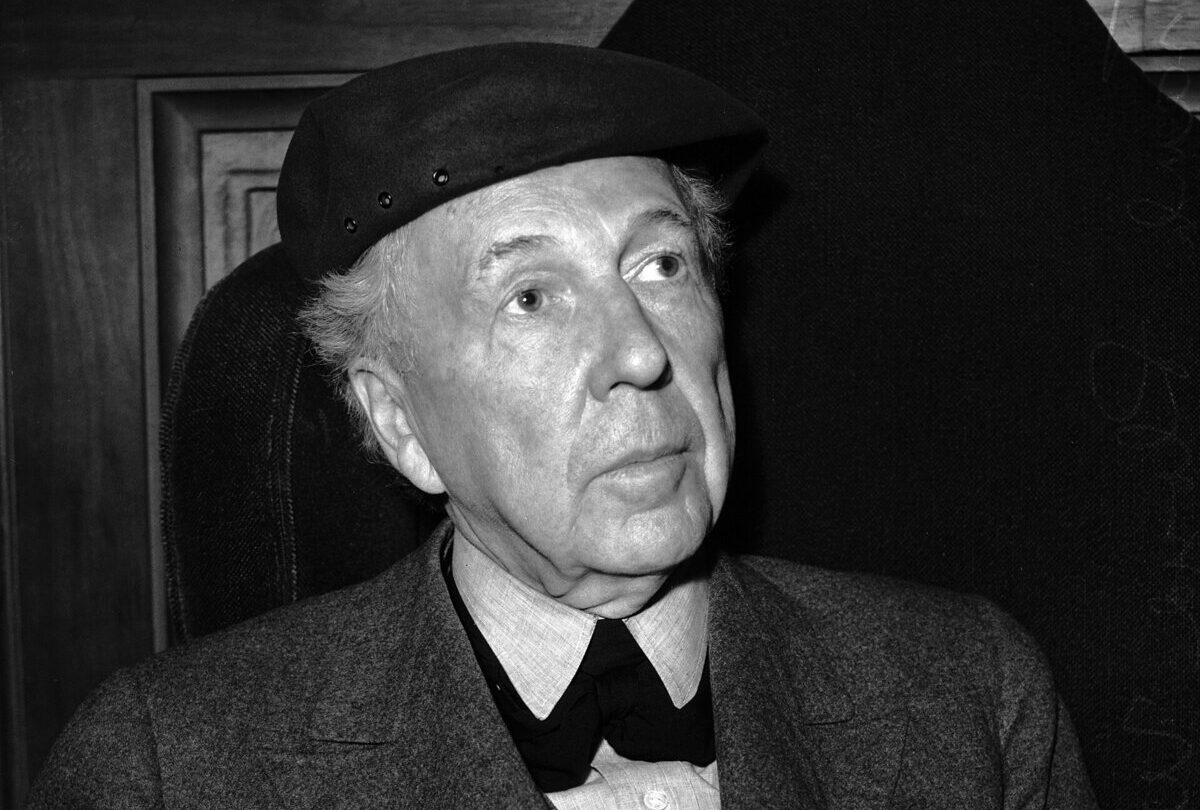


I was too young to have developed any interest in architecture when Mike Wallace interviewed Frank Lloyd Wright in 1957.
However, when I read the transcript of that discussion in the early 1970s, there were several takeaways that have informed my work ever since.
Recently, when conducting some online research, the search page delivered a link to the original interview and I couldn’t help taking the time to fully engage.
This two-part interview, conducted less than two years before his death in 1959, covers a tremendous amount of ground speaking to a broad range of Wright’s beliefs and opinions. And, if you can spare 50 minutes, is well worth taking the time to watch (Youtube: “Frank Lloyd Wright interview“).
That said, herein we’ll focus principally around some of the positions Wright took relative to architecture and cities in this interview.
But, before moving forward, let’s understand that by 1957, Wright was completely embedded in the belief that the human spirit required a direct connection to nature and that architecture (supported by aligned urban planning) was one of, if not the principal pillar, required to make that connection.
From the interview, Wright reflects, “My church, I put a capital N on nature and go there … You spell god with a capital G, do not you? I spell nature with a capital N.”
Although Mike Wallace posed New York City as the example, based on Wright’s writings and other interviews, his response can be generalized to be applied to any — perhaps all — existing metropolitan cities in North America.
Wright stated, “It was never planned, it is all a race for rent and it is a great monument, I think, to the power of money and greed trying to substitute money for ideas. I don’t see an idea in the whole thing anywhere. Where’s the idea in it? What’s the idea?”
Historically, he said, “There was a justification for that. When there was no other means of communication than by personal contact. That’s when this city … originated, it originated back there in the middle ages when the only way you could have a culture, the only way you could get social distinction or any education from it, was by ganging up. But, if our modern improvements are advantageous, we can’t get it here in the city anymore.”
Wright believed that cities needed to be fundamentally rethought to allow for the concentration of properly designed organic highrise dwellings integrated with natural plantings within the residential zone that would promote the opportunity for everyone to experience and receive the benefits of his “church” and that all service (“commodity”) zones should be at least a kilometer from the residential district.
Now, in 1957, Wright had no access to the recent studies that have identified highrise buildings as creating social isolation. That said, his original organic concept criteria should still be the basic platform for urban design overtures.
Let’s move on to Wright’s position on architectural design.
He stated, “It is not their [the American people] job to build, it’s mine. And I think they should have a right to look to their architects for what they should build and how they should build it.”
Responding to Wallace’s question of how he would like to change the way we live, Wright replied, “I wouldn’t like to change, so much, the way we live as what we live in, and how we live in it. We are shifting in what we live in now; we don’t really live in it. We don’t really understand what it is to live in an organic building with organic character.”
“I would like to make it appropriate to the Declaration of Independence, to the centre line of our freedom,” he continued. “I’d like to have a free architecture. I’d like to have architecture that belonged where you see it standing and as a grace to the landscape instead of a disgrace.”
And perhaps most powerful is Wright’s qualification that architecture should be a “grace to the landscape.”
And, here in NOTL, how many of the recent development applications can be said to fulfil that criteria?
Finally, speaking to the “common man” or collectively grouped as the “mob,” Wright stated, “I believe that what you call the common man is what I call the common man who believes in nothing he can’t see, and he can’t see anything he can’t put his hands on. He is a block to progress.”
“I don’t think the mob knows anything of architecture, cares anything about it … I don’t think architecture is for the mob; it certainly isn’t for education. Education knows nothing of it. And very few architects in the world know anything about it.”
“For 500 years, what we call architecture has been phony … In the sense it was not innate, it wasn’t organic and it didn’t have the character of nature.”
“Humanity to me is not a mob. The mob is a degeneration of humanity. The mob is humanity going the wrong way,” he concluded.
Nuff said.
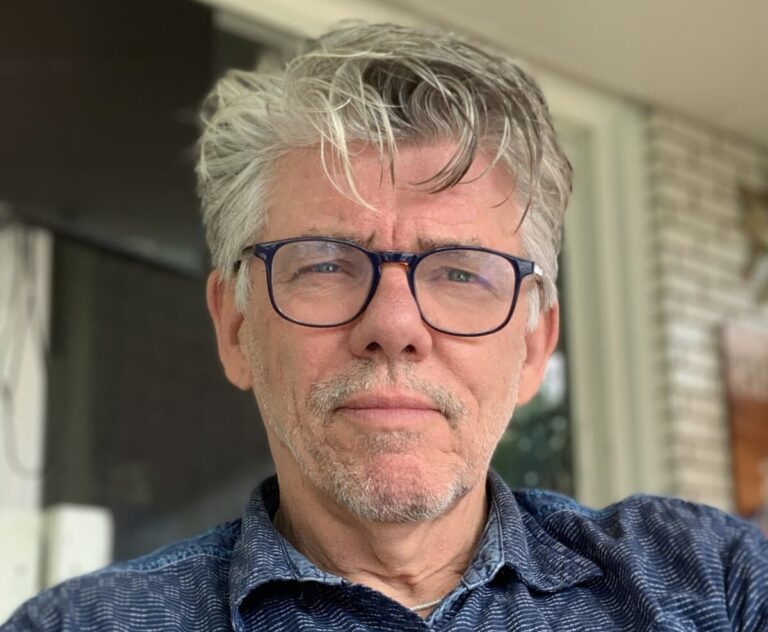
Brian Marshall is a NOTL realtor, author and expert consultant on architectural design, restoration and heritage.