


A council discussion about sidewalks and traffic in St. Davids has reopened broader criticism from a resident over how the town handles development approvals.
Nicholas Colaneri says a development project at Paxton Lane has become about far more than roads and sidewalks, arguing it reflects larger concerns about consultation, archeology and how council handles controversial development applications.
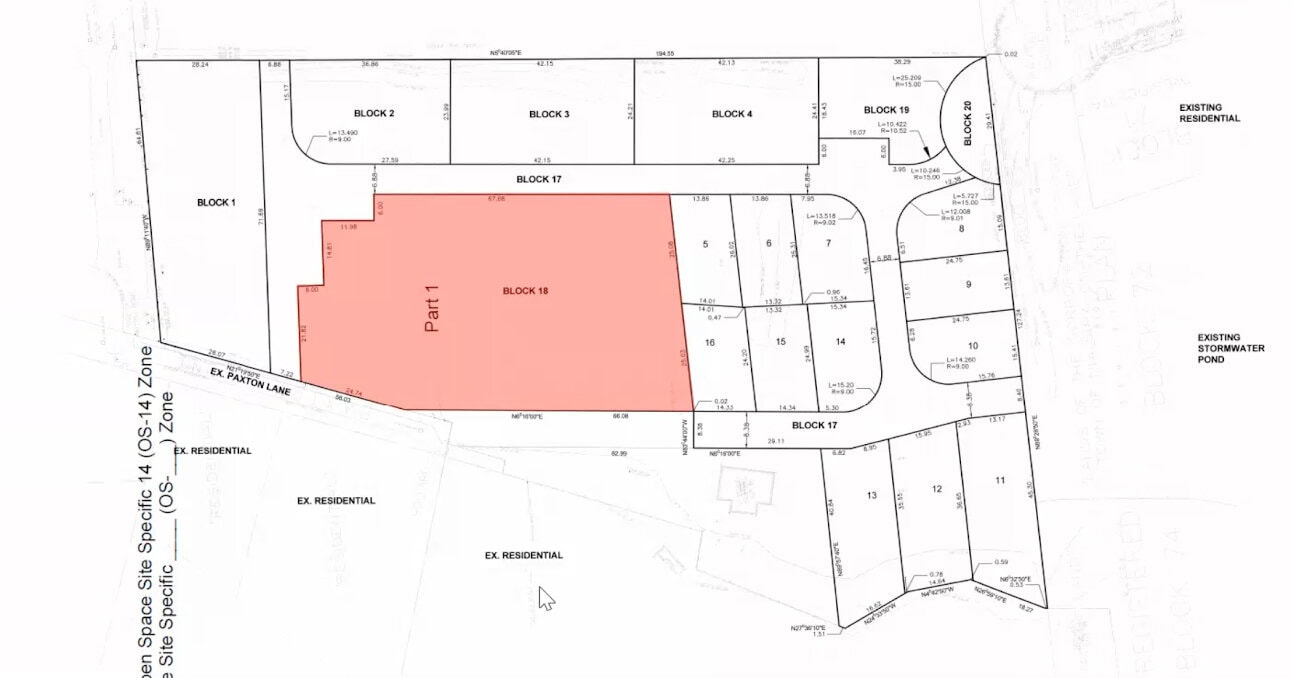
The criticism resurfaced as councillors voted unanimously to study possible upgrades to infrastructure for walking and biking, costs and constraints along Paxton Lane, a narrow road connected to a development called the Settlement at St. Davids extension.
The motion came shortly after council approved a zoning change for 46 Paxton Ln. that keeps part of the property off-limits to development or site work until the town receives archeological assessments and a ministry acknowledgement letter showing the requirements have been addressed.
The archology concerns around 46 Paxton Ln. date back more than a decade. In a 2013 Ontario Land Tribunal decision approving the subdivision, the tribunal (then known as the Ontario Municipal Board) said parts of the property likely containing heritage resources and archeological artifacts were to be turned over to the town.
The current zoning change alters that arrangement by allowing the applicant to keep the land, while still preventing development on the protected portion until the archeological conditions are satisfied.
Colaneri argues that condition shows the file should not be treated as routine.
“If the ministry has concerns about archeological protection, then why doesn’t the town?”
Coun. Gary Burroughs raised concerns about Indigenous consultation connected to the development approval process.
“Our local Indigenous groups were not consulted,” he said. “We shouldn’t be saying that we have.”
Aimee Alderman, the town’s director of planning, building and development services, told council the application was circulated to Indigenous communities as required and that archeological assessments on the property met provincial standards.
“As part of our circulation for the planning application, we do circulate to a couple of Indigenous communities, as is required, and we’ve been in consultation with the province to ensure that our circulations are meeting all requirements,” she said.
Colaneri provided The Lake Report with an April 2 email that appears to be from Adam LaForme, manager of archeology with Mississaugas of the Credit First Nation’s department of consultation and accommodation. In the email, LaForme wrote that the department “has not received any correspondence from the proponent since 2021.”
“Despite this, the director of planning told council, on the record, that all necessary Indigenous engagement had been completed and that all requirements had been met,” Colaneri said.
“The applicant’s planner made the same claim,” he added.
Coun. Erwin Wiens argued it was too late in the process to reopen the issue.
“I think it’s totally inappropriate at this point in time to bring it up now,” he said, adding the town also has timelines to meet under the Planning Act.
The later motion on active transportation (walking, biking, skateboarding and similar methods of getting around), brought forward by Coun. Adriana Vizzari and seconded by Coun. Maria Mavridis, asks staff to prepare a budget request for a study looking at whether Paxton Lane can be rebuilt with safer space for pedestrians and cyclists.
The motion says Paxton Lane between York Road and 46 Paxton Ln. is a “substandard roadway” without active transportation facilities, meaning pedestrians, cyclists and drivers have to share the road.
It also says the sidewalk on Four Mile Creek Road is too narrow to properly accommodate pedestrians and accessibility needs.
The proposed study would look at the financial and physical constraints involved. But town staff warned there are significant limitations.
“My understanding is that’s one of the challenges that we face with any upgrades to Paxton Lane North previously, is the existing road allowance and the impact on the existing properties for any kind of comprehensive improvements,” a staff member told council.
Coun. Sandra O’Connor said she supports improving active transportation, but questioned whether the motion was skipping ahead of other town priorities.
“I’m just a little concerned that this is sort’ve jumping the queue without appropriate rationale,” O’Connor said.
Wiens said now is the time to bring this forward, since the concerns in the motion could not be addressed during the application process itself.
“(Vizzari’s) concern of connectivity, although totally valid, we couldn’t fit that into the conversation in regards to the subdivision,” he said. “They’re two separate pieces.”
“We want to have some sort of idea,” he added. “So I’m super excited by it.”
For Colaneri, the Paxton Lane file is part of a larger concern about development approvals in town.
“The town does what it wants,” he said. “The heritage properties, the Greenbelt land, the employment designations, the institutional sites, the archeological record, the tree canopy. None of it is recoverable once it is gone.”