


A fenced-off piece of waterfront property in Niagara-on-the-Lake that neighbouring homeowners thought was part of their backyard will stay under ownership of the town after council voted against selling the land.
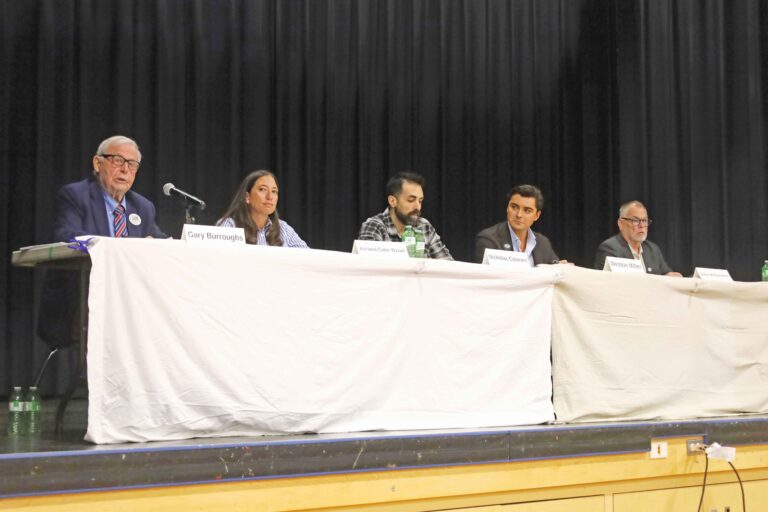
Lord Mayor Gary Zalepa was absent from the meeting on Tuesday, but the remaining eight councillors all voted to keep the land under municipal ownership.
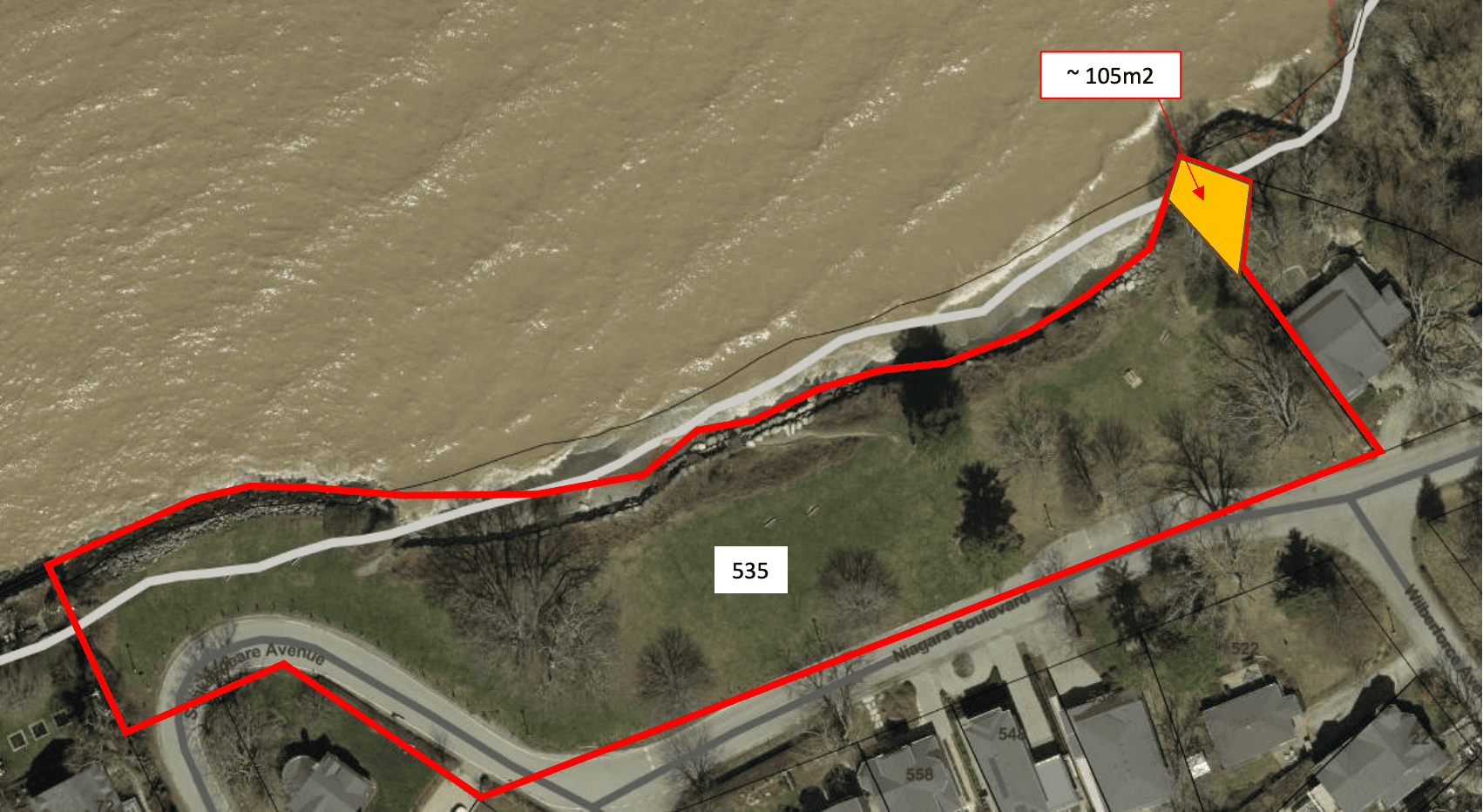
The decision involves roughly 105 square metres of and in Ryerson Park and will still need final approval at a future council meeting later this month before it is formally adopted.
In February, staff recommended council direct staff to explore divesting the piece of property, arguing the parcel hasn’t been open to the public, nor has it functioned as part of Ryerson Park, for more than 25 years.
This week, staff instead asked council to choose between three paths for the future of the highly debated land: keep the land under full municipal ownership and potentially invest in improvements and public access, move ahead with selling it to the neighbouring homeowners or provide another direction altogether.
Ultimately, council chose the first option.
Staff said it may require initial investment for public access and maintenance, estimating starting costs at about $25,000. It would be funded through the town’s general reserve.
During the meeting, a debate unravelled around the town-owned land at the eastern edge of Ryerson Park, beside 491 Niagara Blvd.
The homeowners of #491, Michele Darling and Michael Eagen, had asked the town to sell them the parcel after discovering earlier this year it was not included in their property title.
Staff said the parcel reflects “a long-standing pattern of private use and maintenance.”
But residents opposing the sale argued the land only stopped functioning as public space because it had been fenced off for years.
“The public did not voluntarily give up access to this land,” said Weston Miller, president of the Chautauqua Residents Association, urging councillors to reject divesting the land. “The land was fenced off.”
He said public access restrictions should not be used as justification for selling parkland.
“It should be used to justify restoring it,” said Miller. “You do not strengthen parks by shrinking them.”
He said the town is essentially being asked if it “should fund parks by selling parkland to private residents.”
“There’s a long lineup of Chautauqua residents prepared to help cover those costs.”
The homeowners’ lawyer, Thomas Hanrahan, argued the land had effectively operated as part of the property for decades and said previous owners spent $130,000 in 1994 — roughly $250,874 today, according to a Google inflation calculation using Bank of Canada consumer price index data — on shoreline protection work after erosion threatened the area.
“If that work wasn’t done, we wouldn’t be here,” said Hanrahan. “The backyard of 491 Niagara Blvd. would be in Lake Ontario.”
Hanrahan argued the parcel was “part of Ryerson Park in title only” and said retaining the land could expose the town to future legal claims from the owners of the neighbouring property.
“In my opinion, (Darling and Eagen) have a strong case for adverse possession,” said Hanrahan. “There’s also an unjust enrichment argument.”
He also argued the sale would not create a broader precedent.
“The town is not setting a precedent,” Hanrahan said. “This is a unique case. A unique remedy is required.”
“Cases in the future will be determined on their own merits.”
Several councillors openly challenged parts of Hanrahan’s presentation.
The “title-only” statement raised pointed questions from Coun. Sandra O’Connor.
“How far back does he go to substantiate that statement?” she asked.
When Hanrahan argued the town not realizing it owned the parcel suggested it was never truly parkland, O’Connor pushed back.
“You’re inferring,” she said. “There’s nothing concrete.”
O’Connor said she does not support selling municipal land unless there is a compelling reason to do so.
“To me, there is no compelling reason here.”
Throughout the meeting, town chief administrative officer Nick Ruller stressed staff were not recommending a sale in the latest report and were only presenting options.
“This report provided options and not recommendations,” Ruller said.
Still, several councillors acknowledged how personal the issue had become within the community.
Coun. Tim Balasiuk said he was “very shocked with the way that this unfolded” and “the way that it was perceived throughout the community.”
“I just want to make sure that, coming out of this, we all remember that we all live in Niagara-on-the-Lake,” Balasiuk said. “We’re all neighbours.”
Coun. Erwin Wiens defended Darling and Eagen for approaching the town openly after discovering the title issue.
“They didn’t do anything wrong,” Wiens said. “What we didn’t see through this process is the dignity that Mr. Eagen and Ms. Darling deserved.”