

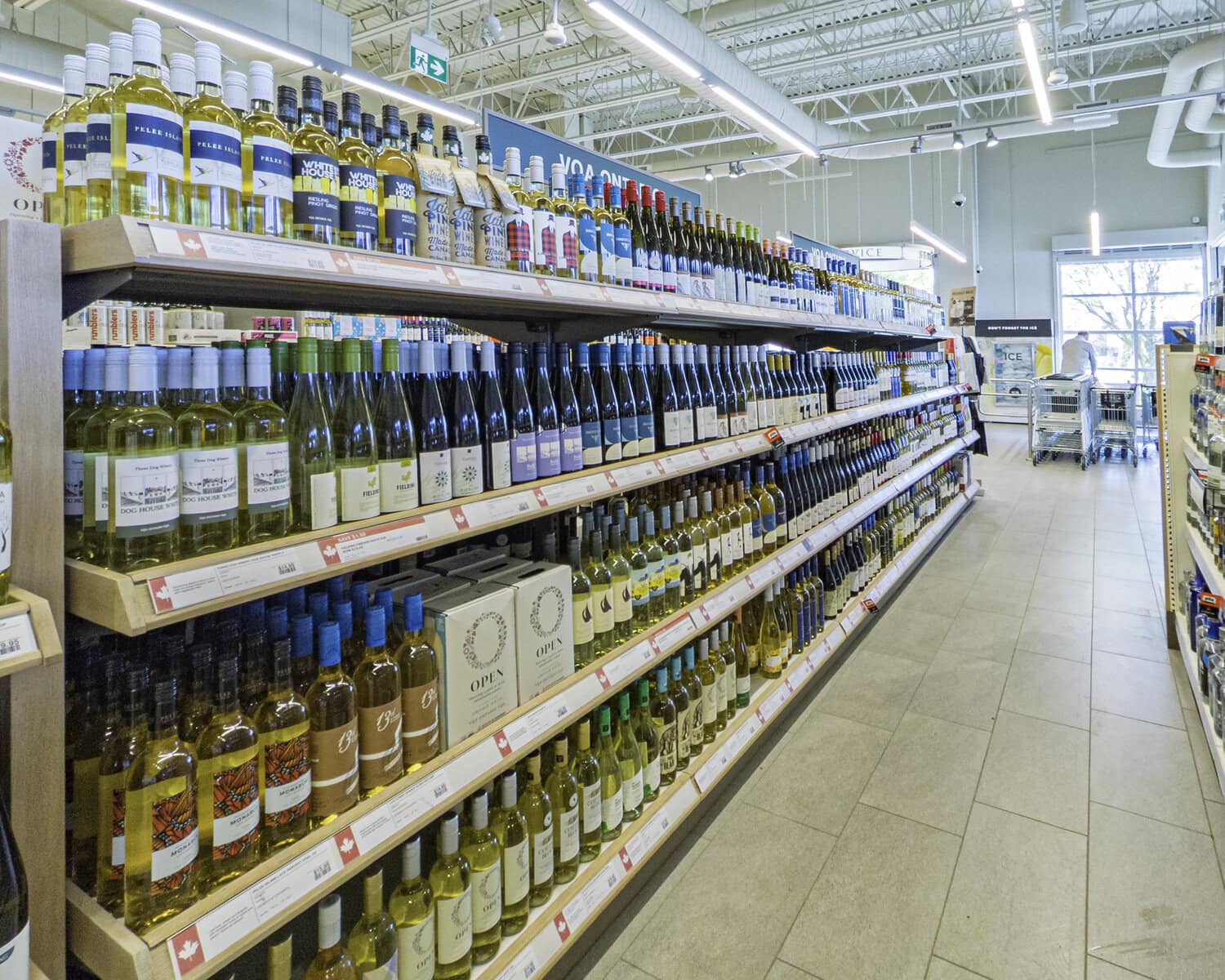


As American wine, beer and spirits remain absent from LCBO shelves across Ontario, the company has expanded its offering of Ontario craft wines and plans to continue doing so amid growing popularity for local brands over the past year.
Niagara-on-the-Lake winemakers and grape growers say the shift has been a boon for Ontario’s wine industry, helping build momentum after years of efforts to boost sales.
Donald Ziraldo, co-founder of Inniskillin Wines, said the success of Vintners Quality Alliance wines — approved under the industry’s regulatory body for Ontario and British Columbia — since the Ford government pulled U.S. alcohol from LCBO shelves last March has been “unbelievable.”
“The performance in most cases are extraordinary, especially not only in the LCBO, but the fact that the wines aren’t there from mostly Oregon and California,” he said.
The removal of American alcohol from the LCBO marked a notable retaliation amid the ongoing tariff dispute between Canada and the U.S.
By the end of last year, the effects were evident. In December, the LCBO reported VQA sales rose 56 per cent across Ontario in 2025.
“We saw trends shift in response to industry changes and a growing desire to support local,” said Abhay Garg, LCBO vice-president of merchandising, in a news release. “Customers were motivated to try something new — often from our own backyard — which is great for local producers.”
From April 2025 to April 2026, the LCBO added 116 new VQA wines, representing a 22 per cent increase over the previous year, a spokesperson told The Lake Report.
The company also increased VQA offerings in its Vintages New Release program by 50 per cent during the same period.
The impact has been clear, Ziraldo said. He said wineries have told him they are struggling to keep up with demand.
“They said that they’re literally out of stock and they’re trying to find wines until the crop is picked again this fall,” he said.
In April, at the Ontario Craft Wineries’ 2026 Spring Wine Forum, LCBO’s CEO Aaron Campbell said the company is “fully committed to the expansion of VQA shelf space.”
Coun. Erwin Wiens, a grape grower who sells produce to wineries across town, attributed VQA’s current success in part to lobbying efforts by industry representatives and the Town of Niagara-on-the-Lake to encourage the province to raise the visibility of Ontario craft wines.
He pointed to provincial measures introduced in recent years, including eliminating the 6.1 per cent tax on wine purchased at wineries, as important steps forward.
“The province has been a major player in trying to advance the wine industry in Niagara,” he said. “This is just the next step, which is an amazing step.”
To maintain momentum, however, Wiens and Ziraldo said provincial governments need to address interprovincial trade barriers.
Currently, each province has different rules and markups governing out-of-province wine sales, returning home with wine purchased elsewhere and direct-to-consumer wine shipping.
For Ontario wineries, that makes it difficult to sell wine outside the province, whether in stores or online. British Columbia, Manitoba and Nova Scotia are currently the only provinces allowing residents to buy Canadian wine produced outside their provincial borders.
In March, Ontario signed an agreement with Nova Scotia allowing consumers in both provinces to ship wine directly to their homes from the other province, though the arrangement is not yet fully in effect.
Wiens acknowledged those barriers are beginning to come down, but he and Ziraldo said they want to see broader co-operation across Canada’s wine industry, with provinces promoting Canadian products collectively.
“We want to work with our partners,” Wiens said. “We don’t want to say, ‘Buy ours, don’t buy B.C.’ We want to say, ‘Buy Canadian’ and divert your views away from Burgundy and California and Chile and look at Canada.”
Ziraldo said he has been advocating for the creation of what he describes as a “VQA Canada” — a national standard for wine production.
“There’s really only one rule and it’s 100 per cent grown in the wine regions in Canada. That can stay until we’re legislated, which may take some time,” he said. “I presented to the Wine Growers of Canada and they endorsed VQA Canada across Canada and the liquor boards.”
After 20 years of advocating for changes to the system, Wiens said, loosening trade restrictions could have major economic benefits, particularly for Niagara-on-the-Lake.
“To have that extra shelf space will be such an amazing boon for our economy.”