



Keith McNenly
Special to The Lake Report
Authoritarian leaders follow a familiar pattern. They blame vulnerable minorities, dismiss experts, attack institutions and demand loyalty over truth. They are vain, contemptuous of limits and convinced of their own superiority. They lie easily and govern as if public office were a vehicle for enrichment, revenge and personal domination. The danger grows greater when those traits are joined to profound ignorance.
Such leaders insist that they alone can save the nation. It is a clever inversion: the nation is said to need saving not from danger, but from its own democratic institutions and laws. What is presented as rescue is, in fact, wrecking. Military and intelligence professionals, judges, and civil servants become obstacles rather than assets. Advice is recast as disloyalty. Expertise becomes suspect because it places limits on impulse and ego.
Today, the world’s most economically and militarily powerful democracy is increasingly shaped by billionaires intent on bending government away from public purpose and toward private wealth and power. Entrenched oligarchy cannot coexist with a strong middle class, nor with genuine democracy. Elites protect themselves by shaping law, policy and public life to serve private interests while hollowing out the security of everyone else.
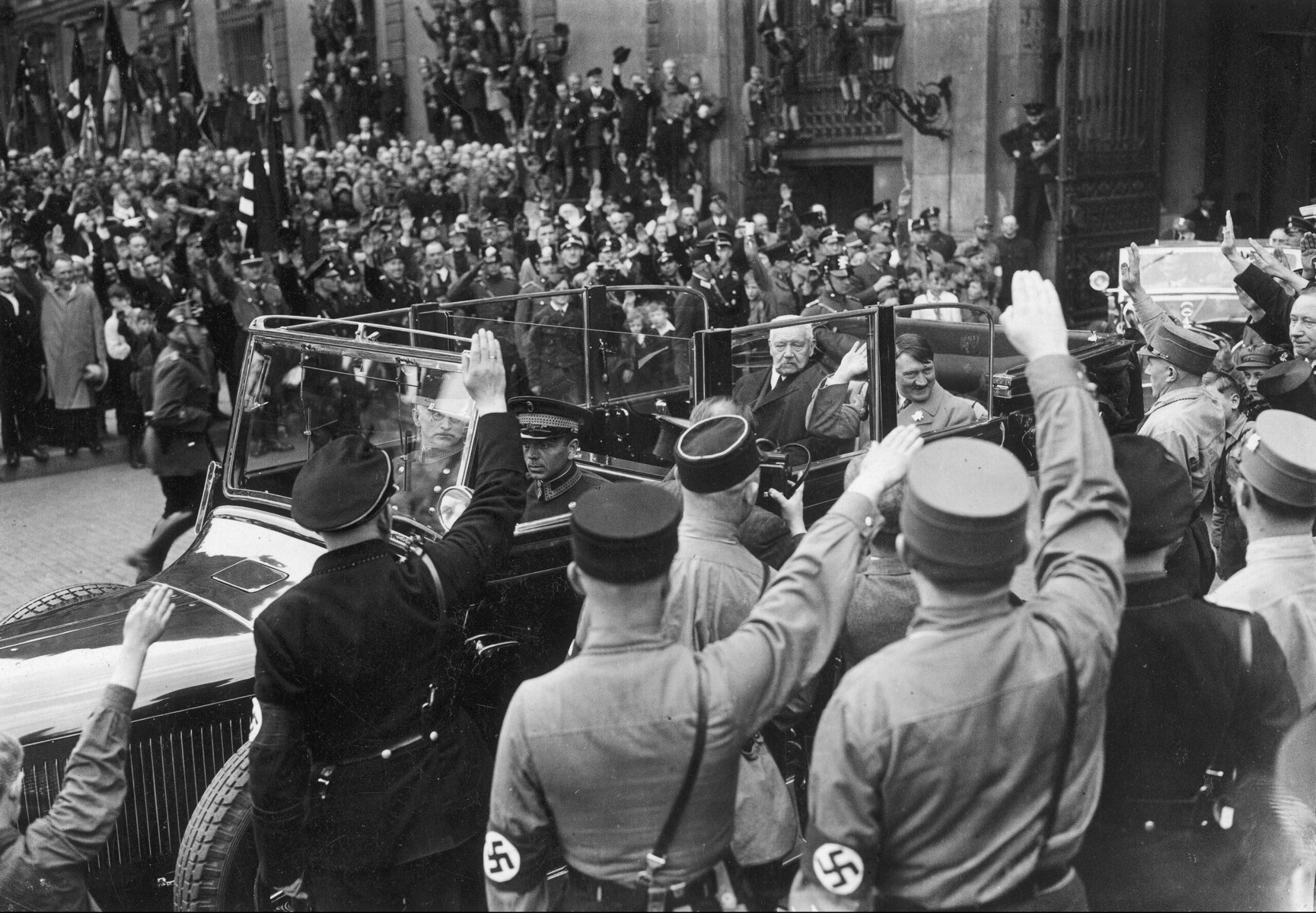
History offers no shortage of examples. Hitler and Stalin differed profoundly in ideology and in the systems they built, but both depended on fear, propaganda, repression and concentrated personal power. Stalin’s regime brought terror and catastrophic suffering, including famine in Ukraine. Hitler’s arrogance and refusal to accept reality brought destruction to Germany and horror to the world after unleashing war and industrialized genocide.
In both cases, millions died because power was concentrated in men who mistook arrogance for genius.
History is essential to democracy, yet it is often neglected when life feels stable. In times of peace and prosperity, citizens grow complacent. Civics and history are too often taught as dry, remote subjects rather than as practical instruction in how free societies endure. Only later do many realize that history is not merely a record of the past. It is a warning system.
Democracies rarely collapse in one dramatic moment. They are weakened gradually, through patterns that repeat across generations and nations.
Yet popular culture often dwells on the final act while neglecting the opening one. Film and television return, understandably, to the heroism of battle: the landings, the sacrifice, the liberation. Those stories deserve reverence, but the spectacle of war can become a form of historical evasion when severed from the political decay that made war possible.
Audiences are invited to admire courage under fire without being taught to recognize the demagogues, propagandists and opportunists who lit the fuse.
That omission matters. If culture teaches citizens only how evil was defeated, but not how it arose, it leaves them emotionally stirred but politically vulnerable. History becomes pageantry: uniforms, explosions, sacrifice, victory.
What should be shown with equal seriousness is the slower corruption that comes first: the normalization of lies, the scapegoating of minorities, the capture of institutions, the seduction of grievance and the gradual surrender of free people to spectacle.
Authoritarianism often has an initial appeal. It promises strength, speed and clarity in place of democratic compromise. But it comes at a cost: hollowed-out institutions, concentrated wealth, corruption and lasting structural damage. It is political fraud — immediate emotional gratification followed by institutional and economic decay.
Minorities, immigrants, dissidents and journalists are blamed for social and economic hardship. Scapegoating redirects anger away from corruption and failure and toward the vulnerable. It allows leaders and their allies to enrich themselves while posing as defenders of the nation.
Citizens do not need scholarly expertise to recognize dishonesty, vanity, cruelty, corruption and contempt for the law. The warning signs are visible enough. The deeper problem is that democracies too rarely teach, clearly and repeatedly, that defects of character joined to unchecked power lead to disaster.
In the United States, Trump has treated the Justice Department as an instrument of personal grievance and political revenge. His use of pardons has conveyed a corrosive lesson: crimes committed on his behalf can be rewarded, even profitable.
Democracy depends on vigilance. History is self-defence: a continuing warning from generations past.
Authoritarians reshape the past into grievance in order to control the present and erase targeted people from the future. That pattern repeats.
The question is whether democracies and film culture will teach history seriously enough — and tell it honestly enough — to keep citizens from learning its lessons again the hard way.
Niagara-on-the-Lake resident Keith McNenly was the chief administrator of the Town of Mono for 41 years.