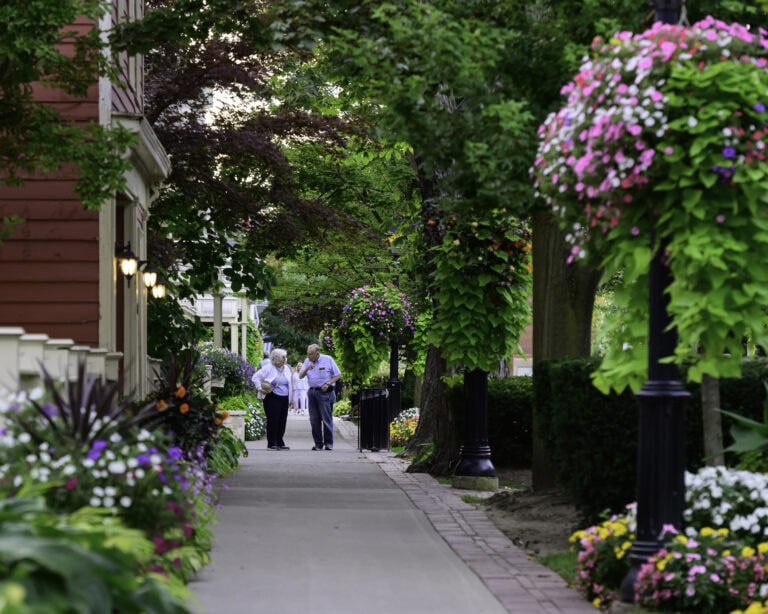



This past Sunday, I attended a small meeting of folks who had deep roots in this town. Some folks were “lifers” — born and raised here with family that reached back generations — while others had only a mere 50 or so years of residency.
Then there was me who, although having been a regular visitor to Niagara since the 1960s, didn’t put full-time “skin in the game” and move to NOTL until 12 years ago. I was a tyro in this mix.
While not one of the folks in that meeting condescended to my comparatively recent relocation into the community, my “come-from-away” origin or lack of boots on the ground knowledge of NOTL’s historic streetscape evolution and when their casual references to past owners of historic buildings clearly left me somewhat lost. Without judgement, they generously educated me.
What these folks all have in common is something I share: a fundamental commitment to preserve and maintain the unique community and historic built character of Niagara-on-the-Lake.
While the meeting visited several important topics, there was one item which in retrospect I realized this column has not addressed over the last eight years: the “hollowing out” of residential neighbourhoods.
Generally speaking, this phenomenon can be defined as the decline of an area caused by the loss of permanent residents and local-serving businesses resulting in neighbourhoods that may look intact on the surface, but actually lack the economic and social cohesiveness necessary to maintain a healthy and vibrant community.
Although there are several socioeconomic drivers that contribute to “hollowing out” — consider how few of the businesses on Queen Street are primarily oriented to servicing the needs of NOTL’s resident population — this columnist lacks the space to examine them all.
So, for now, let’s visit the issue of short-term rentals.
Professor David Wachsmuth of McGill University led an ongoing study on the impacts of short-term rentals on Canadian housing that received the 2020 CMHC President’s Medal for Outstanding Housing Research.
This research identified that short-term rentals was one primary causes for the shift, commonly referred to as the “financialization of housing,” toward treating housing as a commodity — a vehicle for wealth generation and investment — rather than a basic right resulting in social benefits.
It also captured the financial incentives of short-term rentals vis-à-vis the impact on housing which lead to long-term rentals being converted into short-term ones.
Amongst other negative fallouts, the short-term rental study findings suggest this trend has resulted in upward pressure on housing prices (purchase and rental) due to a loss of long term residential stock. In fact, the research at that time identified that over 31,000 long-term dwellings in Canada had been lost to the short-term rental market.
Further, that this movement to short-term rental conversion was growing notably faster in small towns like NOTL than in larger cities.
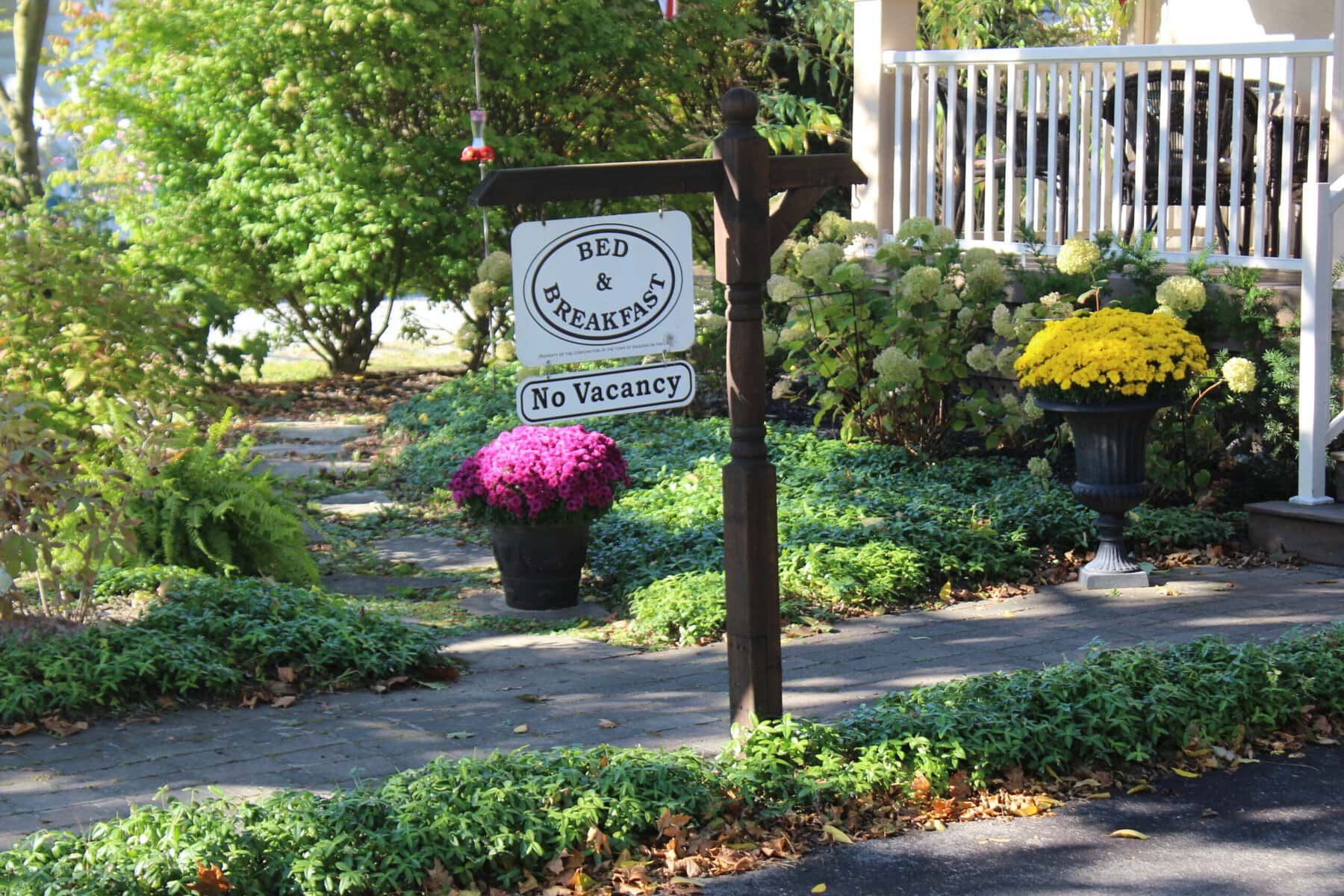
In 2022, this newspaper reported that over 10 per cent of all homes in Niagara-on-the-Lake’s Old Town were engaged in the short term rental market (“Short-term rentals consume 10 per cent of Old Town homes,” March 17, 2022) and there were 290 licensed short-term rentals across the entire town.
It’s fascinating that, while NOTL has removed the temporary cap (over 10 per cent) for the number of licensed short-term rentals and opened the floodgates, the city of Portland, Maine (population 69,568) was so fundamentally concerned with the ongoing viability of its urban neighbourhoods that its instituted a permanent cap set at 1.5 per cent of the city’s rental stock or 290 short-term rentals units for all of 2024.
Ironic that NOTL, at about a quarter of the population of Portland, should have identical total (2022 vs. 2024) numbers for licensed short-term rentals.
Based on my research (I may serve to be corrected with 2026 numbers), Niagara-on-the-Lake has roughly 840-long term rental units. And, if Portland’s “crisis point” to preserve neighbourhood viability and character was applied to our town, the short-term rental licences would be virtually non-existent.
That said, I am completely supportive of the historical tradition of cottage rentals in Niagara-on-the-Lake, which has a long and storied history in our town. In fact, the ongoing existence of the Chautauqua neighbourhood is arguably due to over 100 years of vacation rental revenues paid back to the property owners.
So, I cannot argue with a “made in NOTL” solution. However, there must be strict parameters, bylaws and enforcement undertakings applied to the short-term rental theatre.
Make it clear, proscriptive, defined and enforceable. Anything less would be an abrogation of the overwhelming community’s charge to safeguard our town’s character into the future.
Stay tuned next week when we’ll delve into the challenges of preserving community against hollowing out further.
Brian Marshall is a NOTL realtor, author and expert consultant on architectural design, restoration and heritage.