


THE ART OF CLASSICAL MUSIC: 1730-1820
**** (out of five)
Song Selections at the Artists’ Village
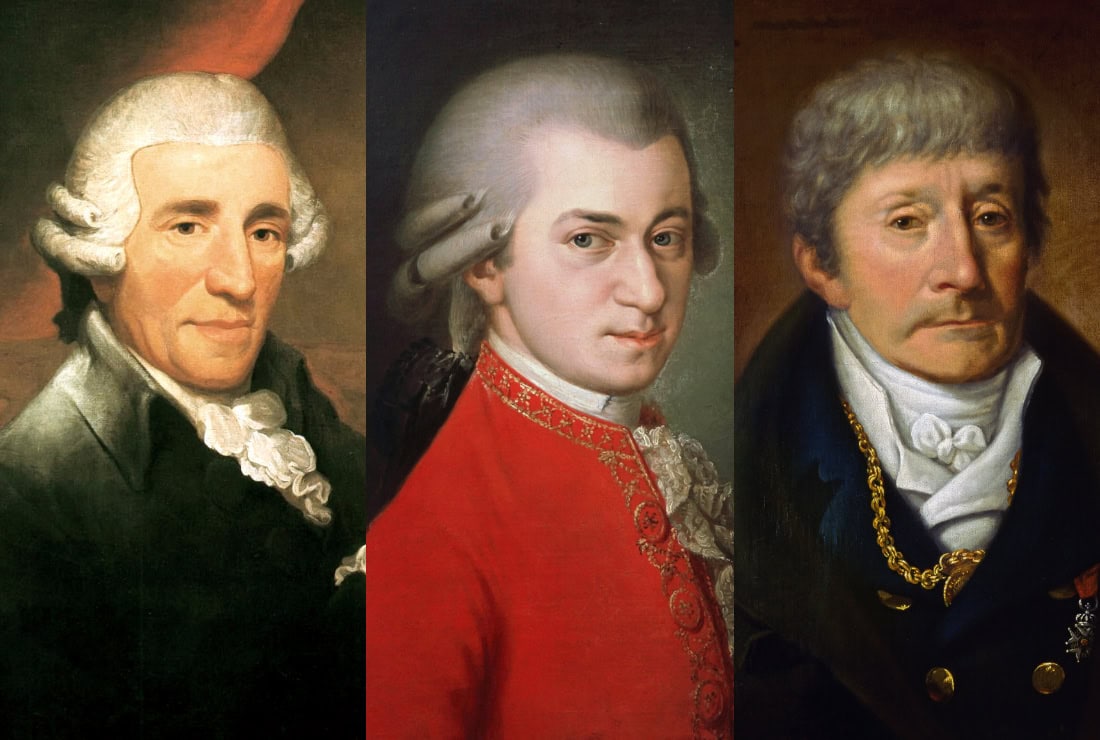
This was an unexpected master class in the music of Haydn, Salieri and Mozart, and it was a surprise how intertwined their lives and compositions were with one another. Their world was Vienna, the epicentre of classical music during the 18th century, and they were its leading masters and innovators.
Selections of compositions by Mozart, Haydn and Salieri, with references to the young singer and composer Marianne Auenbrugger, were introduced and explored by musicologist Kristen Franseen, a postdoctoral research associate at Western University.
The outstanding string quartet players included Juilliard-trained teacher and violist/violinist Esme Allen-Creighton and violin/viola performer and teacher Caitlin Boyle. Sharon Lee is a violinist, concertmaster, music director and orchestra contractor. Amber Ghent is a chamber and orchestral cellist who plays with a wide range of ensembles, including at the Shaw. All four perform and record with symphony orchestras.
They were joined by soprano, librettist and producer Rachel Krehm, the co-founder and director of Opera 5, the current company-in-residence at the Canadian Opera Company. On keyboard was pianist Stéphane Mayer. He is a coach and répétiteur with the Canadian Opera Company, collaborates with other Canadian opera companies and is an active recitalist.
They came together to perform for us in a small, spartan space at the Artists’ Village. This lacked the grandeur of the Habsburg court of Holy Roman Emperor Joseph II or the palatial rooms of the wealthy noble Esterházys, but the intention of making music was the same. Theirs was a joyful interplay with one another and, in turn, with us. However, the context was different and has continued to change over time.
In the 18th century, instability, wars and social change were the norm. The Russian defeat of the Turks in 1783 was a relief, as the Viennese remembered all too well the Ottomans at the gates of Vienna a hundred years before. Joseph II’s mother, Empress Maria Theresa, was in frequent conflict over territories with Frederick the Great of Prussia. Reforms resulting from the Enlightenment and increasing threats of revolution were adding to the uncertainty of the time. Political alliances were made and broken by dynastic royal marriages. Joseph II’s sister, Maria Antonia, was sent off at 14 to marry Louis XVI of France and, as Marie Antoinette, lost her head to the guillotine.
The function of music socially and politically was to represent the social values held by the royals, the aristocrats and the wealthy bourgeoisie. Operas were comedies and very popular at the Burgtheater, founded by Maria Theresa. Musicians, including teachers, were considered servants. Music was played at home by family members or by paid musicians.
Joseph Haydn was employed for 30 years to conduct the Esterházy orchestra. One of his students was Marianna Auenbrugger, a gifted pianist and composer. Her renowned physician father, Leopold, was a close friend of Salieri and wrote the German libretto of Salieri’s opera “Der Rauchfangkehrer.”
On Marianna’s death at 23, Salieri published, in her memory, her Sonata for Keyboard in E-flat Major alongside his own funeral composition, “Ode, Deh si piacevoli.” This sonata was played by Stéphane Mayer, and the Salieri aria was sensitively sung by Rachel Krehm. Haydn dedicated a series of sonatas to Marianna and her sister Katherina, writing, “Their way of playing and genuine insight into music equal those of the greatest masters.”
Stéphane Mayer played, with delightful variation, Mozart’s Six Variations on “Mio Caro Adone,” sourced from Act 2 of Salieri’s popular opera “La fiera di Venezia.” Salieri composed more than 40 operas in Italian, French and German. He was the most influential composer of his time, appreciated for his traditional approach in contrast to the innovations and complexity of Mozart’s compositions. Salieri’s operas were highly acclaimed in Paris, and Rachel Krehm sang “La Ra La” from his “La Grotta di Trofonio.”
Salieri taught Beethoven, Schubert, Liszt and Mozart’s son for free. Beethoven dedicated his “Violin Sonata No. 3, Op. 12” to his teacher, writing, “Salieri taught me that music must speak like a noble tongue.” Mozart struggled to get teaching positions to supplement his performance income. His brilliance was recognized, but his genius and innovative gifts would only be appreciated after his death.
The program came to a delightful conclusion with Haydn’s String Quartet in E-flat Major, better known as “The Joke.” As string quartets became increasingly popular in homes, there was a great demand for music. After being in London and seeing how English musicians self-promoted their talents, Haydn took out a newspaper ad once or twice a week offering, for a fee, six published quartets to be returned the next day.
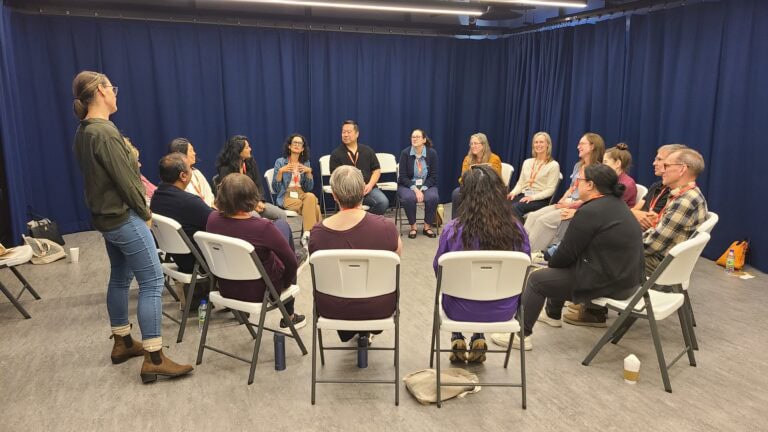
The at-home string quartet musicians faced each other in a circle so they could engage in a musical conversation. The violins sustained the conversation, the cello added a darker, serious tone and the viola was considered a lighter female voice. Most string quartets until the 20th century were played by men. Straddling a cello was not considered ladylike. The give-and-take, starts and pauses of “The Joke” were a delightful end to an excellent performance.
Penny-Lynn Cookson is an arts and culture historian, writer and lecturer living in Niagara-on-the-Lake.