


The fact that Niagara-on-the-Lake’s town council passed a bylaw back in March of this year to completely prohibit the use of municipally owned facilities in any election-related activities isn’t recent news. However, then as now, I remain somewhat at a loss to understand the rationale behind such a blanket prohibition.
At the time, this overture was put forth as a requirement to comply with Section 88.18 of the Municipal Elections Act, which reads as follows: “Before May 1 in the year of a regular election, municipalities and local boards shall establish rules and procedures with respect to the use of municipal or board resources, as the case may be, during the election campaign period.”
Which, as far as this section goes, provides a requirement that a municipality set the rules for any use of its “resources” six months in advance of the election.
Now, interpretation of the Act’s provisions and intent also underwrite criteria that collectively attempts to ensure that public infrastructure is never used to endorse, promote or oppose any specific candidate or political party thereby maintaining a completely non-partisan position in any democratic contest.
While it may admirable in intent, in practice, the provincial legislation downloads the responsibility of defining the parameters and boundaries of any pursuant bylaw — and legal liability attached thereto — into the hands of municipal governance.
So, is it any surprise that several smaller Ontario municipalities, with limited budgets and much tighter staff constraints, might opt for a draconian “hard line in the sand” in their bylaws that denies access to any and all electoral activities?
After all, a hardline denial of all overtures is much easier to administrate with limited staff resources than one that requires adjudication.
As an aside, if the same logic was to be applied by direct extension, one must question whether or not the livestreamed council meetings may not be a publicly funded infrastructure platform upon which the incumbent elected officials can advance their candidacy at the expense of their unelected opponents.
Should these council meetings — halting the business of the town — be suspended during the period leading up to the election or done in camera? Where is the line between public transparency and municipal non-partisanship to be drawn?
Moving on, we find a rubicon between the larger, richer municipalities like the Town of Oakville or the cities of Toronto and Vaughan, for example, which allow the use of community-owned facilities for electoral undertakings, versus the smaller municipality hardliners such as Pelham, Haldimand County and Niagara-on-the-Lake.
There are pros and cons to every position, but perhaps there is a middle ground between the open-door municipalities and the closed doors of communities like Niagara-on-the-Lake.
Visit the two “smaller” municipalities of Norfolk County and the Township of Georgian Bay.
In the latter, their bylaw captures that while the township does not host debates, the clerk may authorize in writing the use of a municipal facility for an all-candidates event if all candidates are invited and the facility is properly rented.
In Norfolk, town policy disallows specific candidate undertakings in municipally owned facilities but, debates may be held in those properties provided that standard rental procedures are followed and all eligible candidates or parties for an office are invited.
In my world, Norfolk County and the Township of Georgian Bay have crafted bylaws that reflect the correct balance between maintaining municipal non-partisanship in the electoral process while not impeding the residents’ democratic right to access the specifics of all electoral candidates platforms in an open forum conducted within a community owned property.
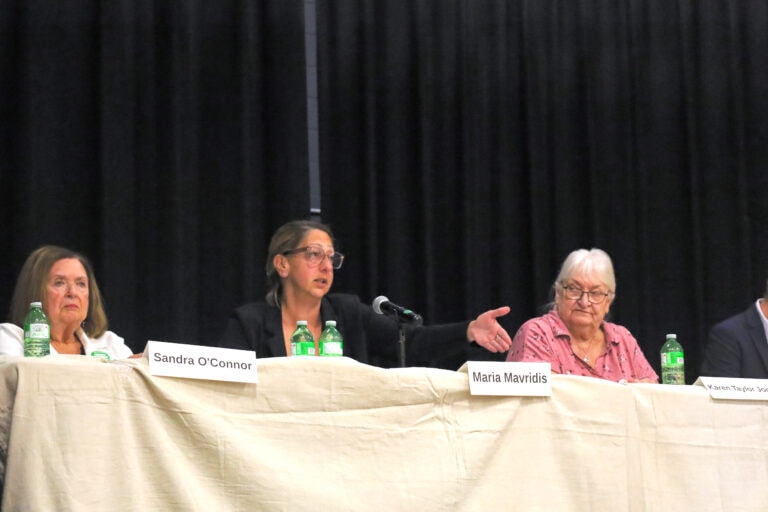
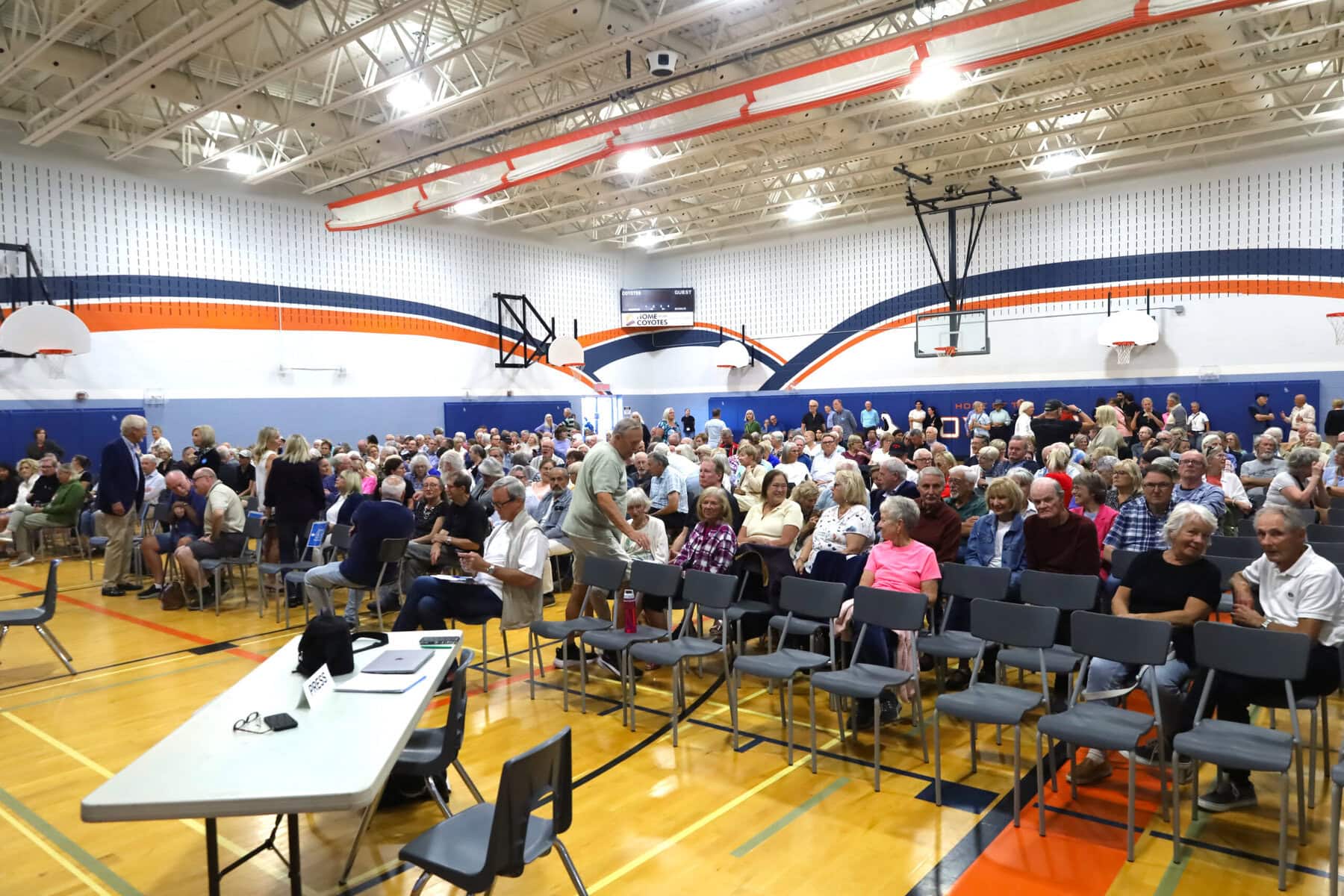
As mentioned off the top, NOTL opted for a complete ban and, as a result, the Niagara-on-the-Lake Residents Association was forced to look elsewhere for a facility large enough in town to host their candidate forums. The Crossroad school’s gymnasium was chosen and the association duly applied for the permits required to hold such events.
Initially however there was some talk by town administration that they would not issue said permits because town staff could not ensure the association would maintain neutrality in their treatment of all the candidates — despite the fact that NOTLRA as an organization had very carefully avoided endorsing any of the candidates.
Apparently, some wiser head in the town administration stepped in, made the decision to correct this egregious overreach by staff (they are not the keepers of the voters’ conscience) and the permits were issued.
But, the fact that the issue came up at all is demonstrative of what needs to change within the corridors of our town hall.
Brian Marshall is a NOTL realtor, author and expert consultant on design, restoration and heritage.