


A senior wants more housing options. A parent wants room for young families to stay. A winery owner wants infrastructure that can withstand the next major storm.
As Niagara-on-the-Lake heads toward the Oct. 26 municipal election, residents are weighing what the town needs next — and what they do not want to lose.
Balancing infrastructure needs, taxes and climate concerns
Some residents believe the next council’s biggest challenge will be keeping infrastructure in good shape while preparing for climate change and keeping taxes affordable.
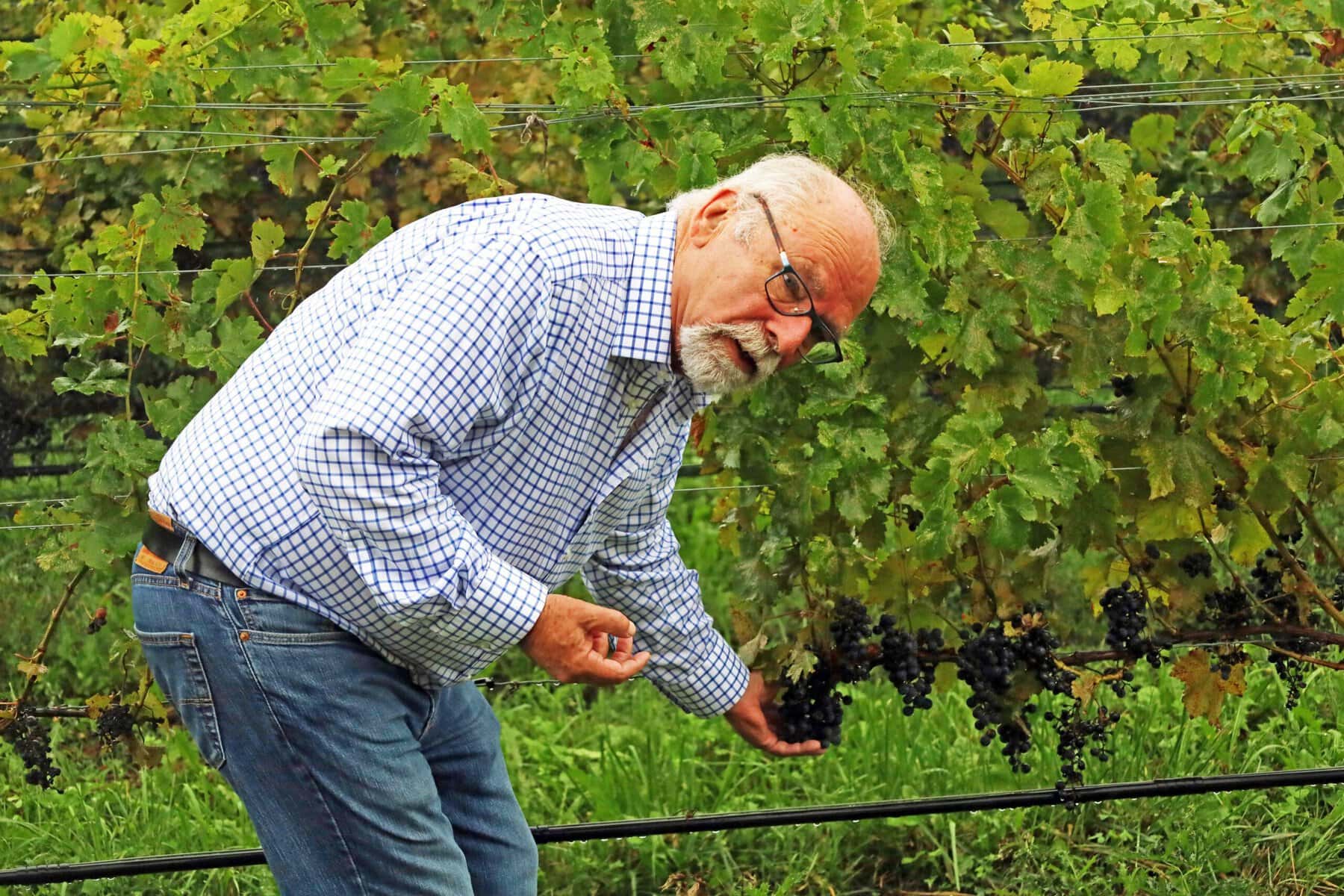
Bill Redelmeier, co-founder of Southbrook Organic Vineyards, wants the town to take a long-term approach to infrastructure as increasingly severe rainstorms threaten homes and farmland. He is also concerned about development replacing farmland with hard surfaces that increase runoff.
“How are we going to adapt and build up a resiliency that allows us to withstand rainfalls, which obviously are going to get more and more common?” he asked.
He said governments need to work together to update infrastructure that was not built for today’s changing weather conditions, rather than focusing on short-term decisions.
Seniors for Climate in Niagara, founded by Lidija Biro, shared its candidate questionnaire with The Lake Report. It asks about public transit, the Greenbelt, renewable energy, climate change and the future of public services such as water and wastewater.
Among the questions is how candidates would make better use of the town’s climate change co-ordinator, Kassie Burns, and which departments should work more closely with her. Candidates have been asked to respond by Sept. 14, Biro said.
For NOTL post office worker Brenda Ferguson, the priority is straightforward: a council that does not raise taxes.
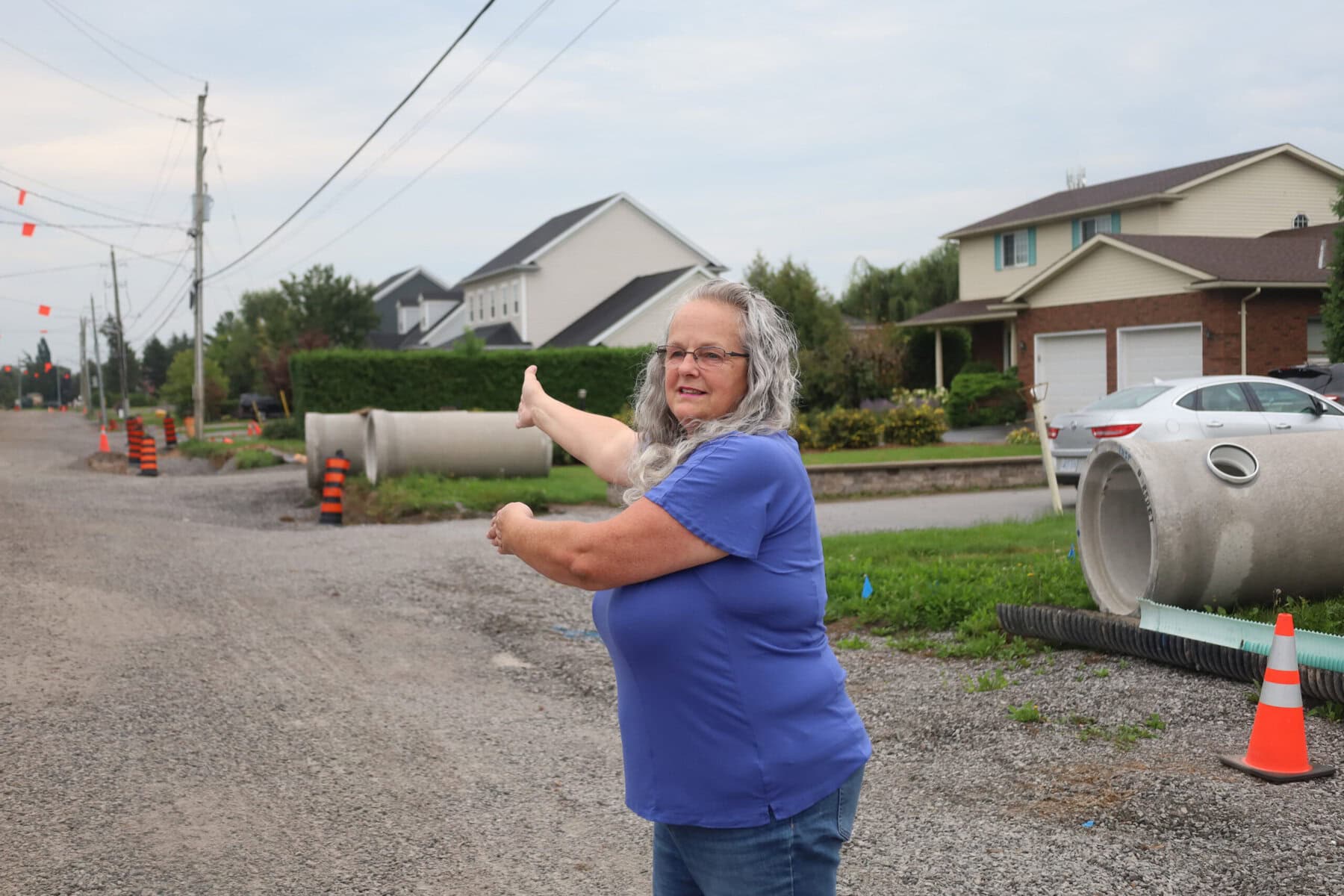
Old Town resident Sheryl Johnson also wants lower taxes and better infrastructure maintenance. She raised concerns about drainage, the Harrison Irrigation Ditch, overgrown vegetation at intersections and what she sees as inefficient use of town staff.
Johnson also wants more support for farmers growing all tender fruits, “not just grapes.”
Gee Adam, a board member of the town’s horticultural society, wants council to pause development for its term and focus on what she described as serious infrastructure deficits.
She said that work should include planting more trees on public and private property to help absorb excessive rainfall.
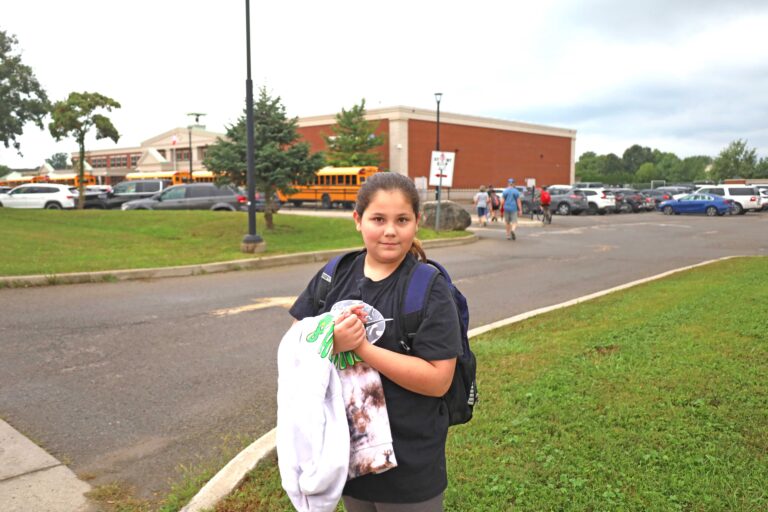
For Tanya Rice, founder of Community Initiative for Animal Rescue, who regularly hosts pet fundraisers at her home on Line 2 Road behind Crossroads Public School, traffic safety is the priority. She said drivers continue to speed on her road despite ongoing construction.
Rice worries that the sidewalks being added to Line 2 Road will not be enough to improve safety, saying drivers already treat stop signs like yield signs. She is also concerned additional housing in Konik Estates Phase 2 could bring more students to the school and increase traffic in the area.
With the road running directly behind the school, she believes a speed limit of 40 kilometres per hour would be more appropriate than the current 50. She hopes the next council will work with the town and Niagara Region to lower the speed limit and ensure it is enforced periodically.
“We need enhanced traffic measures on Line 2.”
Virgil resident Alana Hurov, founder and chief executive officer of Niagara 5000, said affordability, school capacity and infrastructure must be considered alongside support for local businesses and tourism, while keeping property taxes affordable.
As an event organizer, she also wants more opportunities for entrepreneurs and a stronger off-season economy.
Making NOTL a place to age
For some residents, the priority is making it easier to remain in NOTL as they age.
Cindy Grant, NOTL’s 2026 Senior of the Year and a leader of the town’s seniors housing advisory committee, wants more options for older residents. Rather than one large building, the Virgil resident favours several smaller independent-living facilities with some assisted-living capabilities.
“There needs to be hundreds more units,” she said.
Grant also wants regular, scheduled transit around NOTL so seniors who stop driving can still get around town, including to the Shaw Festival.
For fellow senior Ralph Rickard, an indoor swimming pool remains an unresolved priority.
“Swimming is the best exercise for seniors and we have many seniors here,” he said.
Rickard noted that Vintage Hotels did not resume its former spa membership program after COVID. The company did not respond to a request for comment by press time.
How should NOTL grow?
For Julia Murray, head of school at Royal Oak and a mother of three, growth is necessary, but it must create opportunities for the next generation without changing what makes NOTL a place to call home.
“We need diverse housing, a strong local economy, and opportunities for young families and those who work here, so they can remain in our community,” she said.
Murray wants council to follow the town’s official plan, zoning bylaws and planning policies, with exceptions remaining exceptional.
“We need leadership with the courage to think beyond the next development application or election cycle,” she said.
Robin Ridesic, founder of the Exchange Brewery on Queen Street, said residents need to feel confident NOTL is “growing thoughtfully.”
She wants council to balance tourism and development with heritage, agriculture and culture while addressing stormwater and parking problems.
“I really think the struggle for Old Town is getting the balance right.”
Ridesic is raising four children in Old Town and said she wants more space preserved for community use. She pointed to the former Parliament Oak school as an example of what she would have liked to see maintained for the community, and said she hopes the former hospital can serve a similar purpose.
Paul-André Bosc, owner of Paul Bosc Estate Vineyard, is concerned about inappropriate commercial development spreading onto rural agricultural land.
He also wants municipalities to support Canadian businesses through “buy Canadian” purchasing policies and “buy local” promotion.
“I am interested in candidates who are interested in making a national issue a relevant, local issue,” he said.
Who will hold council accountable?
For Ed Werner, president of Brox Company Limited, the election is a test of whether council will uphold the town’s rules.
“This election is about the rule of law and the role of the mayor and councillors.”
Werner’s company took Konzelmann Estate Winery and the town to court over outdoor events that were not permitted under the winery’s zoning and site plan. Konzelmann agreed to a permanent injunction, while the court later dismissed Brox’s attempt to compel the town to enforce its bylaws.
Council later approved a zoning amendment allowing outdoor events at the winery, subject to further approvals.
Werner argues that the sequence shows why voters should elect councillors who won’t change existing rules to accommodate prohibited activities.
“Or the laws will continue to be ignored,” he said.
Queenston resident Marion Hasselback also questions whether the town’s bylaws carry weight.
“I don’t understand why we have bylaws and an official plan that is approved by the province, yet they rarely make developers comply,” she said.
Hasselback wants development proposals studied for their effects on sewers, roads and drainage, and rejected when those effects are negative. She expressed frustration with the Ontario Land Tribunal process and what she sees as developers’ ability to successfully challenge council decisions.
“It really feels like it is out of our hands.”
What will strong mayor powers mean for NOTL?
Hasselback is also concerned that strong mayor powers will give too much authority to one person and leave councillors with less say in decisions affecting residents.
Ron Simkus, administrator of the NOTL Residents Association, shares that concern, saying the election carries an added responsibility because of the province’s changes to municipal powers.
“Electing a strong mayor is a really serious issue,” he said.
The association is hosting three all-candidates forums at Crossroads Public School on Sept. 14, Sept. 25 and Oct. 2.
Simkus said its election committee reviewed hundreds of questions and the results of a May public survey before developing nine questions for each session. Every candidate at a given session will be asked the same questions.
Biro said unanswered questions from the Seniors for Climate in Niagara questionnaire will also be raised at the all-candidates forums at Crossroads.
Keeping NOTL distinct — and its five communities together
Former NOTL councillor Jamie Slingerland, now director of viticulture at Pillitteri Estates Winery, sees amalgamation as the biggest issue facing the town.
He worries it would threaten farmland, local decision-making and the tax base, arguing experienced councillors with provincial relationships are best positioned to defend NOTL.
“The only politicians capable of stopping this are veteran councillors with working relations with the present provincial government,” he said.
“I have been around long enough to know that you don’t put in place a rookie political opponent to deal with an issue this big, it’s just too big of a risk.”
Johnson also believes the town is too unique for a cookie-cutter regional approach.
“We’ll need to maintain our heritage.”
For Penny Milligan, co-founder of the 100+ Women Who Care Niagara-on-the-Lake chapter, NOTL is one town made up of five distinct communities, each with different needs and priorities.
A roundabout in St. Davids may matter little to someone in Old Town, she said, while a Glendale resident may not understand Old Town concerns about development.
“What I feel we need is strong, thoughtful leadership that recognizes and respects these differences while also understanding that we are ultimately one community,” she said.
The question now is how the next council will turn those competing priorities into decisions that serve the town as a whole.