


Dear editor:
Over the years, many of us have publicly and privately wondered what are town staff and councillors thinking when they make decisions that don’t appear in the best interests of its residents.
This four-part series of short letters to the editor will hopefully give some insight into that thinking behind the decision-making regarding flooding, finances, infrastructure, consultant reports, transparency versus privacy and safety.
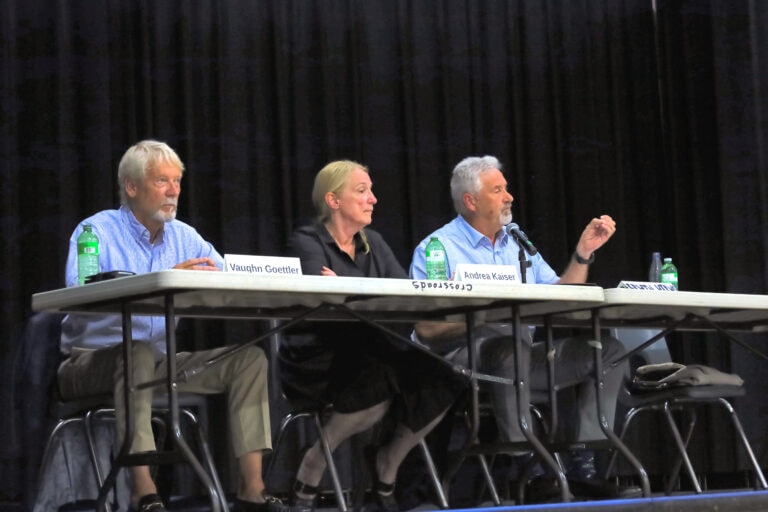
A meeting was held on June 29 between Coun. Erwin Wiens, Jordan Frost (engineer and director of public works and infrastructure) and a number of St. Davids residents to discuss a variety of issues that perhaps can shed some light on the aforementioned topics.
Lord Mayor Gary Zalepa had, in a prior year, shrugged off one of the significant rainfall events we’ve had as a once in 500-year storm. Historical concerns and warnings from residents about water drainage fell on town council’s and staff’s deaf ears.
Water drainage and flooding problems have existed in St. Davids, Four Mile Creek and many other NOTL locations for years. After many years of ignoring the problem specifically in St. Davids, the town finally recognized there was one.
They recently purchased more than nine acres for approximately $1.9 million to establish a much larger reservoir to handle increased water flows from approved developments.
While the town seems to have found a solution to this problem, the solution won’t be operational, (according to Mr. Wiens), for another two years. In the meantime, construction and approvals on new developments continue, further stressing the existing inadequate system.
Doesn’t this sound like, and look like, development approvals preceding the adequacy of infrastructure to service new developments? Wouldn’t an inadequate infrastructure be justification for disallowing any further unwanted developments until the infrastructure was brought up to date?
I think the Ontario Land Tribunal would be out of its mind to approve developments when the infrastructure is critically inadequate. But our town council have decided to appease these development requests, and not contest them at the Land Tribunal. Instead, they have approved them modifying the existing policies and guidelines.
Mr. Frost pointed out that hydrological studies in St. Davids (and probably other parts of NOTL) had been conducted by consultants (paid by the developer). Those consultants concluded there was no cause for concern — the system could handle the additional water flows.
He indicated that the hydrological analysis took into account 100 and even 500-year storms. I’m not sure he has seen the flooding impacts of recent storms.
Mr. Frost stressed that developments were important to the financial health of the town. Our taxes would jump significantly if they were not approved. The implication was this source of revenue was the driving and overwhelming factor to approve developments. Other factors weren’t mentioned.
It seems like the town is a circular financial dilemma. Stopping developments results in lower revenue to fund infrastructure, increased property taxes and unhappy residents who elect council. Approving developments results in infrastructure exceeding existing critical levels, a moderate increase in property taxes and residents enduring infrastructure shortcomings.
Which evil do they choose? The one where the electorate aren’t too impacted financially?
So, as Brian Marshall asked: what happened to all the development fees received from developers over the years that should have funded infrastructure?
Kyle Freeborn would have been instrumental in recommending the allocation of funds to specific requirements, but after 14 years, he’s not longer employed with the town.
To be continued…
Gienek Ksiazkiewicz
St. Davids