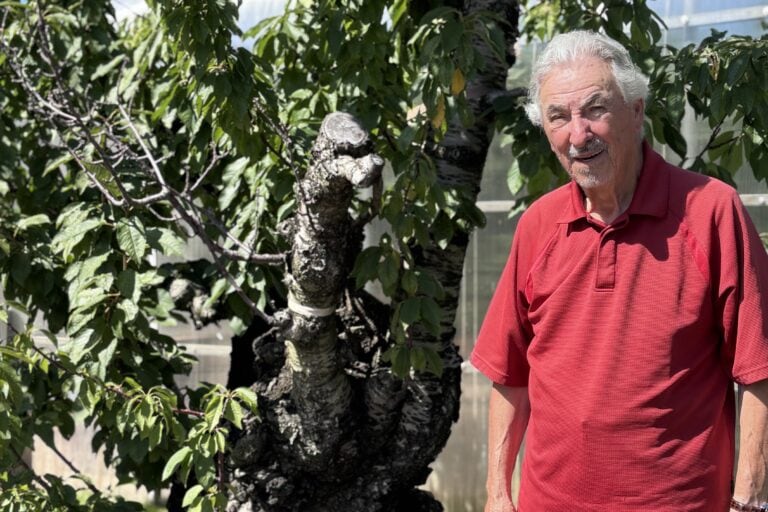

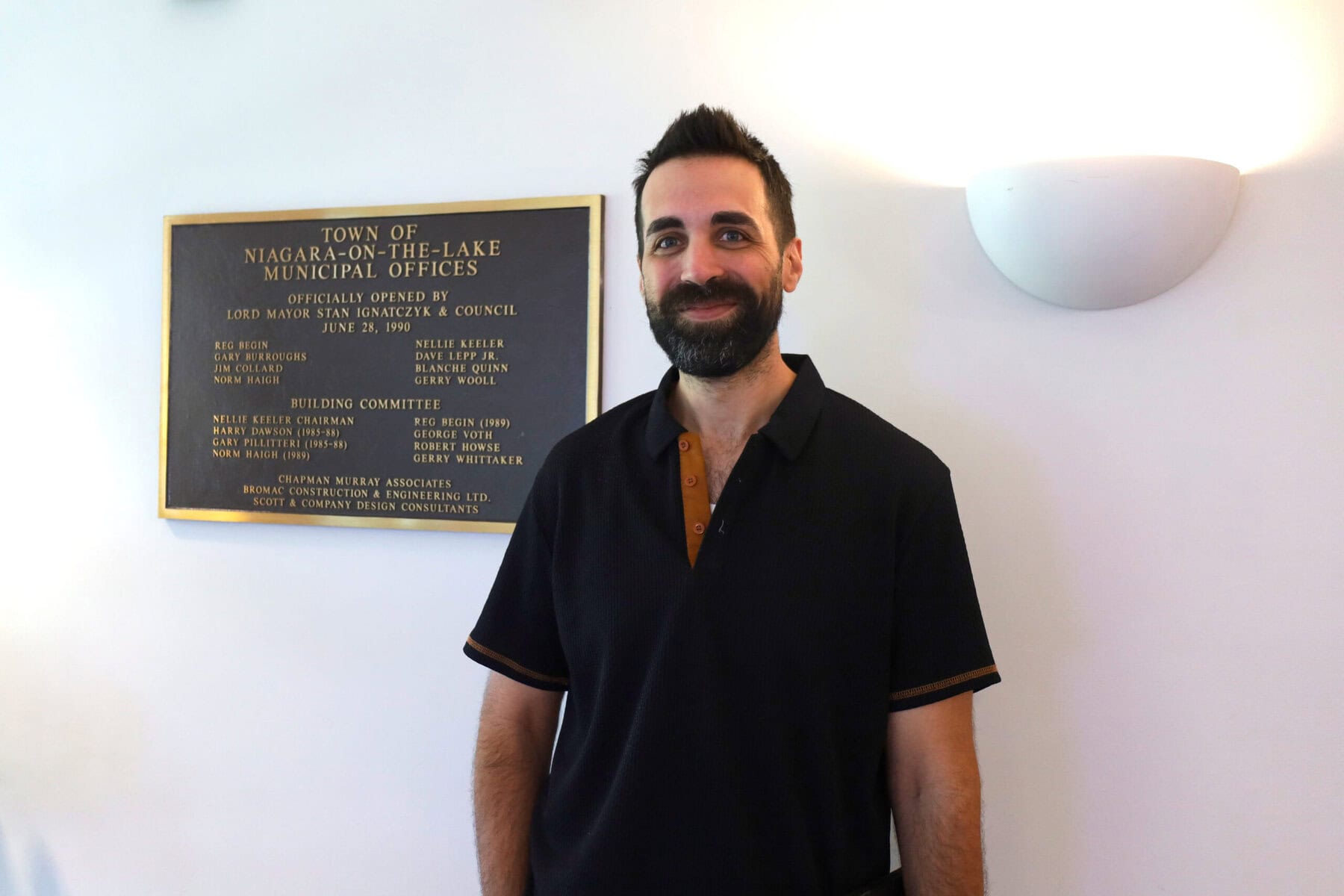


Resident Nicholas Colaneri doesn’t want Niagara-on-the-Lake’s next council choosing between priorities.
He wants everything moving at once.
The council candidate in this year’s election says the town has spent too long reacting to problems instead of getting ahead of them. He says council tackles one issue while others are left waiting — and there is too much work to keep doing things that way.
“Everything from infrastructure to the airport. Amalgamation to swimming pools. The old hospital to data centres. Policies to accountability,” Colaneri told The Lake Report.
“One thing at a time is how this town has been run.”
Colaneri said he wasn’t planning to run until residents approached him after watching him speak before council on more than 10 applications.
“From the gallery, I could shed light and advocate on their behalf,” he said. “At the table, I can vote and act on their behalf.”
Colaneri said NOTL’s biggest threat is decisions about the town being made outside of it.
“Amalgamation, losing every elected seat at the (Niagara) Region, provincial law that took resident’s rights to appeal a planning decision away, power that lets a refused application come back, airport expansion sitting in our fields built for growth in another city.”
“None of that is one bad decision, it is a direction,” he said.
To him, NOTL’s greatest strength is the people who live here and their willingness to show up. Colaneri pointed to farmers and neighbours filling meeting rooms and residents fighting to protect heritage as examples.
“People thinking of people. Most places do not have that.”
On development, Colaneri said tension between residents and developers has grown after repeated proposals affecting neighbourhoods.
“Development is not wrong,” he said. “Done responsibly and ethically, it is a good thing for a town.”
But, he added, “The development has to suit the community.”
“Not the other way around,” he said. “The rules and the people come first.”
Colaneri also wants stronger enforcement when developers repeatedly work without required approvals.
“Stop the work and keep it stopped. Lay the charges the law already allows for.”
He said there should be no retroactive approvals for unauthorized work and penalties should be large enough to have an impact on a project.
“Work does not go ahead without approval by accident. Once, maybe, is a mistake. Twice is how somebody operates,” he said. “It should be treated that way.”
Colaneri takes issue with how council handled the Royal George Theatre proposal.
Asked what council got wrong, he answered: “All of it.”
He said the question of whether the existing theatre could have been kept and expanded should have been answered before approvals moved forward.
“Keep it if it can be kept. If it cannot, show the work.”
“Demolition is the one decision you never get to take back,” he said. “Ask yourself why nobody ever had to prove it could not be saved.”
On the Rand Estate, Colaneri starts with two words: “Protect it.”
“If development needs to happen then that comes secondary,” he said.
He wants the buildings and landscape treated as the beginning point, with development worked around what can reasonably fit on the property and in the neighbourhood.
Colaneri also wants the old hospital to remain publicly owned and used for the community.
“It should stay ours and it should be what people said they wanted,” he said.
He questioned the town’s move toward a parking garage concept and suggested exploring whether nearby Parks Canada land could help address parking instead.
“There is Parks Canada land right beside that site,” he said. “Could NOTL buy or lease the land to solve the parking?”
Colaneri also weighed in on the town’s approach to media questions.
Earlier this year, chief administrative officer Nick Ruller directed town staff not to respond to what the town considers opinion-based media requests, instead focusing on factual and policy-related questions.
“Not a single part of me is okay with this position,” said Colaneri.
He said the approach gives town hall too much control over what information reaches residents.
“A town that decides which questions it will answer is deciding what the public is allowed to know,” he said.
“That is not communications; that is control.”
And, Colaneri said, the problem isn’t just about reporters.
“If someone whose job is asking questions cannot get an answer out of this town, what chance does a resident have trying to find out what is happening on their own street?”
With the next council dropping from nine members to seven, Colaneri said the stakes are higher.
“Fewer seats means each one carries more weight.”