



Dear editor:
Yes, it is Earth Day. It is celebrated annually on April 22. As of today, Wednesday, April 22, 2026, it marks the 56th anniversary of the environmental movement, which began in 1970.
Over a billion people worldwide participate in activities to promote environmental protection. I was looking out the window with Bella, my tuxedo cat, and what should I behold but a red-breasted merganser walking in front of 39 Garrison Village Dr., our house.
To his credit, he looked both ways before crossing the street, and going to the architect and developer of the Village, John Hawley’s house was somewhat poetic. I am a retired teacher, so please humour my fun facts.
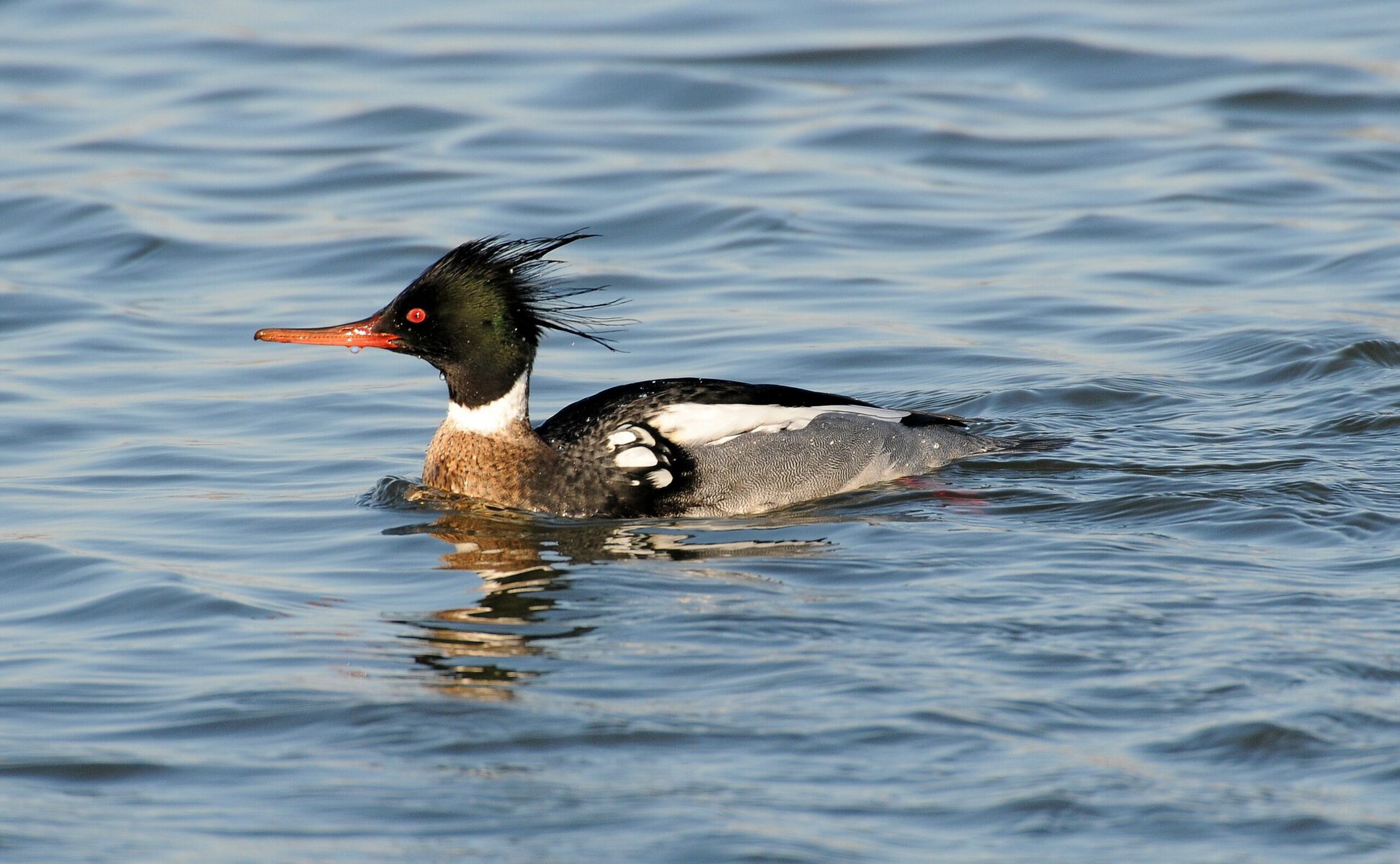
Red-breasted merganser (Mergus serrator), a type of diving duck often called a “sawbill.”
Distinctive features: The male features a dark, metallic green head with a spiky, double-pointed crest, a white neck ring and a rusty-coloured breast.
Bill: Both sexes have a long, thin, bright red bill lined with tiny, sharp serrations used for gripping slippery fish.
Habitat: They are medium-sized sea ducks found in both freshwater and saltwater habitats, particularly during winter and migration. The slender red-breasted merganser is found across Ontario, breeding in northern areas and wintering along the Great Lakes, including Lake Ontario
Size: Adults generally weigh between 1.7 and three pounds and measure 20 to 25 inches in length. These handsome diving ducks belong to the sawbill family, named for their serrated bills, used for catching fish.
Diet: They like salmon and trout, which has brought them into conflict with game fishermen. At home on both fresh and saltwater, red-breasted mergansers are most commonly seen around the coastline in winter. They are very sociable, forming flocks of several hundreds in the autumn.
Now, many people think of ducks in a kind of generic sense (quack) and don’t realize that there are many varieties of ducks, or that most of them are really striking when seen through decent optics — at least the males are.
In the duck world, mature males (or drakes) often sport fancy plumage, while the females (hens) and first year birds are much more understated and sometimes even drab.
This is because males need to look dandy to compete for mates, and females need to blend in with the surroundings while sitting atop ground-based nests.
There are all kinds of different ducks, but in a simplified sense there are two basic categories: dabbling ducks and diving ducks. Dabblers feed by tipping their tail feathers skyward and nibbling submerged aquatic vegetation. They tend towards being vegetarian and include species such as the mallard, black duck, wigeons and teals.
Diving ducks dive from the surface and use wing flaps and webbed feet to propel themselves along underwater and forage for food. They are generally more carnivorous than dabblers and often chase and capture small fish.
The majority of our winter ducks are diving ducks. Divers can be spotted offshore along our sandy beaches, off of rocky headlands, in the salt ponds and in the breach ways. Diving ducks will often congregate in large groups known as rafts and will sometimes mix with other species.
The dabblers (aka puddle ducks) are generally found in the backwaters and not in the ocean. An interesting point of difference between the two is that when they take flight, puddle ducks leap from the water and take off almost vertically, whereas divers flap and run along the surface to become airborne.
Enjoy Earth Day and waddle around, you never know what you might spot.
Anita Barber
NOTL