


Keith McNenly
Special to Niagara Now/The Lake Report
In modern English, the word “oligarch” surged with coverage of post‑Soviet privatization and Russian oligarchs placed in control over strategic institutions and industries.
The rise of oligarchs in capitalist societies differs from Russia in origin, but not in outcome. Their story typically begins not with a fire-sale transfer of state assets to political friends, but with entrepreneurship, and early control of valuable markets. The difference often ends there: government policy and public money can accelerate their growth, as government regulators decline to check monopolization.
Once established, capitalist oligarchs use scale and capital to buy up competitors, dominate emerging technologies, and shape the rules of the market to protect their position: cultivating influence through lobbying, lavish campaign support, and are rewarded with privileged access, and approvals such as corporate mergers.
Citizens feel this in rising prices for goods and services, wage stagnation, loss of opportunity, but most acutely when consolidation reaches information systems: ownership of news, television, cable, and major social media platforms, eliminating effective competition and punishing opposing viewpoints.
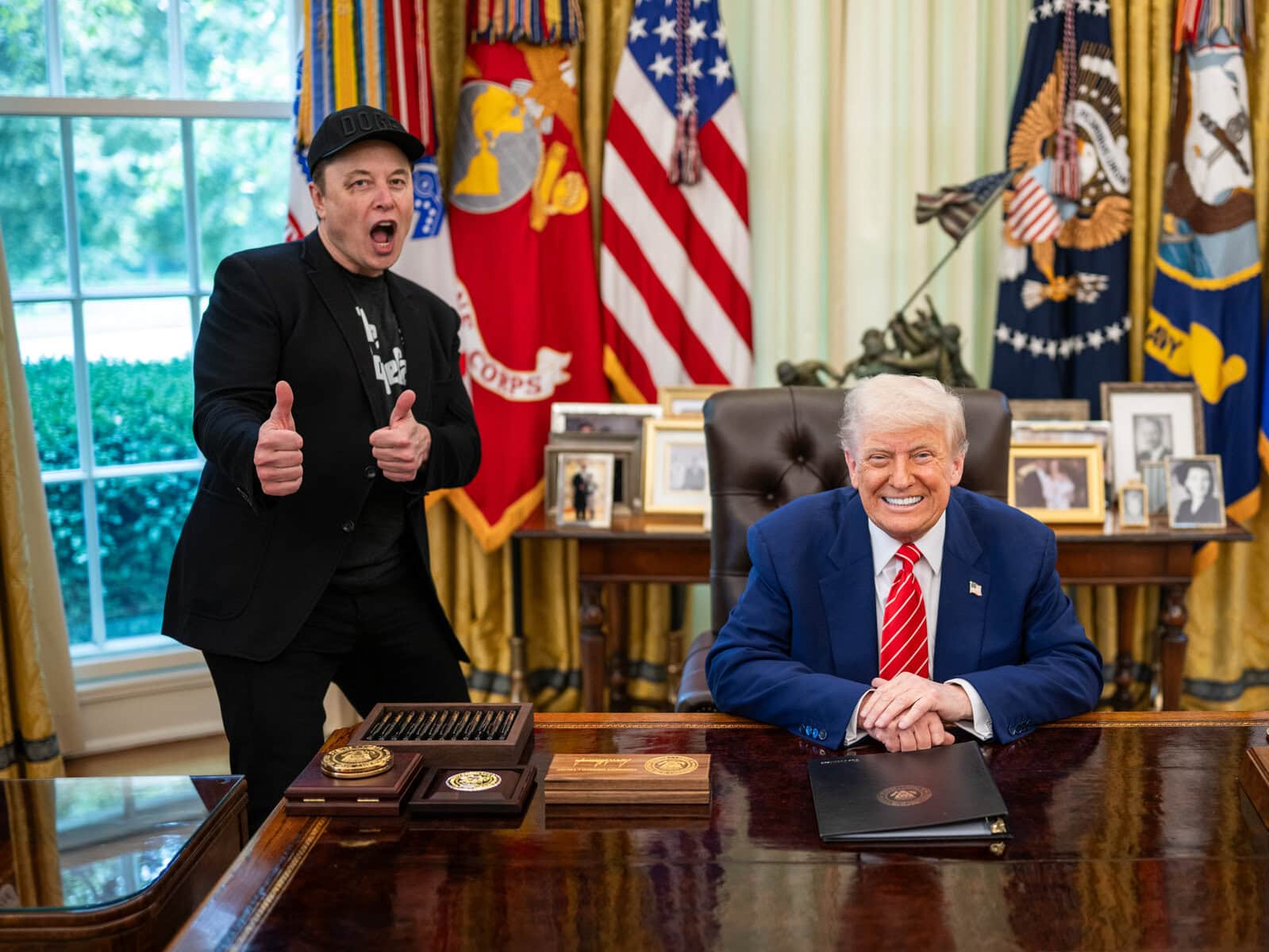
The world now has its first trillionaire in the form of American businessman Elon Musk, a single individual whose personal power rivals that of many nations. Unelected and effectively unaccountable, his preferences could produce near-sovereign consequences.
He is the first member of a new exclusivity, a club that under present conditions of influence could cast the middle class into rising levels of penury.
To grasp the scale, imagine someone possessing one trillion dollars at the time of Jesus Christ’s birth. Even spending $1 million every day for roughly two millennia, they would still need almost 750 more years to run out — and that ignores investment returns. Compounded income alone could exceed the GDP of many countries.
A trillion dollars could materially relieve a health-care delivery crisis or expand housing supply. Concentrated in one person’s hands, however, that hoard is often economically inert, reinforcing inequality and undermining the conditions that sustain a growing middle class.
Oligarchs are now harnessing their newest tool: AI.
When concentrated under corrupt leadership and deployed primarily to enhance private wealth rather than the public good, the consequences are unlikely to be benign.
The earliest effects are already visible in social media’s ability to shape public discourse, amplifying narratives that benefit oligarchs and their political leaders, accelerating wealth accumulation while deepening a cult like following.
Social media has traveled a long way from its early promise of simple connection — grandparents sharing photos of their grandkids and family vacation updates.
Social media is increasingly turning its attention to a highly lucrative target: children.
There is no historical or medical precedent that fully prepares us for how early, sustained addiction to algorithmic feeds may reshape development, transforming carefree childhood into a monetized life of attention capture, and we do not yet know what outcomes will follow as these children reach adulthood. Think of Mao Zedong’s cultural revolution “re-education” propaganda camps — but self-serve.
As manipulation scales, reality becomes harder to verify while truth and fiction blur. That is not a reliable environment for the developing minds of coming generations.
In this environment, almost any social media message, good or bad, flattering or condemning, should first be dismissed as manipulation, engineered for profitable clicks. As need of that cynicism becomes pervasive, trust collapses and shared reality fractures.
Nature offers opportunity and imposes constraint in equal measure. Politics often favours only the merest few without balance or constraint. Like a cancer that metastasizes and consumes the body, oligarchy is spreading through the body politic, feeding on political favour, gathering wealth off the backs of the middle class worker.
The remedy is deliberate regulation: democracies must ensure no individual, firm, or network can dominate markets, buy governments, or manufacture consent at scale through media, or AI.
Without hard boundaries including progressive taxation and dissolution of monopolies, oligarchy will continue to deconstruct society until elections, law and truth become historical artifacts.
Canada is on the right track, starting with regulations to protect children’s developing minds from the algorithms of social media. Let’s not stop there.
Shared reality is already under attack. Cheap AI can forge convincing video and audio in seconds, turning history from an anchor into quicksand: nothing in social media can be trusted without skepticism’s critical examination.
In that world, the most outrageous lie will outcompete the most obvious truth.
The question isn’t whether this machinery can be built; it already is.
Niagara-on-the-Lake resident Keith McNenly was the chief administrator of the Town of Mono for 41 years.