


Susan Elliott and
Dr. Robin Williams Foster
Special to The Lake Report
People may still think of libraries as quiet places, but they are under constant threat from well-organized efforts to ban books and stifle free speech, according to a hard-hitting documentary screened here recently.
“The Librarians,” shown at the St. Catharines Performing Arts Centre on April 30, documents the struggles that libraries and their staffs face in the United States from individuals and groups that seek to restrict citizens’ access to information in school and public libraries.
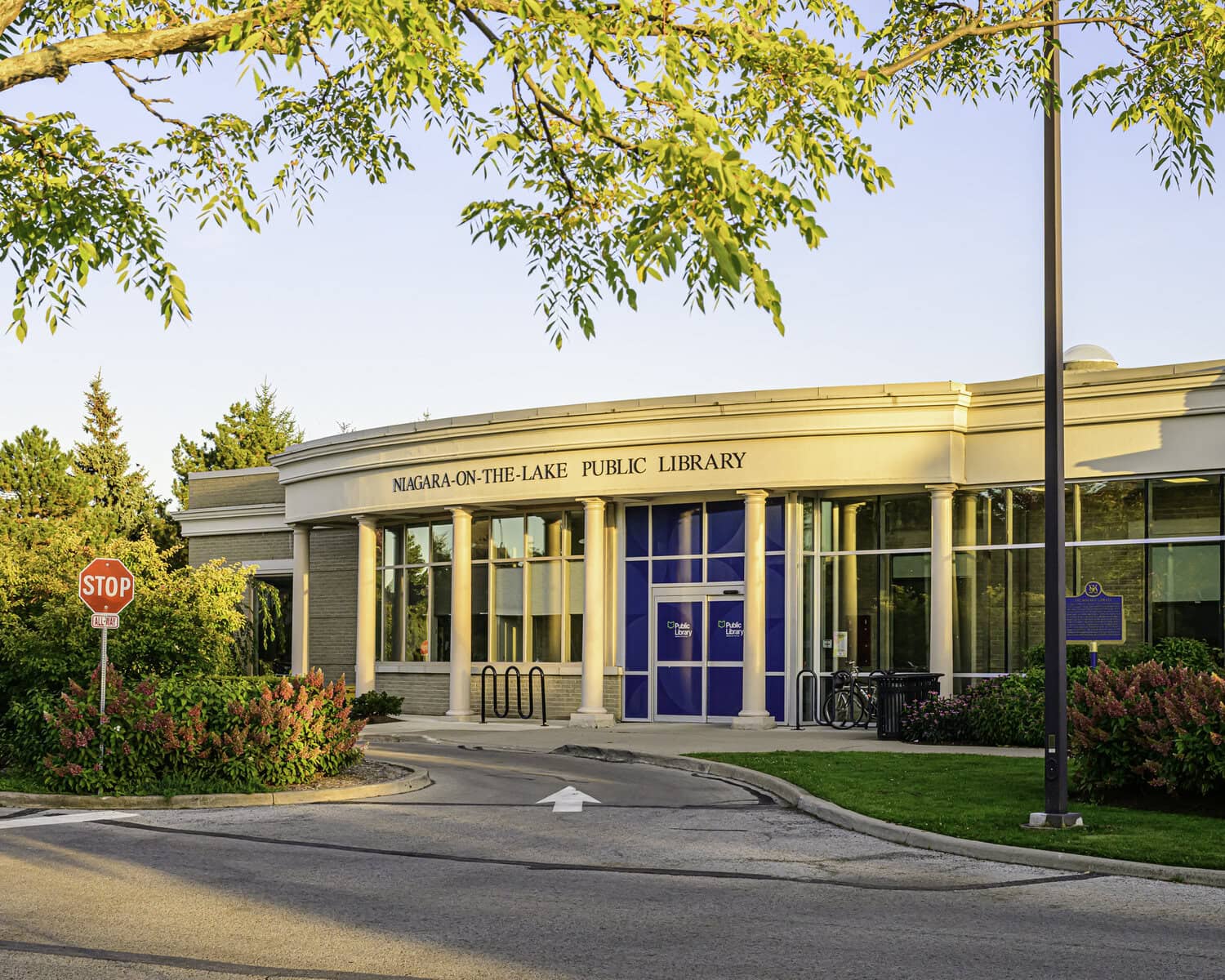
Screening of the 2025 film, executive produced by well-known actor Sarah Jessica Parker and directed by Kim A. Snyder, was sponsored by the Niagara-on-the-Lake Public Library to build awareness and understanding of the vital importance of libraries in our communities. The near-capacity audience included many regional librarians from all parts of Niagara and Brock University.
Following the experiences of U.S. librarians who have come under direct attack for simply keeping books on the shelves, the film depicts a deep assault against librarians, funded by nationally coordinated campaigns with deep pockets and murky agendas.
Through the librarians’ personal stories and their testimony at intense public meetings, the film shows how those who work in what used to be a quiet profession have become frontline defenders of intellectual freedom and the right to read.
“The film reminds us of how important it is to protect the long-standing role of public libraries,” says Wayne Scott, co-chair of the NOTL Library board.
“Libraries provide access to ideas and information from many different points of view and they remain open and free for everyone, even when some materials may be seen as offensive or upsetting to some people,” he said.
Daryl Novak, co-chair of the NOTL Library board, says the organization sponsored the film to make people aware that restrictions to freedom of speech can spread easily and quickly unless people are aware of the threats.
“The only way to make sure that what ‘can’t happen here’ actually does not happen here is to be aware of the threats in other places. The film shows this clearly,” Novak said.
While the film focuses on the U.S. efforts to ban books and even prosecute librarians for simply keeping books on shelves, libraries in some parts of Canada have also come under threat.
On May 13, Alberta Premier Danielle Smith’s United Conservative Party government passed Bill 28, legislation that gives the provincial cabinet direct power over how local libraries operate. This is a significant change to that province’s Libraries Act.
The new law lets politicians demand that librarians restrict some books from being accessed by children under 15. The politician now gets to decide which books should be withheld, not the local librarian or local families. Alberta’s Coalition of Public Libraries has decried the government’s move as “addressing a problem that doesn’t exist.”
Novak adds that, “The library can be faced with similar and other complex issues. While defending the right of individuals to express opinions of their own as their own, the library itself must also guard against the promotion of any opinion that might appear to represent an organizational position at odds with library policy.”
“At our library, collection development and programming are guided by board-approved policies and professional library principles supported by organizations such as the Ontario Library Association,” says Laura Tait, the NOTL Library’s chief executive officer and chief librarian.
The Ontario Library Association’s stated policy is that this province’s libraries “have the important responsibility to facilitate expressions of knowledge, creativity, ideas and opinion, even when viewed as unconventional or unpopular.”
The Canadian Charter of Rights and Freedoms supports freedom of thought, belief, opinion and expression. Canadians have the right to access diverse ideas, literature and viewpoints without censorship, allowing libraries, schools, bookstores and readers to explore both popular and controversial works.
Susan Elliott and Dr. Robin Williams Foster are members of the Niagara-on-the-Lake Public Library’s board.