



Keith McNenly
Special to The Lake Report
Canadian philosopher Marshall McLuhan coined this adage, “The medium is the message,” to explain how the form of communication shapes meaning — from television to today’s social media and AI. Politics works the same way.
A national leader broadcasts the country’s values, its temperament and its intentions. In that sense, the leader is both medium and message.
Current American governance is an extreme example. Many Americans, by electing the current president (and Congress) — or by withholding support from alternatives — used that signal as protest: frustration with institutions, impatience with a poor economy, a willingness to “throw a monkey wrench” into a system they believed no longer served them.
Whatever the motives, the effect has been to elevate a style of rule marked by impulse and grievance, thin on empathy, short of foresight and a steady erosion of democratic restraint.
This brings a basic truth into focus: in national leadership, character is not a side issue. It is the foundation. Most of what a government does is implemented by professionals across departments and agencies.
Policy detail can be learned, competent advisers can be hired, but character cannot be outsourced. A leader’s moral standards determine which instructions are given, which norms are respected, which institutions are treated as obstacles.
Good people usually cannot work in organizations where their moral standards are consistently challenged for long. Too many compromises accumulate; the job becomes a daily exercise in rationalizing corruption.
Political leaders of bad character understand this. They don’t merely prefer loyal subordinates; they require them. Corruption becomes self-protecting: a dishonest leader must appoint dishonest underlings, and dishonest underlings select more of the same.
Over time, the rot spreads from cabinet tables to senior departments, until public work is less about duty and competence and more about loyalty tests, grift and fear.
That is why electing a leader who places public interest subordinate to personal ambition is never only about one person. It is a decision about the ethical ecosystem of an entire government.
Once bad faith is seated at the top, the spiral can accelerate quickly. Some countries live that condition — long enough for corruption to feel normal and for cynicism to replace citizenship.
Frustration with government is not illegitimate. Democracies can fail ordinary people: wages lag, housing becomes unreachable, services degrade and elites appear insulated from consequences.
But frustration can be used constructively only if the electorate retains a basic civic discipline: demand change but preserve the foundation first — elect integrity — reward truth.
The contrast between the United States and Canada can be framed as two messages. The first from Americans a year and a half ago, upsetting both domestic and the global order, the second from Canada six months later in swift reaction.
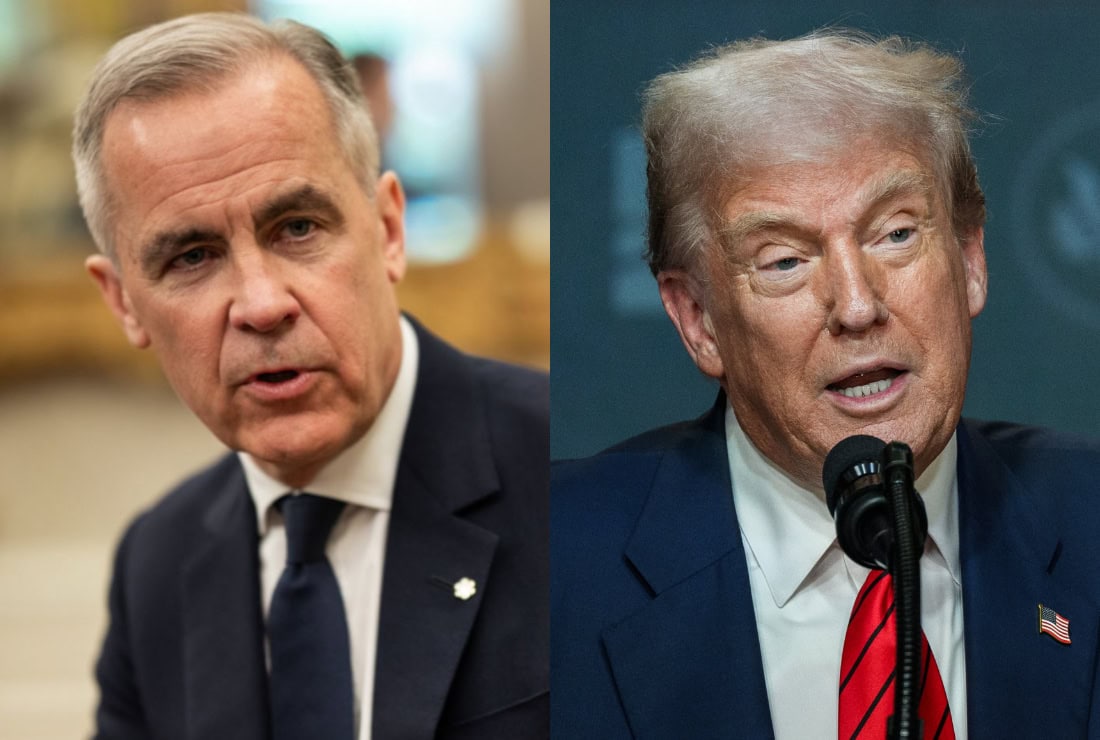
America’s electors produced a politics of disruption and grievance; Canada elected Mark Carney, representing order and stability — two sharply different broadcasts.
Our divergence in political style has deep roots. The United States and Canada were one British colony until 1776, when the American Revolution split the continent. Loyalists, aligned with Britain, largely fled north; revolutionaries built the American “experiment.”
Historians often describe loyalists as valuing order, stability and legality, while revolutionaries saw Britain as a corrupt tyranny that denied them representation. Those origin stories helped shape two democratic cultures: different instincts about institutions, and different tolerances for disruption.
National elections send a message from citizens to the world. The message is not only policy; it is posture, it is what allies can expect, what adversaries can exploit and what norms will survive the next stress test. Citizens choose the leader — the message.
There is a bitter irony as the United States celebrates its 250th anniversary: the framers anticipated authoritarian leaders, but not modern concentrations of wealth and influence capable of pressuring — or purchasing — the very counterweights meant to hold power in check.
Authoritarian forces are aligning across borders, and the free world again needs coherent leadership. Canada’s message, in that context, has been clarity of purpose.
Carney speaks plainly about stronger partnerships among mid-sized democracies — the message at home: defend sovereignty, strengthen the domestic economy and build capacity — lowering internal trade barriers, investing in infrastructure and taking security more seriously.
McLuhan’s insight remains: the leader is the message. Carney is a message from Canadians that stability and legality are a greater national strength than disruption and grievance.
Niagara-on-the-Lake resident Keith McNenly was the chief administrator of the Town of Mono for 41 years.