


Niagara-on-the-Lake councillors spent roughly an hour Tuesday arguing over a simple question with big consequences for the town: what planning work should staff focus on in 2026?
The debate unfolded as council reviewed a proposed planning work plan organizing 34 active projects into three tiers based on urgency, council direction and community impact.
Staff said the recommended priorities, tied to housing, agriculture, heritage, urban design and development, reflect what the department can realistically handle this year without requiring more funding or stretching staff too thin.
At the centre of the disagreement was whether council should reshuffle staff’s proposed priorities.
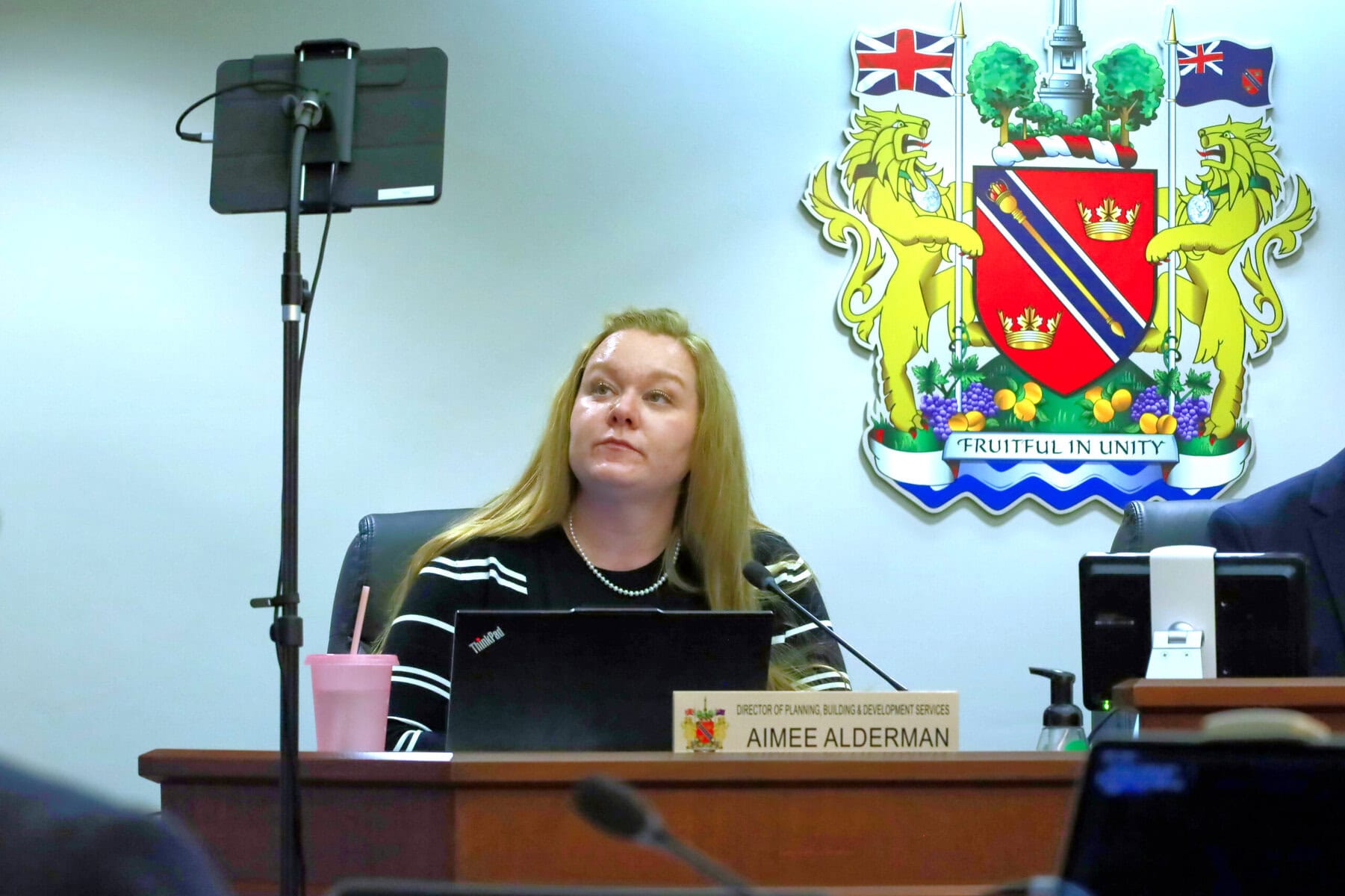
“What is being recommended this evening is that staff advance the work for those eight or nine items that are listed in the report — only — for 2026,” said Aimee Alderman, the town’s director of planning, building and development services.
That list includes eight items: Tier 1 projects like the housing needs assessment, Queen Street secondary plan, on-farm diversified use review and ordnance boundary stone restoration, Tier 2 projects including the urban design review panel, heritage designation work and site plan guidelines, and one Tier 3 project, an update to the town’s additional residential unit guide.
Alderman said all recommended projects are expected to be completed in 2026 except the housing assessment, Queen Street plan and on-farm review, which would begin this year but likely continue beyond it.
During the discussion, Coun. Maria Mavridis questioned whether councillors were treating the town’s three planning tiers as a ranking system rather than organizational categories.
Alderman said all projects on the list are considered important and the tier system was mainly created to help staff organize the town’s growing workload.
Coun. Sandra O’Connor argued council should use the meeting to rethink the order of those priorities.
“This is the only opportunity we have to do this.”
O’Connor said she was frustrated that staff presented council with a recommended list of priorities while advising against changes to it, arguing councillors should have had more say in setting the town’s planning agenda for 2026.
“To me, this is not consultation,” she said.
Most councillors rejected that argument, saying council already had opportunities to shape priorities through earlier strategic planning discussions and work plan meetings with staff.
Lord Mayor Gary Zalepa said councillors were invited in February to review departmental work plans, while Mavridis said staff had specifically asked council members to meet and discuss workloads and priorities.
“These are all the things that we’ve talked about over the course of the last four years,” Coun. Tim Balasiuk said about the listed priorities.
Coun. Erwin Wiens warned against changing direction midway through ongoing projects.
“This is about getting stuff across the finish line,” he said.
O’Connor also proposed moving the Chautauqua neighbourhood review, the community planning permit system and the heritage priority designation list into the town’s top tier of priorities, while lowering airport growth planning and the housing needs assessment.
The airport incentives and growth management project was not one of the eight recommended priority projects for 2026, but was listed under Tier 2 in the broader planning matrix.
She also questioned why the stone restoration was treated as a higher priority, calling it “rather minor.”
Alderman repeatedly warned that rearranging or adding projects could mean revisiting staff availability and costs.
O’Connor’s amendment ultimately failed in a vote, leading council to approve the original 2026 planning priorities list as is.