

0.2 C
Niagara Falls
Wednesday, December 10, 2025
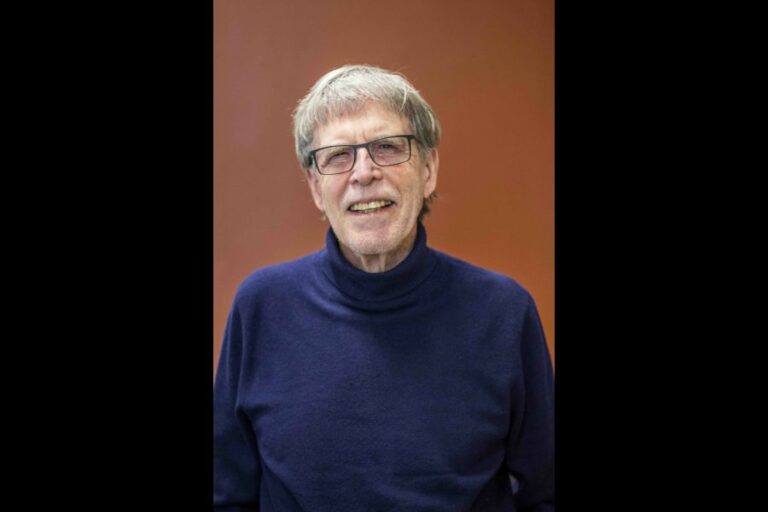
Dr. William Brown is a professor of neurology at McMaster University and co-founder of the Infohealth series at the Niagara-on-the-Lake Public Library.

Author's Latest

Dr. Brown: Avian flu, a.k.a. H5N1 – the next pandemic?

The possible transmission of H5N1, also known as bird flu, into the human population, and then from human to human, “would put us a risk for a second pandemic in less than a decade, and this time, the political climate has changed and might hobble our response to a possible pandemic,” writes Dr. Brown.

Dr. Brown: The tiny and the gargantuan in the universe

“Heisenberg was right in his day — there were no methods for ‘seeing’ atoms, never mind, electrons. But these days the first fussy pictures of atoms have been seen and electrons tracked,” writes Dr. William Brown, covering two scientific objects of recent fascination for him: A giant red star and a photon of light.

Dr. Brown: Einstein: What he got right and wrong

“Einstein was a brilliant theorist, bold in his thinking, relentless and determined,” writes Dr. William Brown. “But he could be stubborn to the point of failing to recognize inconvenient facts derived from his own studies.”

Dr. Brown: Computers — early days to modern times

In this week’s column from Dr. Brown, he traces the evolution of computer technology’s use in the field of scientific research, from its earlier, more elementary uses in the late 20th century, to the unfolding possibilities of today’s AI machine learning.

Dr. Brown: Protein disorders and epigenic editing

Gene editing once held “the promise of fixing mutant genes responsible for the mutant proteins that cause hundreds of other protein-related diseases,” writes Dr. Brown. “Unfortunately, transforming theory into practice is difficult.”

Dr. Brown: What AI can teach us about the human brain

“Like the human brain, AI acquires large databases (sets for AI), which cover a broad range of subjects sequestered in different sets. The issue is: how does AI choose from among different sets of data to better focus and solve the problem or question at hand?” writes Dr. Brown.

Dr. Brown: As leaders age, they should undergo cognitive testing

“Connect the dots and look back; it seems Biden obvious was suffering from some form of dementia, which affected his memory, speech, thought processes and planning — made worse by the bad news piling up on his desk and pressure at home and abroad to look ‘in command,'” writes Dr. William Brown.

Dr. Brown: The surprising power of the placebo effect

Studies have repeatedly shown that as many as one-third of patients suffering from pain see noticeable improvement thanks to placebos, a measure of effectiveness rivalling or surpassing the effectiveness of many pain medications, including over-the-counter drugs and opioids for painful disorders such as headache and lower back pain. 

Dr. Brown: How AI is catching up to human doctors in medicine

“As it is, the health-care system is overloaded. Physicians and patients alike are frustrated with long waiting periods to see physicians and nurse practitioners. For now, health-care organizations such as the Harvard system, see ChatGPT as a partner for physicians — but how long will that partnership be complementary and equal?” writes Dr. William Brown.

Dr. Brown: How homo sapiens outlasted all human species

For much of our human evolution, climate played a major part in the success or failure of various human species variants — including the last, homo sapiens — the lone survivor as Chris Stringer so aptly put it in the tile of his 2012 book, “Lone Survivors: How We Came to be the Only Humans on Earth.”

- A WORD FROM OUR SPONSORS -
FOLLOW US

Subscribe to our mailing list