


Dear editor:
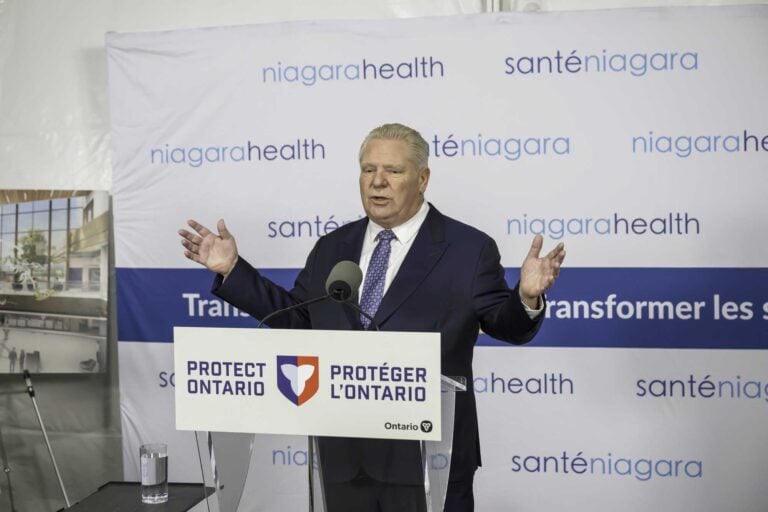
The focus candidates running for municipal office in Niagara-on-the-Lake have given to amalgamation in their election campaigns is surprising. Amalgamation will exist in all but name following the 2026 municipal vote, given the new governance model that the Ford government will impose on Niagara following the October elections.
Ford’s model will result in a regional structure similar to the world’s current political reality. Together, two strong municipal powers, Niagara Falls and St. Catharines, and a somewhat less strong power, Welland, will have the political clout to dominate the region provided the big man in his fancy house agrees with the direction they take when it comes to provincial priorities.
While the remaining municipalities in Niagara Region can act as a formidable middle power if they band together and work collaboratively (they’d be stronger politically than any one of the other three municipalities acting on their own), they could not overcome the combined strength of the big three.
The middle-power approach could work for Niagara-on-the-Lake, Fort Erie, Thorold and Port Colborne to some extent, if they can agree on shared priorities and joint actions. However, the inherent differences between the communities, plus the power Ford will vest in his soon-to-be-appointed regional council chair, would make the alliance difficult to sustain over the long term.
Not that the big three won’t find it challenging to collaborate, at times. Niagara Falls has a tourism-based economy, buoyed by its world-famous falls and to some extent its casinos, while St. Catharines and Welland do not.
While the Falls’ hotel strip, restaurants and Clifton Hill attractions seem to be thriving, the downtown cores of both St. Catharines and Welland are in decline, and both cities are trying to address challenges related to employment, homelessness and drug addiction. The priorities of the three cities are different.
It won’t surprise me if the new weighted-vote system of governance being implemented by the Ford government bogs down completely, with the big three municipalities failing to achieve consensus as more and more Destination Niagara funding is channelled into the new theme parks and casinos planned for the Falls.
But maybe that is the intent. By establishing a system of regional governance that seems likely to fail, perhaps Ford’s real goal is simply to pave the way for future amalgamation. Sort of like how he’s letting healthcare collapse to the point where private, for-profit clinics and hospitals will eventually seem like the only cure to what’s ailing it.
In the meantime, Niagara Falls, with the support of the provincial government, will likely have the political clout to push ahead with the expansion of the regional airport in Niagara-on-the-Lake, despite its negative impacts on quality of life and farmland in our town. Expect an increase in tourism, more casinos and more putting residents’ needs on the back-burner.
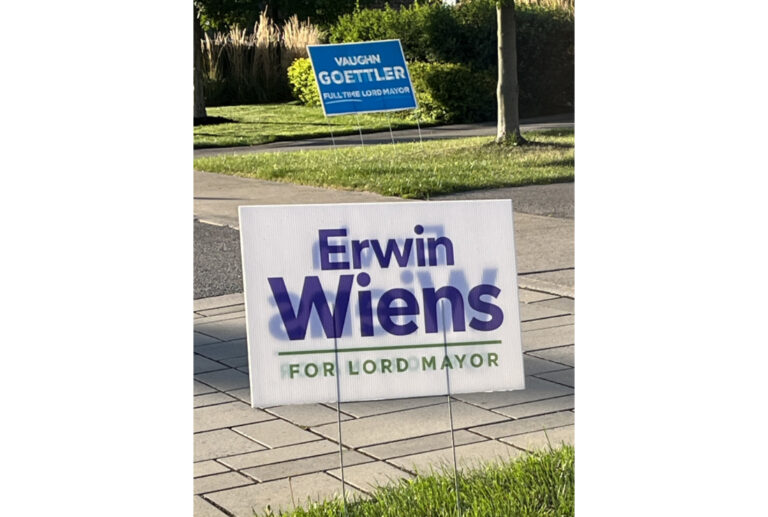
Whoever is elected lord mayor of Niagara-on-the-Lake on Oct. 26 will obviously have a say in shaping the future of our town. However, with the changes to the regional governance model, he or she won’t be able to stop the Destination Niagara steamroller from fundamentally changing our town’s look and character in the next few years.
The best hope appears to be for Niagara-on-the-Lake and the other small municipalities in the region to say “no more.” To step away from the region, and refuse to transfer tax dollars to the regional government in payment for shared services such as policing, waste collection, road maintenance, etc. They could then look at the pros and cons of contracting for those services separately or as a group buyer.
In Niagara-on-the-Lake, at least, given the assessment-based funding formula used by the region to calculate our bill for police services, such a move could actually reduce the costs to taxpayers while increasing service levels.
Obviously, a careful cost-benefit analysis would need to be undertaken before the town and the other municipalities took that step, but just putting it on the table would send a strong message to the region and the premier that enough is enough. That we refuse to stand by and see our democratic rights eroded, the characters of our towns fundamentally altered as the Niagara region becomes a cash cow for the province and the quality of our lives sacrificed on the alter of mass tourism.
The premier should rethink the new governance model he is imposing on Niagara Region, call a vote to elect the council chair, take back the strong chair powers he has bestowed on the position, put an end to strong-mayor powers and eliminate weighted voting at the regional council table.
If he doesn’t, when the history of these turbulent times is written, Premier Ford may well be viewed as being more of an adherent of U.S. President Donald Trump than as the Captain Canada leader he purports to be.
Terry Davis
Old Town