


Dear editor:
As we look toward the upcoming Niagara-on-the-Lake municipal election on Oct. 26, it is crucial to understand how the mechanics of local voting will shape the next four years of our town.
There is an undeniable, growing concern among residents regarding the direction of our local governance. Many feel that our unique, historic small town is increasingly vulnerable, with aggressive developers rushing to capitalize on the very “goose that laid the golden egg.”
If we compromise our heritage, agriculture, and community character for short-term expansion, we risk breaking the fundamental reasons why we all choose to live here.
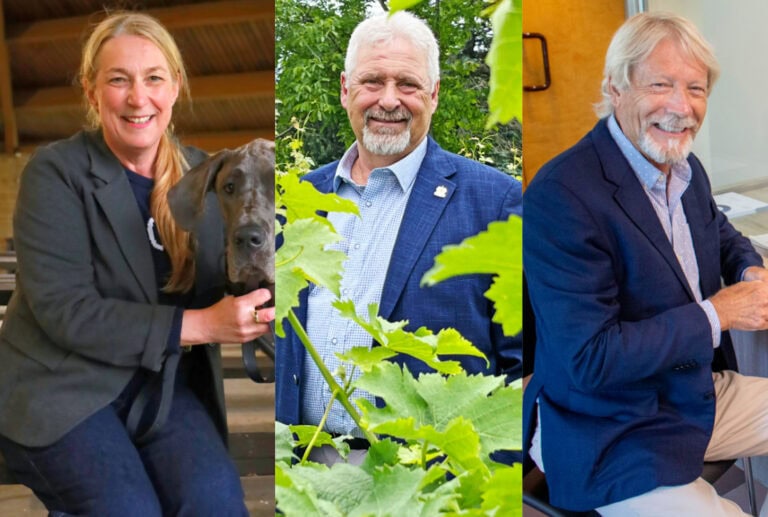
Protecting this town requires a cohesive strategy at the ballot box. In municipal politics, traditional and established voting blocks carry an immense amount of influence. Right now, candidate Erwin Wiens enters the race representing a platform of continuity and staying the course with the current council’s direction.
Because his base of support is highly unified and predictable, any voters looking for a genuine shift toward stricter development controls face a stark mathematical reality: a divided alternative vote splits the block, making it statistically very difficult to challenge the status quo.
Currently, the vote for change is split between Andrea Kaiser and Vaughn Goettler. When the alternative vote is divided down the middle, it inadvertently clears an easy path for the frontrunner — even if a combined majority of residents actually want a new approach to managing town growth.
Our local history shows that candidates can make deeply collaborative decisions to prevent this exact issue. In the 2022 election cycle, regional candidate Bonnie Worthington recognized that a multi-candidate race would fracture the alternative vote. Putting the town’s broader interests first, she chose to withdraw. Ironically, it was that exact decision that unified the vote and enabled Andrea Kaiser to get elected to regional council in the first place.
While candidate platforms offer distinct choices — such as Kaiser’s focus on managed growth or Goettler’s “residents first” approach, which includes a call to pause development until infrastructure capacity is fully studied — the structural reality of a three-way race remains unchanged.
Dividing the ticket unintentionally shields the current leadership from a true challenge, leaving the town exposed to the very development pressures residents fear.
For residents wanting a distinct shift in town governance to protect our community from predatory development, the choice comes down to simple math, not personal politics. A divided house cannot achieve a new direction.
If voters who favor change want to see a new path forward for Niagara-on-the-Lake, we must look forward, understand the numbers and consider how to stand together before election day.
Judith Barnes
NOTL