
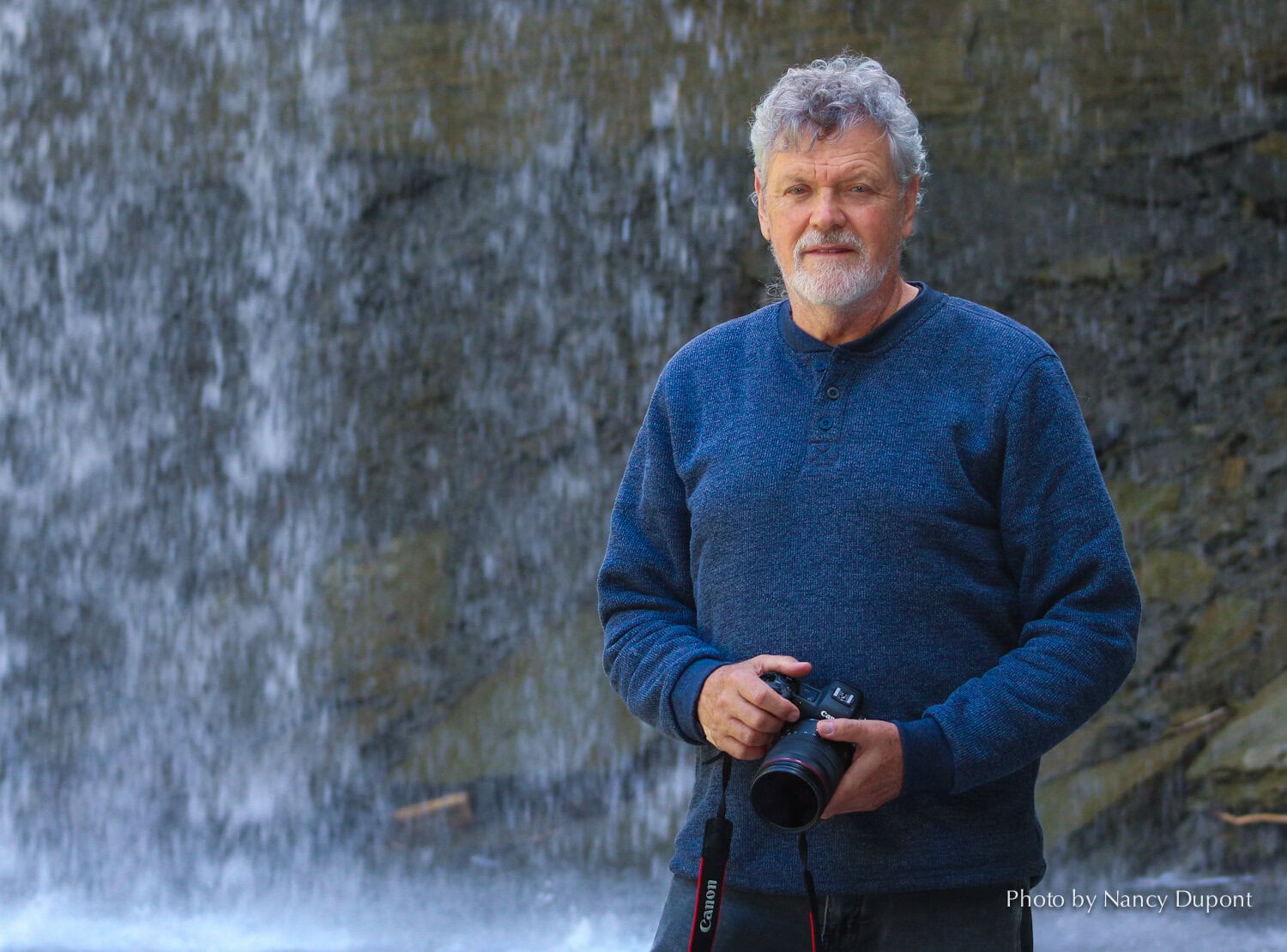


For photographer and author Mark Zelinski, the Niagara Escarpment has been a source of inspiration since childhood.
He grew up in the Greater Toronto Area, but said some of his earliest memories are of exploring waterfalls along the Escarpment and the Niagara Gorge in the late 1950s.
“The escarpment has always been a powerful influence, an ever-present personality, like a spine that connects life force,” he told The Lake Report in an email.
He will bring the story of that lifelong connection to the Niagara-on-the-Lake Museum on Friday, Oct. 2, for the launch of his latest book, “Niagara Escarpment: Land Between Waters.”
The event runs from 3 to 5 p.m. and will feature Zelinski along with a number of speakers whose work and expertise connect to the escarpment and Niagara region.
The book contains 320 pages and 600 photographs documenting the escarpment’s landscape, natural life, history and communities.
He returned his attention to the region in 2012, after completing a 38-year journey across more than 80 countries as part of his “Books That Heal” initiative.
Through the initiative, Zelinski donated 9,000 photography books to 140 charities around the world.
Credit: MARK ZELINSKI
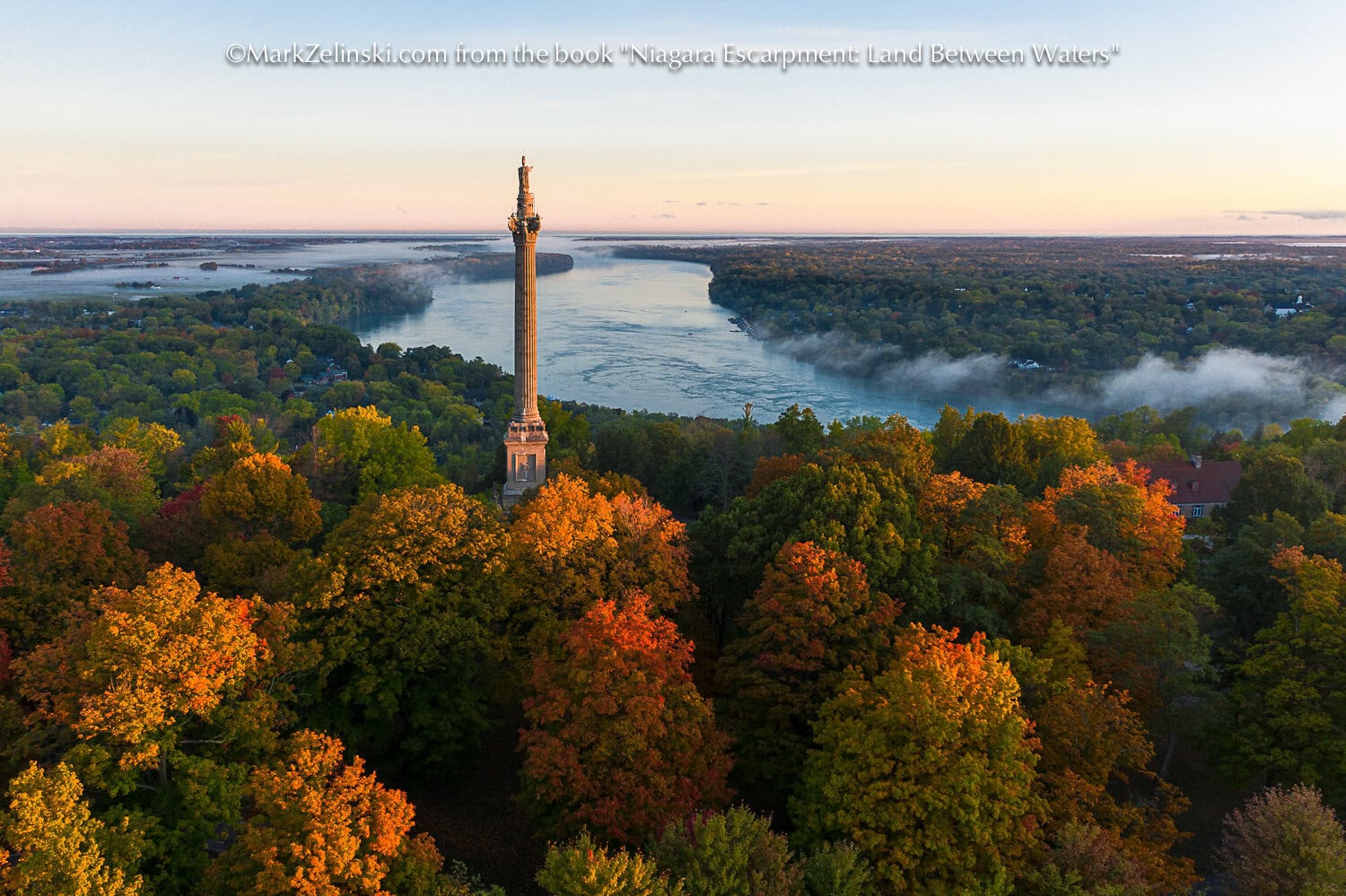
One of 600 photographs by Mark Zelinski set to be featured in his latest photo book, “Niagara Escarpment: Land Between Waters.” This photograph captures sunset over Queenston, with Brock’s Monument standing tall above the trees, and the Niagara River in the background.The Niagara Escarpment provided him with inspiration in his creative endavours before he became a photographer: his early work as a painter and filmmaker was influenced by the region’s trees, cliffs, potholes and waterfalls, he said.
His new book is a continuation of the inspiration the land provides him.
“The 320 pages and 600 photographs in this book present the enormous abundance of flora and fauna to be found on the escarpment, including one of the newest species that call it home: humans,” he said.
Zelinski also explores the Niagara Peninsula’s distinctive landscape and history.
He points to the escarpment’s microclimate, which allows tender fruit to be grown at a northern latitude, as well as the region’s Indigenous and colonial history, including the Treaties of Niagara, the War of 1812 and more.
The museum talk will feature several guest speakers, including Chief Margaret Sault of the Mississaugas of the Credit First Nation; Tim Johnson, president of the Niagara Academy for Indigenous Relations; Dr. Liette Vasseur, UNESCO chair on Community Sustainability; and Dr. David Galbraith, director of science at the Royal Botanical Gardens Canada.
Other speakers will include Lord Mayor Gary Zalepa, Perry Hartwick, chair of Niagara Geopark, Gord Arbeau, vice-president of Niagara College, and Adam Christie of the Niagara Peninsula Conservation Authority.
“I’m honoured that the esteemed authors of five chapters of the book will be speaking at the NOTL Museum launch presentation,” Zelinski said. “Each one brings their experience, knowledge and perspective to the book and to this presentation.”
Those interested in attending are encouraged to register at notlmuseum.ca/whats-on/view/id/1520.
The book launch is one of several special events happening at the museum at the start of October for Ontario Culture Days. As part of the provincewide celebration of various cultural institutions, the museum is offering free admission and free historical walking tours from Oct. 2-4.