


Dear editor:
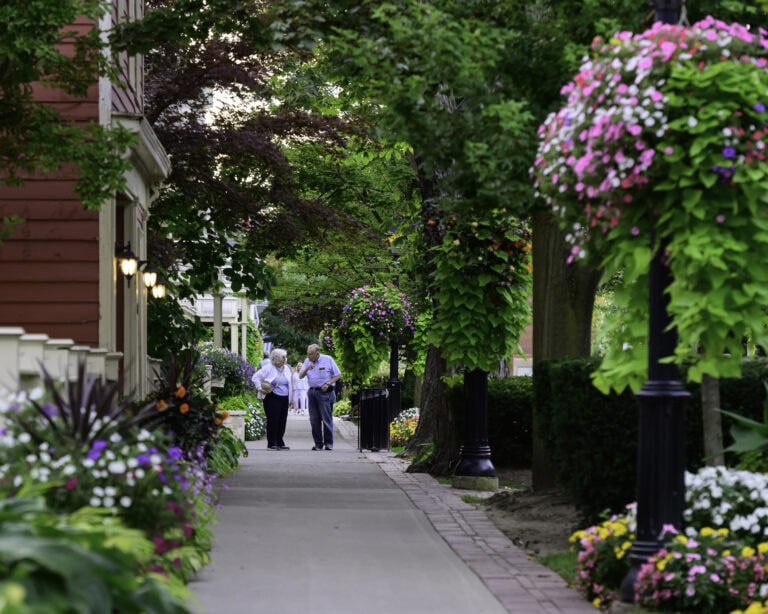
“It’s Disneyland minus the admission fee out here” my friend mutters as we return from our morning walk, dodging both tourists and cars streaming into Old Town.
She’s not wrong. Every time a tourist drives on town roads, uses a park or public washroom, leaves garbage in a bin, brings a child to the wading pool, admires the flowers on Queen Street or books an unhosted short-term rental, there is a cost associated with the action — because town staff are behind the scenes, ensuring that these services are carried out in a well-ordered and tidy fashion.
Tourism provides a huge economic benefit for this town (over $421 million in annual revenue from domestic tourists, according to the Town of NOTL’s website), but as a resident, there is a pressing need to focus on both maintaining and updating our infrastructure, implementing climate adaptation strategies and providing services to a growing population.
New sources of funding must be identified to pay for these items. Ask anyone who lives here — there is no appetite for tax increases. So, where will the money come from?
I searched the town website after the latest round of flooding, and read the climate strategy document titled “Niagara-on-the-Lake Climate Change Adaption Plan” (2022). “Appendix E – Impementation Schedule” of the report was where the rubber hit the road, but unfortunately, many of the actions listed mention lack of funding and/or lack of resources as impediments.
My understanding is that only six of the 27 climate change adaptation initiatives have been completed so far (according to a town report from Feb. 26), and there is no recommended “Green Team” that has been created.
This is disheartening — if our basic infrastructure is overwhelmed during climate events (which seem to happening on a more regular basis), how does Niagara-on-the-Lake remain a viable place to live, never mind a desirable place to visit?
It is now time to change the “Disneyland minus the admission fee” paradigm.
Sixteen-thousand tourists descended on the Peach Festival this year, and there are 3.5 million tourist visits annually. During high season, cars are parked up and down the streets of Old Town, and many of these spots are not metered.
We are missing an opportunity — what if we made every street within walkable distance of the downtown-core paid parking for tourists? At least for the high season.
And what if we took the parking money, along with other initiatives, such as charging commercial taxes on unhosted short-term rentals, and put any savings towards the implementation of the action items from the serving the needs of our residents?
Yes, someone will always find a reason why any of these suggestions for new sources of funding won’t work, but let’s put on our thinking caps, come up with new ideas and act boldly.
Could we implement a system of staff parking permits for downtown businesses? Or a certain number of guest passes for those looking to host a gathering or have maintenance done on their house and who live within the downtown core? What do they do now?
If you live downtown, tourists take up the free spots already — maybe these residents would be better off with a permitting system. Perhaps a satellite parking system where visitor parking spots in town are “crème de la crème” expensive, and cheaper parking is available on the outskirts of town with a shuttle dropping off our visitors in Old Town or at wineries.
Maybe this strategy would attract the elusive “quality tourist” that we keep hoping to court. Surely there must be some sort of solution we can work out.
Parking fees are lucrative and generate many dollars with little upfront investment (that is, if the choice is made to forego the proposed $19-million parking garage on the old hospital site — indeed, parking must be very lucrative if it can generate the funds to pay off that kind of investment), and by increasing the number of paid spaces, we should be able to generate a substantial amount of cash.
And to those who say that any new fees will keep tourists from visiting, I invite you to look at a place close to home and see how they did it: Crystal Beach, Ont.
Tourists pay an admission fee to enter the beach during peak hours — the beach is at capacity most of the summer. Fort Erie realized there was a cost to tourism and implemented fees to pay for it. We need to do likewise.
The time has come to put the needs of the residents first. We need some fresh ideas on the topic of how we will pay for both infrastructure replacement and maintenance, services for a growing population and, most importantly, to implement the measures recommended in the town’s own climate change report.
Given my choice, the priority must be on adopting climate adaption and mitigation strategies first. We know that climate change isn’t just coming — it’s here and it’s now baked into the system.
The “super” El Niño building power this fall is promising to turn the summer of 2027 into one of the hottest ever, with both record droughts and flooding possible.
This is an election year: ask your candidate what ideas they have for new sources of funding so Niagara-on-the-Lake can continue to be a viable place to live — and visit.
Ruth Denyer
NOTL