


It’s Nobel Prize time in the fall, with the announcement of winners in early October, followed by presentations at the Niagara-on-the-Lake Public Library beginning in late October by me for the physics, chemistry and medicine prizes, then presentations by David Elkins for the economics and peace prizes, and ending in December with Valmai Elkins and the literature prize. The award ceremony is then held on Dec. 10.
In the sciences, winners are sometimes easy to predict. For example, in 2015, detection of gravitational waves produced by the collision of two black holes was followed two years later by a Nobel Prize in physics.
Ripples in space-time produced by the collision of large masses was a by-product expectation of Albert Einstein’s monumental masterpiece, general relativity, in 1915. Hence, discovery of those gravitational waves was expected but as yet unproven, until exquisitely sensitive devices had been developed to pick them up — an effort that required three decades of sustained work and financial support.
This occurred similarly for black holes, another theoretical outcome of general relativity, whereby if a mass was large enough, space-time could collapse into a gravitational field so strong that not even light photons could escape (hence black).
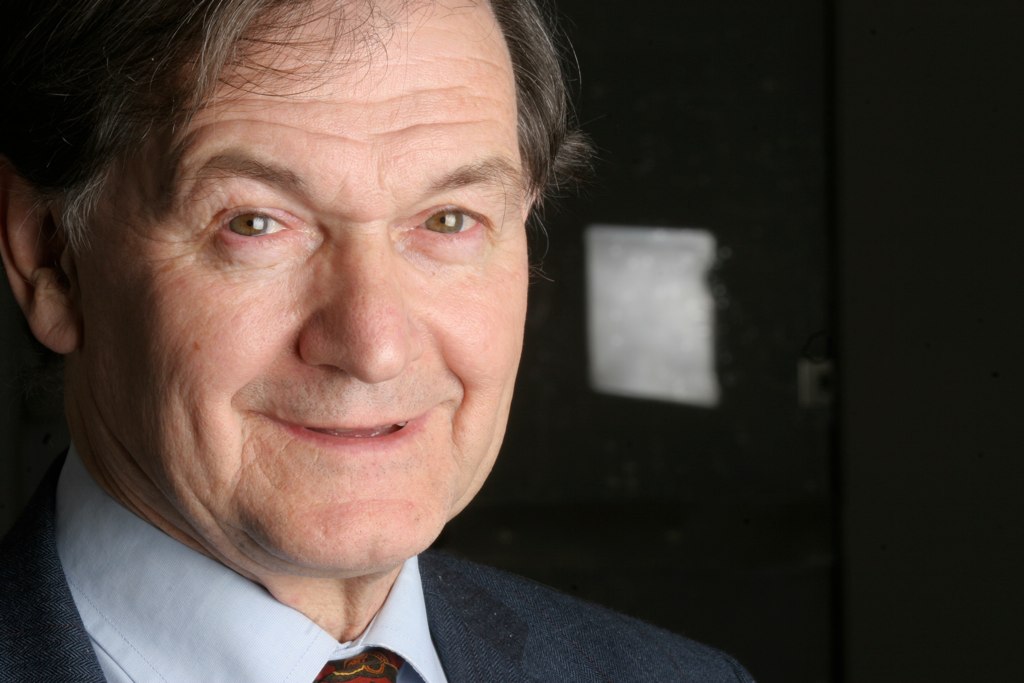
Much work by Roger Penrose and Stephen Hawking and others followed about black holes, but no one had actually seen one. That was until 2019, when a black hole was photographed and published.
The Nobel committee wasted no time: the next year, a Nobel Prize was awarded for the discovery of a giant black hole at the centre of the Milky Way (and by implication, almost all galaxies) and key mathematical studies, which governed the shape of black holes by Roger Penrose.
Another obvious prediction for a Nobel Prize was the 2020 award in chemistry to Emmanuelle Charpentier and Jennifer Doudna for their pioneering work on gene-editing.
Their work was a slam-dunk for the prize because the technique offered an obvious option for treating genetically transmitted diseases. Since then, the technique and related developments have refined gene-editing and revolutionized prevention and treatment for thalassemia and sickle cell disease — two common scourges.
Yet another obvious award was the development of mRNA vaccines, which were originally developed for treating cancer but offered incredible off-the-shelf technology for developing very effective vaccines for preventing COVID-19 in less than a year following the virus’ outbreak in China in late 2019.
These days, mRNA technology continues to offer effective treatment for a variety of diseases, including the original target, cancer, for which the technique recently offered effective treatment for malignant melanoma in a small clinical trial.
For some, perhaps the majority in the sciences, nominees wait in line for many years until the nominating committee finds a way to link several bodies of work together into a shared Nobel Prize or before a body of work finds its time, such as the 2021 chemistry award for the development of lithium ion batteries, or last year’s award in medicine, for foundational studies of autoimmunity.
Sometimes, Nobel prizes come too late. That was the case for Stephen Hawking, who died in 2018, two years shy of the prize for studies on black holes.
It’s not uncommon for laureates to be in their late 70s or 80s, even 90s, several decades after the work that justified a Nobel. No posthumous Nobel prizes are awarded and there’s a limit of three on the number of laureates awarded for any prize in the sciences.
One of the tricky aspects of any prize in the sciences is the question of who did what.
For some prizes, such as the physics prize for gravitational waves, the shared prize for finding the giant black hole in the Milky Way and the studies that confirmed the existence of the Higgs particle, depended on hundreds, even thousands of contributors, which makes the case for awarding some Nobel prizes to a defined group a reasonable choice such as, in the case of the Higgs particle, the prize could have been awarded to the European Organization for Nuclear Research (CERN) or the Large Hadron Collider group.
Like all human organizations, the Nobel Prize group makes mistakes, but surprisingly, few in the sciences over the 125 years of its existence.
To look back over the history of Nobel prizes, especially in physics and chemistry, is to look back at the most important landmarks in those sciences.
One great way for those who want to learn about the sciences is to trace the major steps in the evolution of, for example, cosmology and quantum physics offered by the treasure-trove of information, both scientific and biographical, available at Nobel.org. Navigating that site is a marvel and gift to the curious.
Next week, we will be discussing this year’s Nobel Prize winner in medicine at the NOTL Public Library on Wednesday, Nov. 11, starting 2 p.m. To register, visit notlpubliclibrary.org.
Dr. William Brown is a professor of neurology at McMaster University and co-founder of the InfoHealth series at the Niagara-on-the-Lake Public Library.