


To win a Nobel Prize is regarded as the highest honour for most scientists. And for good reason: to look at the list of laureates in physics, chemistry and medicine or physiology is to see some of the finest, most ground-breaking work in science over the last hundred and twenty-five-years since the Nobel prizes were founded by Alfred Nobel.
Progress in the sciences has a long and rich history over the centuries but the magnitude of progress in the sciences throughout the 20th and now first quarter of the 21st century stand out for science’s very broad scope, depth and exponential growth and is mirrored by changes in almost every field of engineering.
Before I began the annual reviews of Nobel prizes in 2017, I was well aware of the work of neuroscientists such as Sherrington, Erlanger and Gasser, Hodgkin and Huxley, Eccles and Katz, all of whom won a Nobel Prize that had something to do with the biophysics or physiology of the nervous system — which were “need to know” material for me in neurology and neurophysiology.
However, I was largely unaware of the broad body of high-quality work in other areas of sciences such as cosmology, quantum physics, chemistry and much of medicine outside the nervous system.
Quantum physicists Steven Weinberg and Richard Feynman, both theoretical physicists and Nobel laureates, believed that if you wanted to learn something, find some way to teach it.
That’s precisely what they did, and what I’ve tried to emulate for the last 10 years, when I’ve shared with the public what I learned from the work of leading scientists who won Nobel prizes in the sciences each year. It wasn’t easy, but doing so, I expanded my horizons in science well beyond what I understood as a clinical neurologist and neuroscientist.
This year is the 10th anniversary of the annual program at the Niagara-on-the-Lake Public Library that reviews the keystone three sciences awarded Nobel prizes — physics, chemistry and medicine or physiology — and related disciplines in mathematics and engineering.
There also coverage of the economics and peace prizes covered by David Elkins and the literature prize — perhaps the toughest of the lot to cover — by Valmai Elkins.
As part of the anniversary celebration, David, Valmai and I intend to highlight the best of the winners in the last 10 years, including 2026.
It’s difficult to pick winners in the sciences, because the quality is so uniformly high every year. However, there are favorites of mine. In 2017, the first year of the series, a Nobel was won by Weiss, Barish and Thorne for developing an exquisitely sensitive device designed to detect faint waves in space-time generated by the collision of two very distant middling-sized black holes.
Gravitational waves were considered a possibility by Einstein, based on his masterpiece work, general relativity, but he thought (and rightly so for the time) that the ripples in space-time would be far too feeble to pick up with the tools of his time. He was right then, but three decades of hard work by the three laureates, backed by hundreds of scientists and engineers, showed it was possible.
That stunning Noble Prize was awarded two years after the first gravitational waves were detected. It turns out that space is crowded with gravitational waves generated by collisions between black holes, a black hole and a neutron star, or between two neutron stars. So far however, no gravitational waves generated by the Big Bang have been detected.
The Nobel committee wasted no time in awarding a Nobel Prize to Penrose, Genzel and Ghez in 2020 for their work in finding a giant black hole at the center of the Milky Way and showing that black holes were a robust prediction of general relativity. This prize was awarded one year after pictures of the first black hole finally showed unequivocally that black holes existed.
But of all the physics prizes, my favorite was won in 2022 by Zeilinger, Aspect and Clauser, who showed that particles such as photons or electrons could behave as one (entangled), sometimes at enormous distances, a notion considered impossible by Einstein in this, his last challenge to his friend Niels Bohr, and quantum physics, which Einstein considered fell short of a complete theory because of its lack of causality.
Einstein may have lost the challenge posthumously, but many living physicists agree — he was right to question quantum physics as a complete theory, devoid of causality. I’m not a physicist, but I’m on Albert’s side.
My favorite chemistry prize was the 2021 Nobel won by Charpentier and Doudna for their pioneering work in gene editing using a guide molecule (CRISPR) designed to latch onto a specific target gene coupled with an enzyme (Cas 9) to cut part or all of the dysfunctional gene out.
The method wasn’t perfect, but in the succeeding decade led to other methods in gene editing to make the genetic engineering more precise and less prone to off target hits.
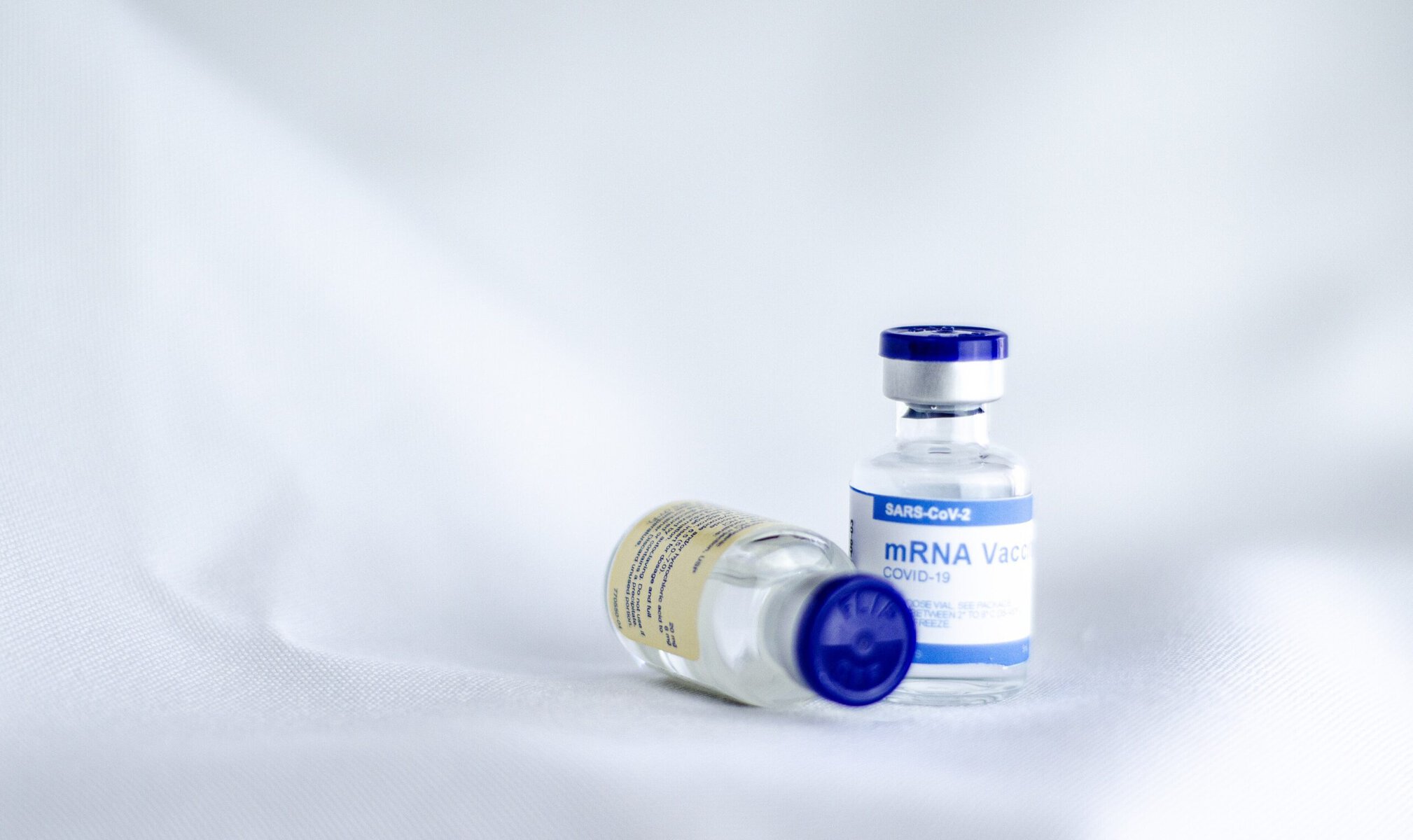
For the medicine prize, how can I not site Karikó and Weissman’s key work in developing mRNA vaccines, without which millions infected with COVID-19 would have died?
And finally, a favorite of mine was the solo award of the medicine Nobel prize to Svante Paabo for his pioneering work developing tools for studying ancient nuclear DNA.
His work led to fascinating revelations of sex between closely related species such as denisovans, neanderthals and modern humans, methods for studying why ancient species such as neanderthals went extinct and tracking migrations patterns and group sizes among ancient humans and modern humans.
Truth be told, all the Nobel prizes I’ve reviewed have been fascinating, and thank goodness for prizes such as the Nobel Prize and now many other prizes which highlight the best of science — something urgently needed in these days of social media and ramped misinformation.
Those who want to hear more about the Nobel prizes awarded in the last decade can join me at the NOTL Public Library on Wednesday, Sept. 23 for the beginning of this fall’s seven-part lecture series on 2026’s prizes. The lectures run 2-3 p.m.
Dr. William Brown is a professor of neurology at McMaster University and co-founder of the InfoHealth series at the Niagara-on-the-Lake Public Library.