


That AI can beat humans in chess, GO, Jeopardy and even diagnostic skills for physicians is old news. What about flying or sports?
Surely humans are more skilled than AI, except perhaps for autonomous self-driving cars and flying airplanes, although few passengers on commercial aircraft are ready for a robotic pilot and co-pilot without a human in the loop, just in case — at least not yet.
Enter Garmin, a well-known, award-winning company in the avionics business for private and corporate aircraft, which introduced what they call Autoland.
This device monitors pilot performance and, should Autoland sense the pilot has lost control of the aircraft, is capable of taking control of the aircraft, selecting the optimal airport to land based on available fuel, enroute weather and terrain, runway-length, winds, available approaches, communicating with air traffic control, carrying out the chosen approach, and landing the aircraft to a full stop on the selected runway, all while keeping passengers informed about its intentions and updating arrival times.
The system is very impressive and from tests, performs in the real world as well or better than the most highly experienced pilots on type-specific aircraft on which the Autoland system is installed.
That’s amazing and so impressive that future versions might be capable of taking over the whole flight from flight planning, to start up, taxing, take-off and climb, enroute cruise, approach, landing and taxiing to a designated site on the destination airport — all with continuous communication with air traffic control, along with updates as weather and other factors require.
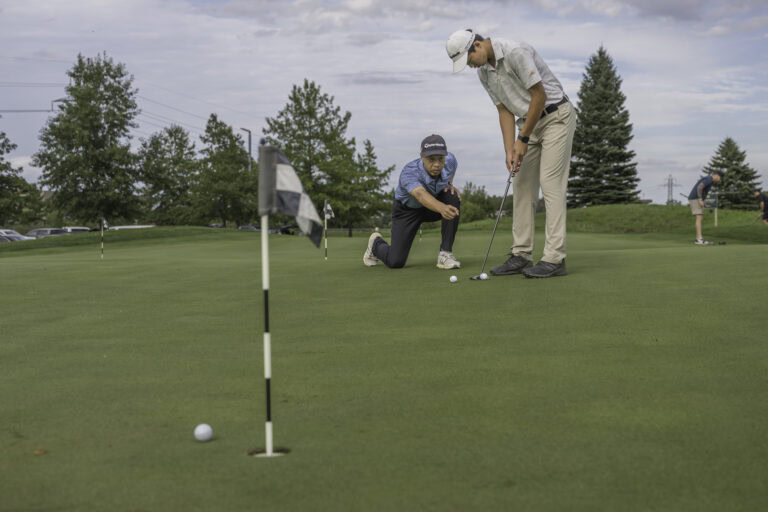
But what about sports? Are we likely to see robotic golfers, quarterbacks, tennis players, gymnasts, sprinters or marathoners or even mountain bikers?
Hopefully none of the above — still, as an exercise in what modern robotic engineering and AI might be capable of, why not have some fun seeing whether robots can keep up with and even beat the best human players?
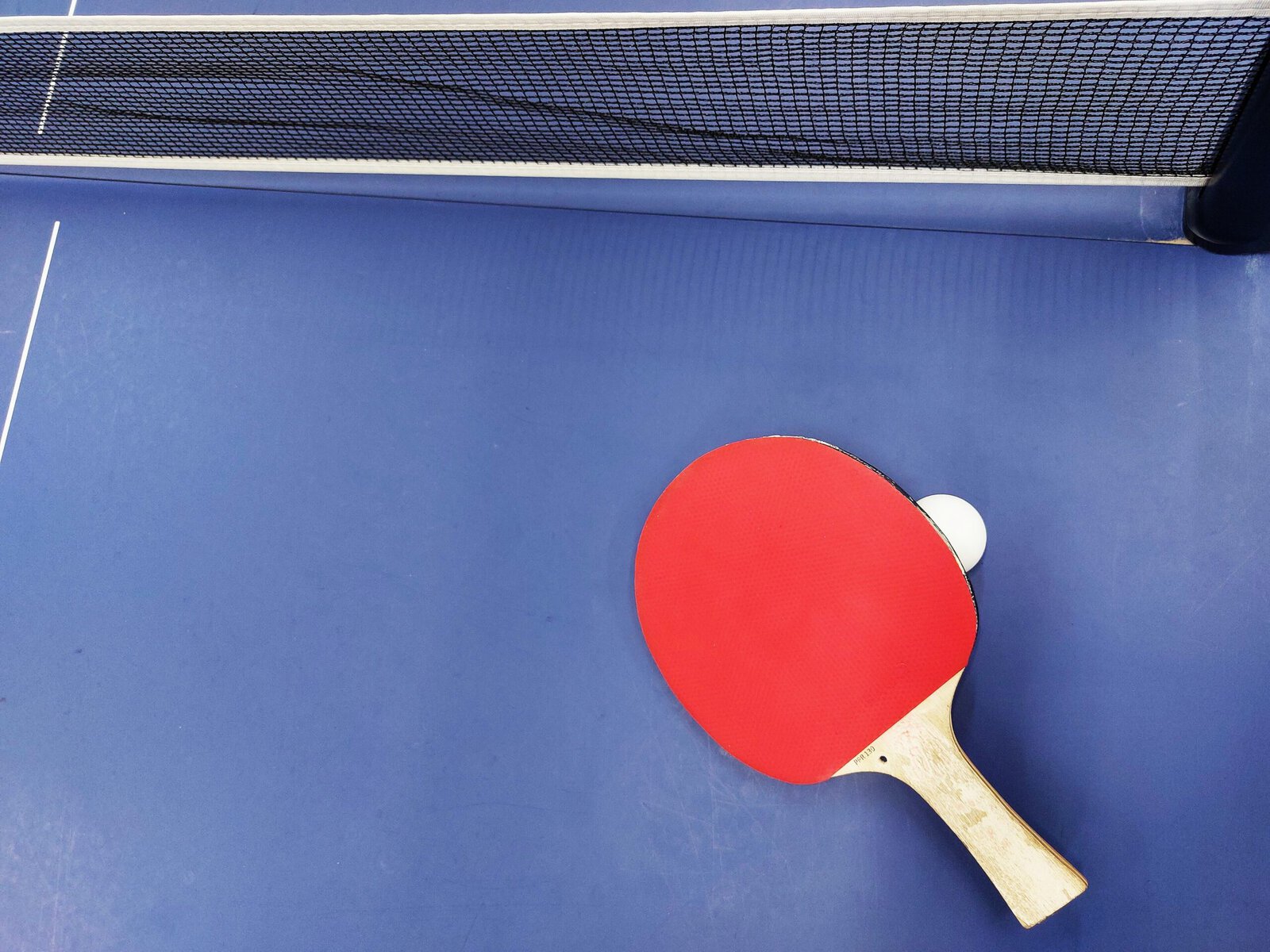
That’s precisely what Peter Dürr and his colleagues recently reported in the journal Nature for table tennis (“Outplaying elite table tennis players with an autonomous robot,” April 22).
Watching experts and pros play table tennis, it’s obvious the game requires lightning-fast reads of your opponent’s serve and shots, including sizing up any spin on the ball and hence change in trajectory of the ball and, within a split second, reacting to return the ball with a winning shot or one that catches your opponent out of position and possibly too off balance to make a winning return shot.
What about a robot as a player?
The speed of the game requires multiple cameras designed to see the whole court from different perspectives, transfer of the camera data to an AI module where the speed, spin and thus trajectory of the ball is calculated and a near-instantaneous decision is made to direct the robotic arm with eight independently controlled joints, to hold the racket and strike the ball in such a way to provide the best possible return.
That’s a lot of sensing, analysis, decision-making and directions in less than a second.
That’s what it takes to beat some elite table tennis players, but not so far, professional players. The system trains by playing elite table-tennis players and learning the best ways to deal with different types of serves and shots in much the way humans learn.
The point of the exercise was to test the limits of AI systems, especially those controlling a robotic limb at speeds equal to or possibly exceeding human speeds and in this special case engineers and computer scientists made it happen by tweaking what had been learned with computer programs and AI designed for other purposes.
Recently, robots have been designed that are capable of walking and even running, which is some achievement considering how complex the human nervous system is for controlling the same functions.
It took apes several million years to figure out how to walk bipedally and, more demanding, run on uneven ground. That process required repurposing existing genes to reshape the pelvis, especially the illum, hip, knee and ankle joints and feet, as well as the lumbosacral and cervical spines and base of the skull.
That’s a lot of change but as much as we gained, we also lost the ability to scamper up and down trees.
What’s not always appreciated is how much our upper limbs changed over the same period, especially the degree of control and speed with which we can control out fingers and thumbs to write, paint, manipulate fine things and play musical instruments with our brains and hands.
My guess is that it will take a long time for engineers to create a robot capable of playing a musical instrument, but I may be wrong given the trajectory of change in mechanical and computer engineering.
Just don’t expect a robot to play tennis anytime soon. Jannik Sinner and Carlos Alcaraz are safe on that score — for now.
Dr. William Brown is a professor of neurology at McMaster University and co-founder of the InfoHealth series at the Niagara-on-the-Lake Public Library.