


FUNNY GIRL
*** (out of five)
Festival Theatre, 2 hours 40 minutes, one intermission. Ends Oct. 3. Music by Jule Styne, lyrics by Bob Merrill. Book and story by Isobel Lennart. Directed by Eda Holmes.
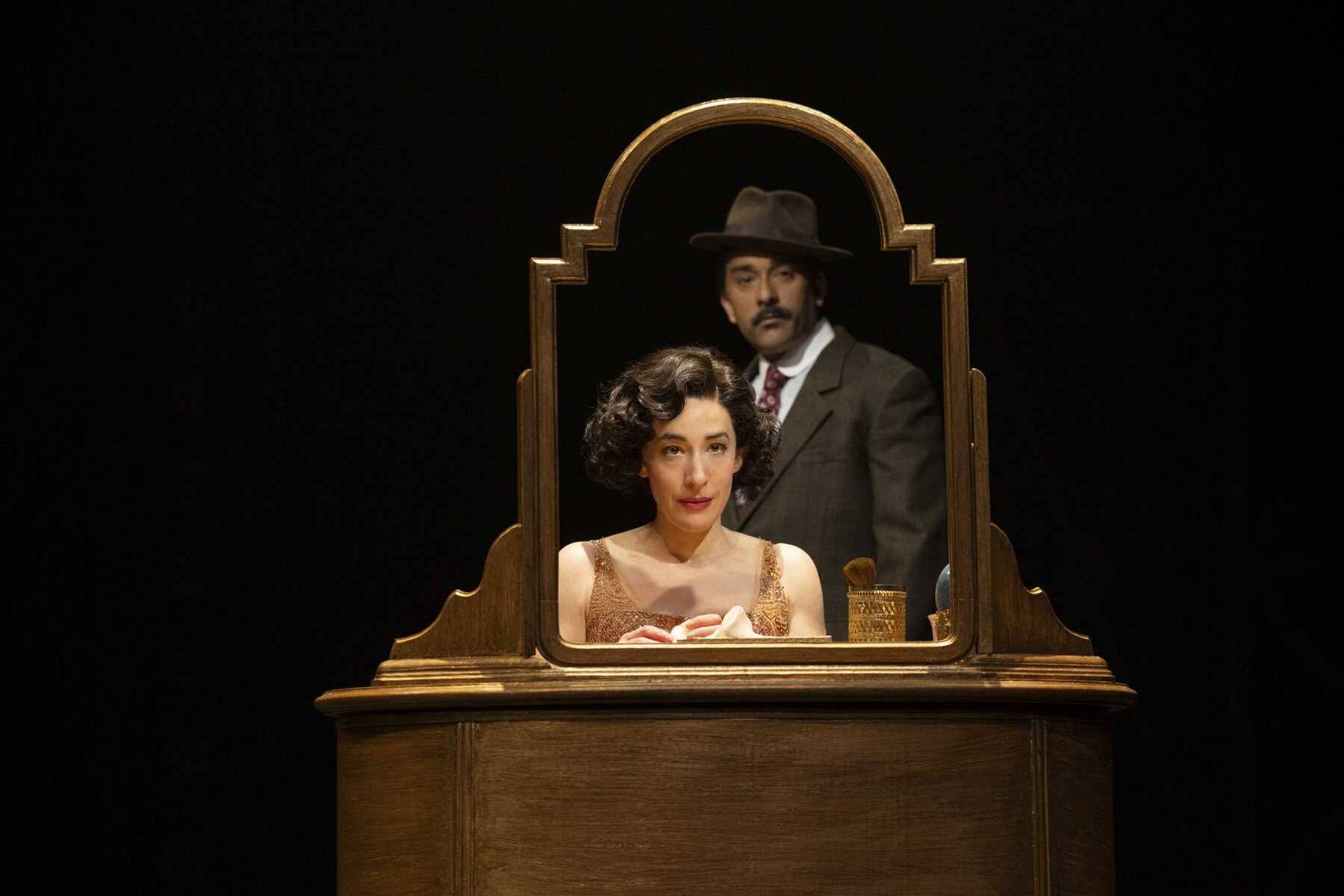
Fanny Brice looked into her dressing room mirror and said, “Hello, gorgeous.” Whether meant to bolster her own insecurity or said to the man she loved, those two words became one of show business’s most memorable and quoted lines.
Although not a great beauty in a time when it mattered, the New Yorker Fanny Brice, born in 1891, had the ambition, guts and tenacity to succeed that took her from vaudeville to burlesque music shows, to headlining the Ziegfeld Follies by 1910.
Fania Borach changed her name not wanting, as she said, to be connected to borax. As Fanny Brice, she was a singer and actress but most importantly, a great mimic and brilliant clown who became a renowned and beloved comedienne. Her face illustrated by Al Hirschfeld graced a U.S. stamp honouring her trail-blazing contributions to comedy.
Always careful not to offend, her parody, Jewish-accented humour, plus her mobile face and expressive body was described by her third husband, Billy Rose, as “a bagel among a loaf of white bread” changed meaningfully in the play to “onion rolls.” Later in her career, her popular self-created role on radio as the brat Baby Snooks was heard on CBS and NBC from the mid-1930s to her untimely death at 51 of a hemorrhagic stroke.
It’s a daunting task to take on a role made famous on stage and screen by a 21-year-old New York singer named Barbra Streisand. It took 10 years to get the production of “Funny Girl” to Broadway in 1964. It was decided that the role had to be performed by a Jewish girl who could combine a neurotic insecurity with fierce determination, resilience and a romantic nature.
When Jule Styne shouted, “I found the girl!” to the producer Ray Stark, the search was over. Stark was married to Frances Brice, Fanny’s daughter by her second husband, Nick Arnstein. Streisand dove deeply into the voice, mannerisms and psyche of Fanny Brice and came up with a winner, receiving the Academy Award for best actress in 1969.
There is a cadence, a cultural rhythm to the ethnic Jewish accent of New York. Sara Farb as Fanny has a voice with the breath control, volume and power to sustain long held notes to the rafters, but expressive nuances of heartbreak, warmth, longing and wry humour were lacking. Fanny’s zaniness, her uninhibited “anything can happen” spirit were not in evidence.
Fanny was a woman in love, smitten at first sight with a man she described as well-educated, cultured, great manners and “a good speaker of mostly lies.” Nick Arnstein was a 6’6″, handsome professional gambler, a shady conman, a philanderer and sponger.
It was Fanny’s money that paid for their homes, expenses and his legal bills as she fought to reduce Arnstein’s prison time in Sing Sing and Leavenworth. Finally, a fed-up Fanny put career first and divorced Nick after nine years of marriage.
In the play, Nick is noble, attentive, generous and reluctant to take Fanny’s money. Ray Stark covered up the skeletons in the family closet. The real-life Arnstein was hanging around the Broadway rehearsals threatening to sue if the production misrepresented him. He was appeased.
Qasim Khan as Nick Arnstein is, curiously, on stage but absent from it. The swoon-worthy charisma and stature that so captivated Fanny is simply not present. Matt Alfano is solid as Fanny’s friend Eddie who tap dances up a storm on top of a suitcase to the delight of all.
Damien Atkins as Florenz Ziegfeld brings an elegant reserve and steeliness to the role of Fanny’s boss, who was her true-life father figure and mentor. Patty Jamieson as Fanny’s mother follows the script yet seems constrained in revealing a real character study of Mrs. Borach in the tumult of the saloon and crowd scenes.
What shines in this production are James Lavoie’s sets and costumes, the lighting and the music. The First World War ensemble dance of “Rat-Tat-Tat-Tat” is a golden spectacle of imaginative energy and precision. The Ziegfeld Follies scene of shimmering silver, glitter and long-legged beauties with amazing headpieces slowly descending a high staircase captures the spectacular Ziegfeld glamour enhanced by Taurian Teelucksingh’s tenor solo.
From the opening overture to the dramatic end, the Shaw orchestra conducted by Paul Sportelli swept us through the familiar “People” and “Don’t Rain on My Parade” to rags and jazz. And at the conclusion, a somewhat somnolent audience that had been slow to respond, found their reason to be there.
It was Sara Farb’s finale, a stationary no-holding-back solo, guaranteed to rouse emotions, that wrenched the audience to an eruption of applause. Impressive, but still not quite enough to fill the void.
Penny-Lynn Cookson is an arts and culture historian, writer and lecturer living in Niagara-on-the-Lake.