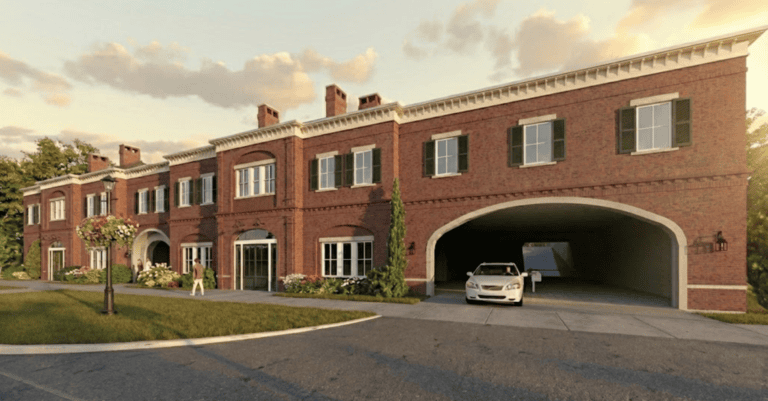




Last week, this columnist observed that “several municipal processes related to proposed and undertaken alterations of this important heritage property,” referring to the Crysler-Burroughs House at 187 Queen St., “have been fundamentally flawed.”
Further, it was suggested that council should “delay any decisions pursuant to applications on this property” until, at a minimum, correct heritage permit application(s) for the attached garage and driveway off of Queen Street are presented to the municipal heritage committee (“Arch-i-text: Questions about proceedings on the Crysler-Burroughs House”).
This week, after reading that column, one of our Niagara-on-the-Lake neighbours reached out to me with pertinent and relevant information relative to these issues.
As it happens, that reader had raised concerns regarding the specific issues of the driveway and attached garage with the former director of community and development services, Kirsten McCauley.
The first communication was last April, wherein Ms. McCauley stated, “The owner/applicant is aware that a heritage permit is required for the garage addition and the driveway” and that “the heritage permit for the garage is a condition of consent and is included in the development agreement that is registered on title.”
Then, in September, McCauley declared, “Staff have been advised that only a temporary gravel driveway is proposed at this time.” Continuing with, “In the future, any proposal to formalize the driveway and any addition to the house for a garage will require a heritage permit.”
Based on these statements, it is very clear that senior town staff and certain downline staff members were fully cognizant of the actual “state of affairs.” However — and to err on the side of giving “benefit of the doubt” — it seems that they failed to communicate these requirements to their heritage planners.
As a result, the proceedings of the Jan. 14 municipal heritage committee deliberations and recommendations associated with this property were based on the false premise that the driveway and garage addition did not require their review and recommendation.
And, if not challenged, could lead to the assumption of a de facto approval.
Based on the incontestable evidence, I would submit that council must immediately direct town staff to contact the owner(s) of 187 Queen St. to request they file heritage permit applications for the “proposed” driveway off Queen Street and the attached garage — which, upon receipt, shall be presented to the municipal heritage committee for their review and subsequent recommendation(s).
Anything less could expose the town (and taxpayers) to a losing proposition, should the matter be brought before a court of law or from any form of provincial oversight.
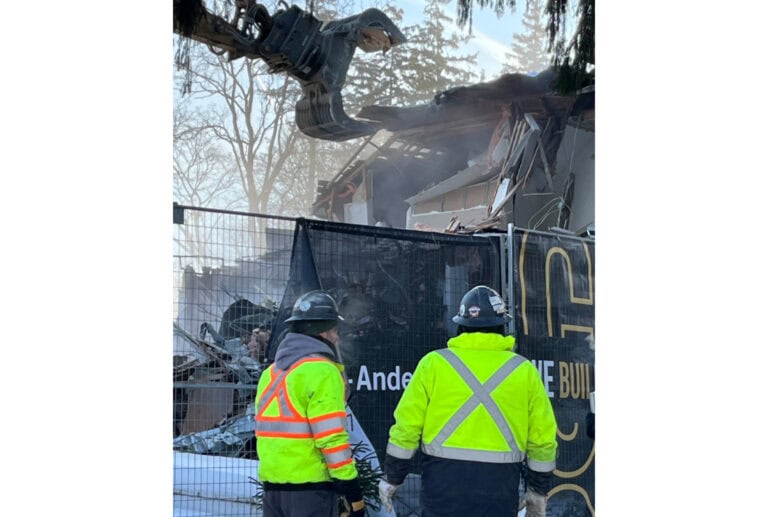
Moving on to another matter considered by the municipal heritage committee during their Jan. 14 meeting, the demolition permit for the old Royal George and Tranter’s House buildings at 83-85 Queen and 79 Queen, respectively.
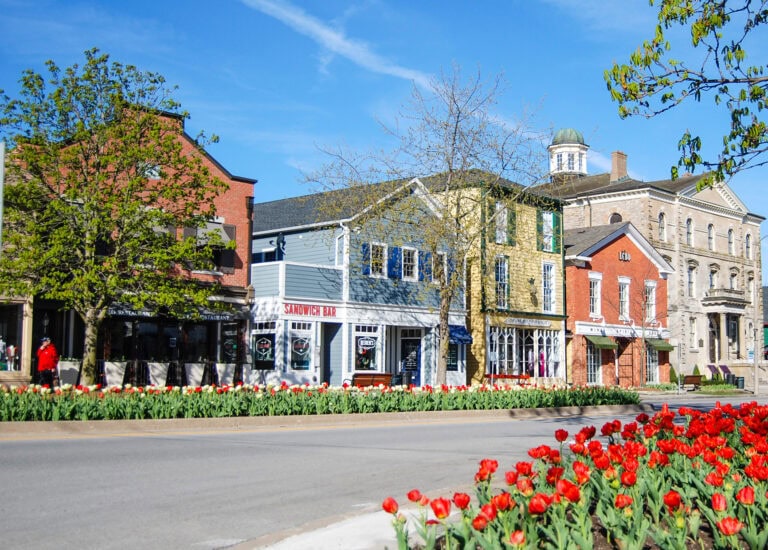
As many of you may be aware, demolition permits were granted for 188 and 178 Victoria last year — the first two historic buildings slated as causalities in the Shaw Festival’s obscene attack on the integrity of the Queen-Picton heritage district’s streetscapes.
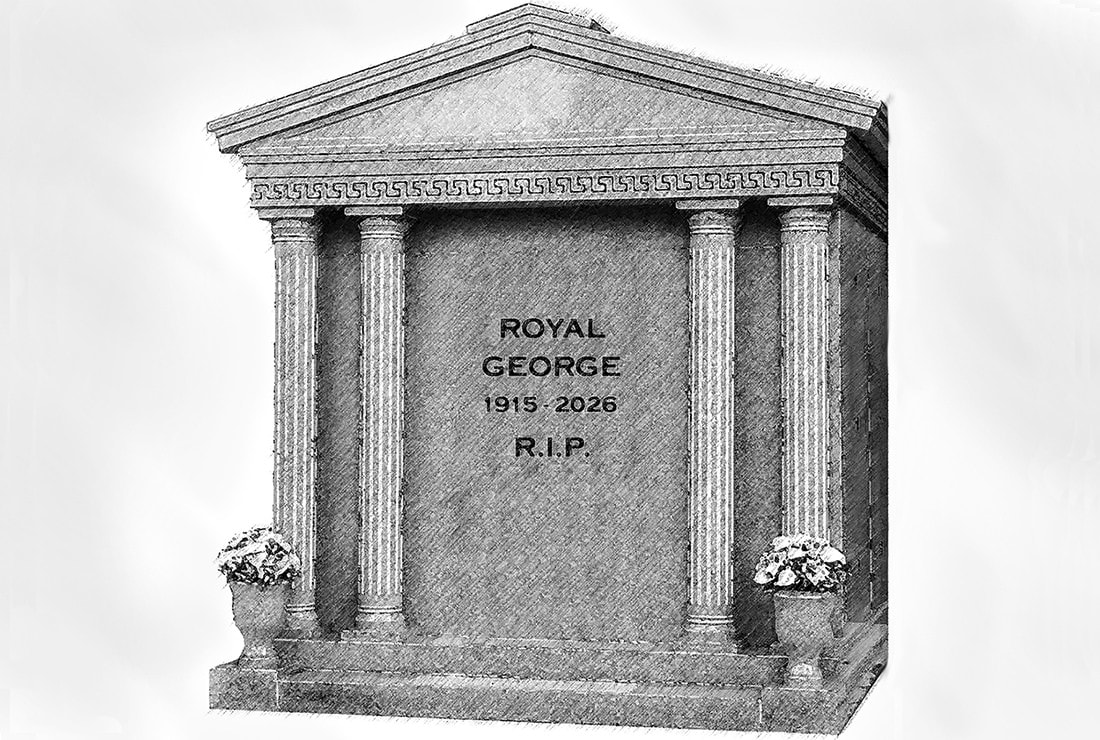
It is certainly no secret that this columnist considers the architectural design of the proposed theatre, as presented to date, to be distinctly inferior in terms of contextual integration. Moreover, the “ghost façade” proposed as a keystone element in the Shaw’s commemoration plan will be a singularly awkward isolated island tombstone divorced from both the streetscape and the proposed building itself.
While the municipal heritage committee did vote in favour of accepting heritage staff’s recommendation on the demolition permits, it should be noted that contained therein were several conditions, including having a site plan agreement in place with the town prior to issuance of the permits, and several relatively minor revisions to the commemoration plan.
Thus, the Shaw’s agenda is, one bite at a time, moving forward.
But here’s what I find somewhat puzzling:
At some point, the Shaw Festival must file a heritage permit application for the proposed building — its design subject to municipal heritage committee review and evaluation vis-à-vis its impact on the Queen-Picton historic district as designated under Part V of the Ontario Heritage Act. This moves me to wonder if successfully fulfilling the heritage permit requirement is a part of the site plan agreement.
If not, it is possible that demolition could proceed on Queen and Victoria streets — irretrievably altering the streetscapes — with no agreement on the permissibility of the proposed design for the new building.
Such a scenario would only add additional leverage to the Shaw’s current take-it-or-leave-it positioning (“Shaw warns delays could derail Royal George rebuild,” Niagara Now, Nov. 17, 2025) associated with the proposed building.
Perhaps this little wrinkle should be sorted out sooner rather than later?
Particularly since, if the members of the municipal heritage committee stand firm in their overriding mandate to protect our historic designated properties and places, a redesign of the building would definitely be in order.
Brian Marshall is a NOTL realtor, author and expert consultant on architectural design, restoration and heritage.