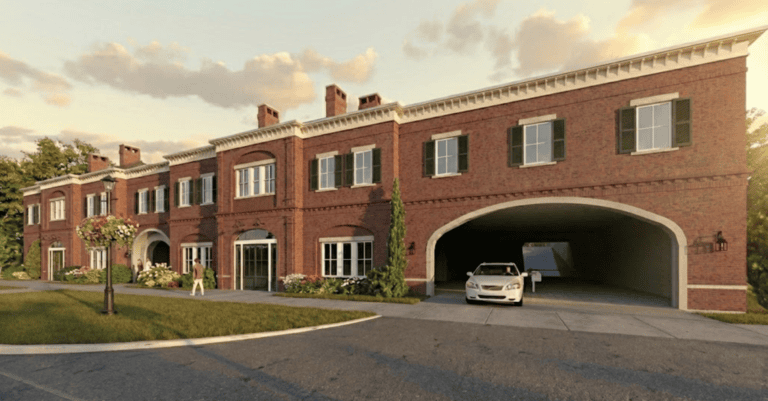




We’re continuing on from last week’s column (“Arch-i-text: Navigating the new heritage conservation district plan, pt. 1“) wherein, amongst other things, we considered how to determine whether a property located within the new heritage district boundaries is considered “contributing” or “non-contributing” and the general rationale for controls on the latter, as contained in section 7, “Policies and Guidelines for Non-contributing Properties,” of the plan.
Before shifting our attention to the “contributing” classification, it may be useful for “non-contributing” property owners to understand that, section 9.2 of the plan specifies only “generally major alterations to the size, shape, density, height of existing structures, such as additions, new builds, rehabilitations and demolitions” will require a heritage permit, and this section goes on to define the classes of work that fall under exemptions (don’t require a heritage permit).
In general, if you have a project in mind that does not significantly alter the existent building(s) within the streetscape context, nor have an adverse impact on adjacent “contributing” property(s), it will likely fall within the “exempt” parameters.
However, I reiterate that you should reach out to the town’s heritage planners and discuss your proposed work to ensure it falls within (or outside of) the allowable interventions to the property that can be performed without a heritage permit.
As for the policies and guidelines for “contributing” properties (section 6 in the plan), let’s begin with a few definitions of terms used in the plan.
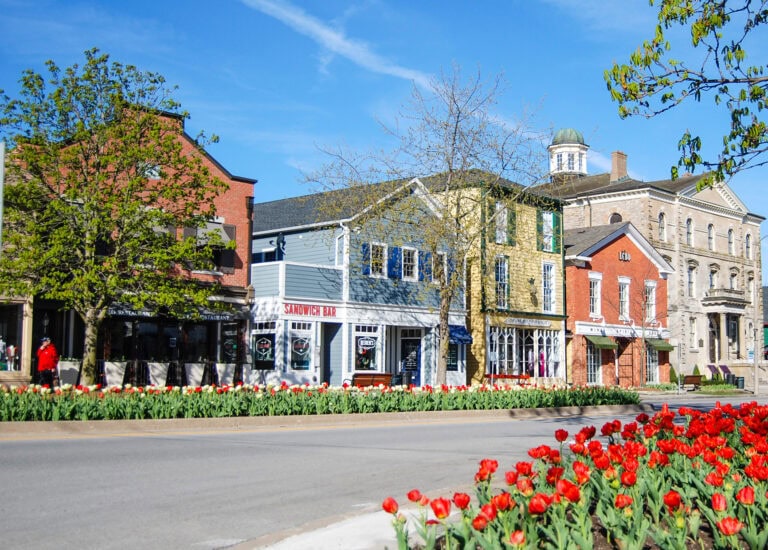
When the term “cultural heritage value” is used, it refers to a historical place that may variously be a single property, a street, a neighbourhood or a series of conjoined neighbourhoods which embody heritage attributes — materials, forms, location, spatial configurations that illustrate the evolution of the town over time and may have historical association with the social, cultural and/or economic milieus within the town’s past.
“Spatial organization” is a fundamental component in defining the character of a place as established by the arrangement and relationships of both natural and built features within a given area.
A row of trees (natural feature) planted equidistantly along a boulevard may be considered to contribute to a consideration of spatial organization; as does the orientation and positioning (setbacks from lot lines, etc.) of built features — including the spaces between them — along a street.
An “alteration” (or “to alter”) refers to an action which results in a change to a property – and, that includes restoration, renovation, repairs or disturbance of the currently existing conditions on said property.
“Heritage attributes” refers to the elements of a property which includes, but is not limited to, the buildings, structures, materials, spatial organization, features and spaces that underwrite its cultural heritage value and/or heritage interest.
Intrinsic to the plan’s policies and guidelines is the understanding that a property that contributes to the overall integrity of the cultural heritage value of the conservation district through its architectural, historical and contextual attributes is an irreplaceable asset in that tapestry.
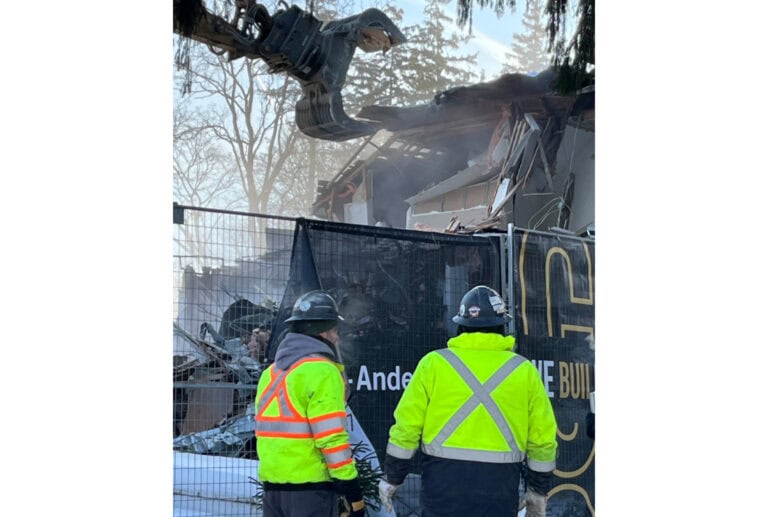
And, the loss or diminishment of such contributing properties can materially damage the district.
The intent of the plan’s policies and guidelines are directed toward preserving the heritage attributes of each contributing property and the existing spatial organization of district streetscapes while enfolding the understanding that, over time, minor — and sometimes major —alterations must happen.
Therefore, the authors of the heritage conservation plan have addressed this at multiple levels in section 6.
Setting aside heritage specialist guided “restoration” projects the plan identifies “rule-of-thumb” alteration criteria in 6.7 as: “compatible, subordinate, and visually distinguishable to conserve the cultural heritage value and heritage attributes of the contributing property and of the heritage conservation district.”
Under the new heritage conservation district plan, if you are a “contributing” property owner, this is what can be done without a heritage permit.
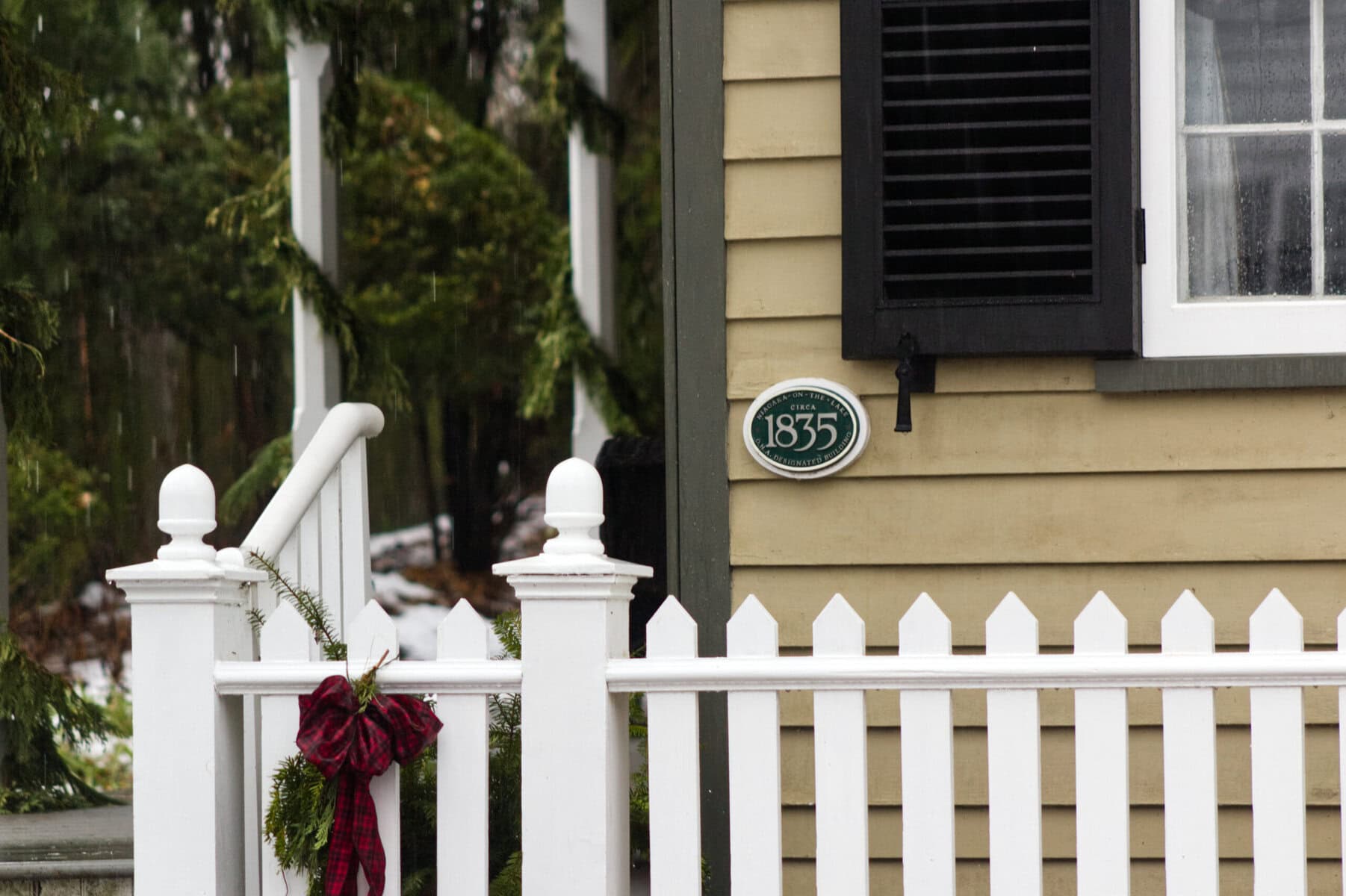
You can conduct, according to section 9.1, the following: repair of windows, doors, shutters, siding, entryways, roof systems, trim and associated architectural details, foundations, fences etcetera without any oversight.
However, should you wish to paint your front door purple or replace the original single pane windows with modern vinyl framed units, be prepared for a fight because these types of interventions are not in-kind and will detract from the cultural heritage values of the district.
The plan does not dismiss new additions to a contributing property but states that such a construct must be “compatible, subordinate, and visually distinguishable to conserve the cultural heritage value and heritage attributes of the contributing property and of the heritage conservation district.”
Bluntly, if the original clapboard siding on your house needs to be repaired or replaced, you can use modern stock configured to the original exposure at no additional cost.
And, should your original single pane windows require full replacement, this can be done with historical accuracy and, with the addition of interior storms, achieve an R-value roughly equivalent to the vinyl window inserts.
And, so many more no or low-cost options are available to preserve and maintain the invaluable heritage character of Old Town.
Brian Marshall is a NOTL realtor, author and expert consultant on architectural design, restoration and heritage.