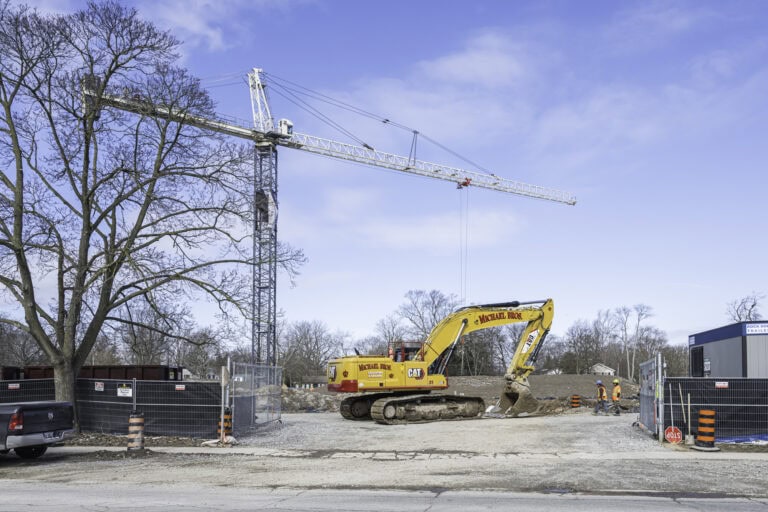



In the ongoing saga of the battle over the development of the Rand Estate property (144, 176, 200 John St. E. and 588 Charlotte St.) the owner has once again made application for official plan and zoning bylaw amendments.
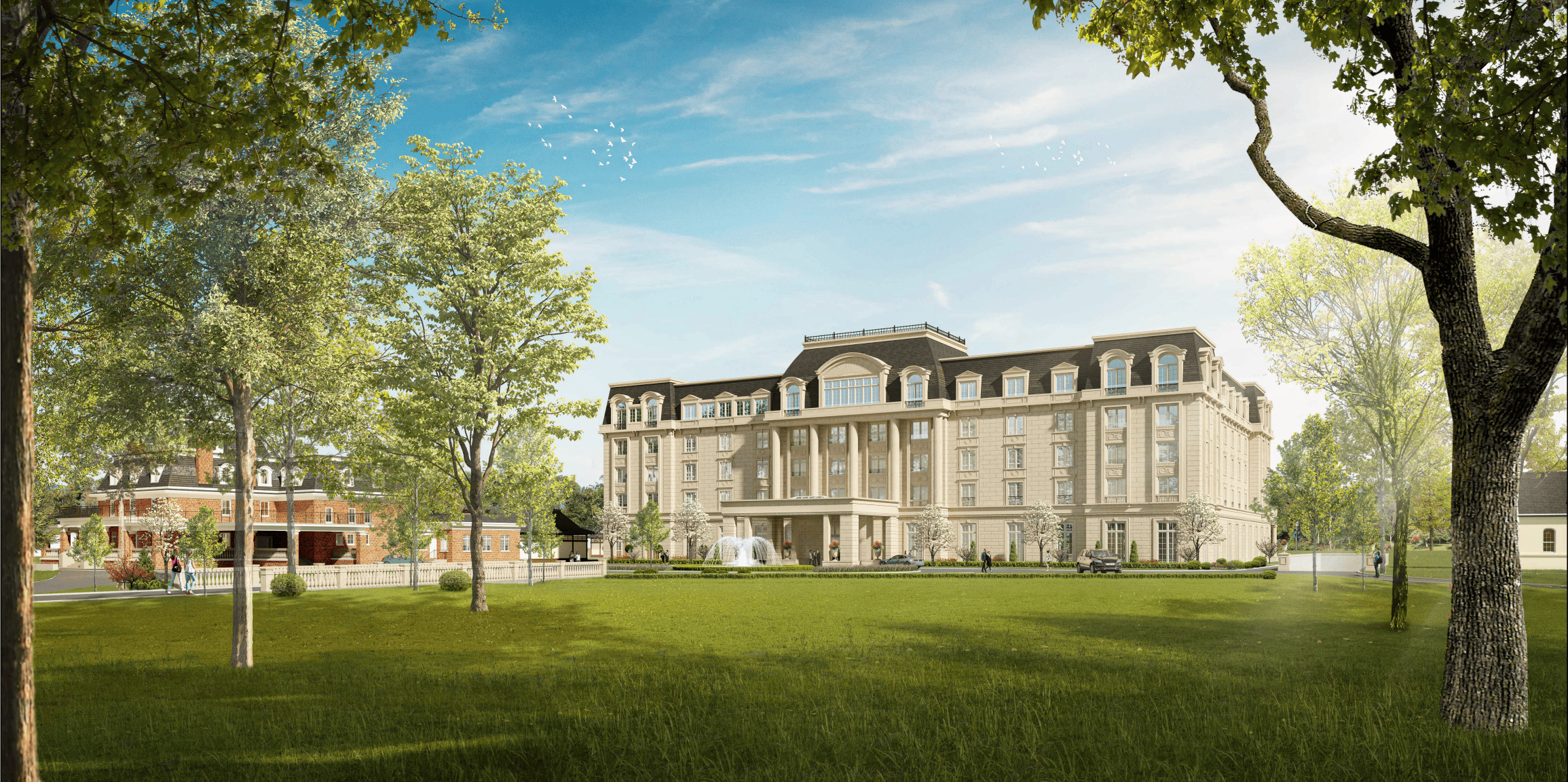
The developers — Solmar (Niagara 2) Inc. and the Two Sisters Resorts Corp. — have trotted out a new proposal which includes a five-storey, 111-room hotel and five three-storey residential buildings, which will contain somewhere between 240 and 277 units; the final total of said residences being dependent upon “the unit sizes and the market demand for the various unit sizes.”
Of the existing buildings, it is proposed that the Rand main residence, the Devonian House, a wooden pergola and the Coach House will be preserved and undergo adaptive reuse, with the main residence becoming a spa, the Devonian House converted to a restaurant, the Coach House a bridal retail store and the pergola retained as a feature in the landscape.
Interestingly, the hotel will carry the Ritz-Carlton brand and the residential units “will be affiliated with the Ritz-Carlton Hotel, where owners will be part of a program where their units may be rented out for accommodation purposes associated with the hotel.”
Before we look at the proposal in more depth, let’s quickly revisit the fact that the last proposal from these developers resulted in the town, a community organization and a direct neighbour being embroiled in a long, costly legal battle before the Ontario Land Tribunal — a body which rejected the developers’ plans — then the tribunal’s chair and the Ontario Superior Court; the former rejected the appeal and the latter did not hear it since the developers withdrew it.
In short, the town’s legal counsel in this case, Nancy Smith, described it as a “complete win.” A result certain town councillors failed to celebrate — Coun. Erwin Wiens, for instance, was reported in this newspaper as wishing that “council stops paying to take development proposals such as these to court” (“Success is ‘when the bleeding stops,’ says Wiens of Rand hearing,” Oct. 24, 2024).
Perhaps this reaction can be attributed to the Rand case serving as an example that gives lie to the suggestion the town always loses before the Ontario Land Tribunal, so such undertakings are a waste of money.
Moving on to the current Solmar/Two Sisters application, let’s deal with the obvious elephant in the room.
The five three-storey “residential” buildings are clearly designed and positioned as opportunities for real-estate investors. These units offer an investor a Ritz-Carlton underwritten booking vacation rental bridge without the need for any other local short-term rental agency offering.
In short, and despite the application’s efforts to present these buildings as residential housing, this presentation seems to be a carefully crafted mask giving the appearance of conforming to provincial residential housing objectives.
A positioning that would serve the developers well in the event the proposal ends up before the Ontario Land Tribunal.
Look, there may be some brave souls who are prepared to live in the backyard of a hotel and event venue, but I doubt there are many, and most of the units in these proposed buildings will simply become additional hotel spaces.
Turning a page, let’s consider the architecture and design of the proposed buildings.
The hotel is promised to be of Second Empire styling echoing that of the existing Rand Estate and the renderings submitted by the developers show that the architect has followed the precepts of that style.
However, by cladding the building completely in “stone” (likely manufactured) and employing no variation in colour treatment — other than the mansard roof — when combined with its five-storey height, the finished structure will present a hulking, completely dominant massing on the property and sharply diminish the shouldering heritage asset.
Shifting to the proposed “residential” buildings, all five are carbon copies of one another and are not, unlike the design of the hotel, Second Empire but rather a loose mish-mash of architectural elements and styles.
These buildings and their site positioning around a loop access road are much more typical of a commercial development presentation rather than a residential community.
Still, the proponents of this applicant must believe it strong enough to safely ignore the rulings contained within the tribunal decision on their previous application.
For example: the denial of road access through the panhandle onto Charlotte Street, which the new proposal resurrects as the primary access route for the residential buildings; that more than half of the residential component should be low density — all of the new proposed residential buildings are medium density; the preservation and rehabilitation of the Dunington-Grubb landscape design and elements including the estate’s Axial Walkway and Mound Garden; and the list goes on.
While it’s accepted that the Rand Estate will be redeveloped, in my opinion, this proposal is another fail on multiple levels and is underwritten by the arrogance of applicants simply who want what they want, full stop.
Brian Marshall is a NOTL realtor, author and expert consultant on architectural design, restoration and heritage.