
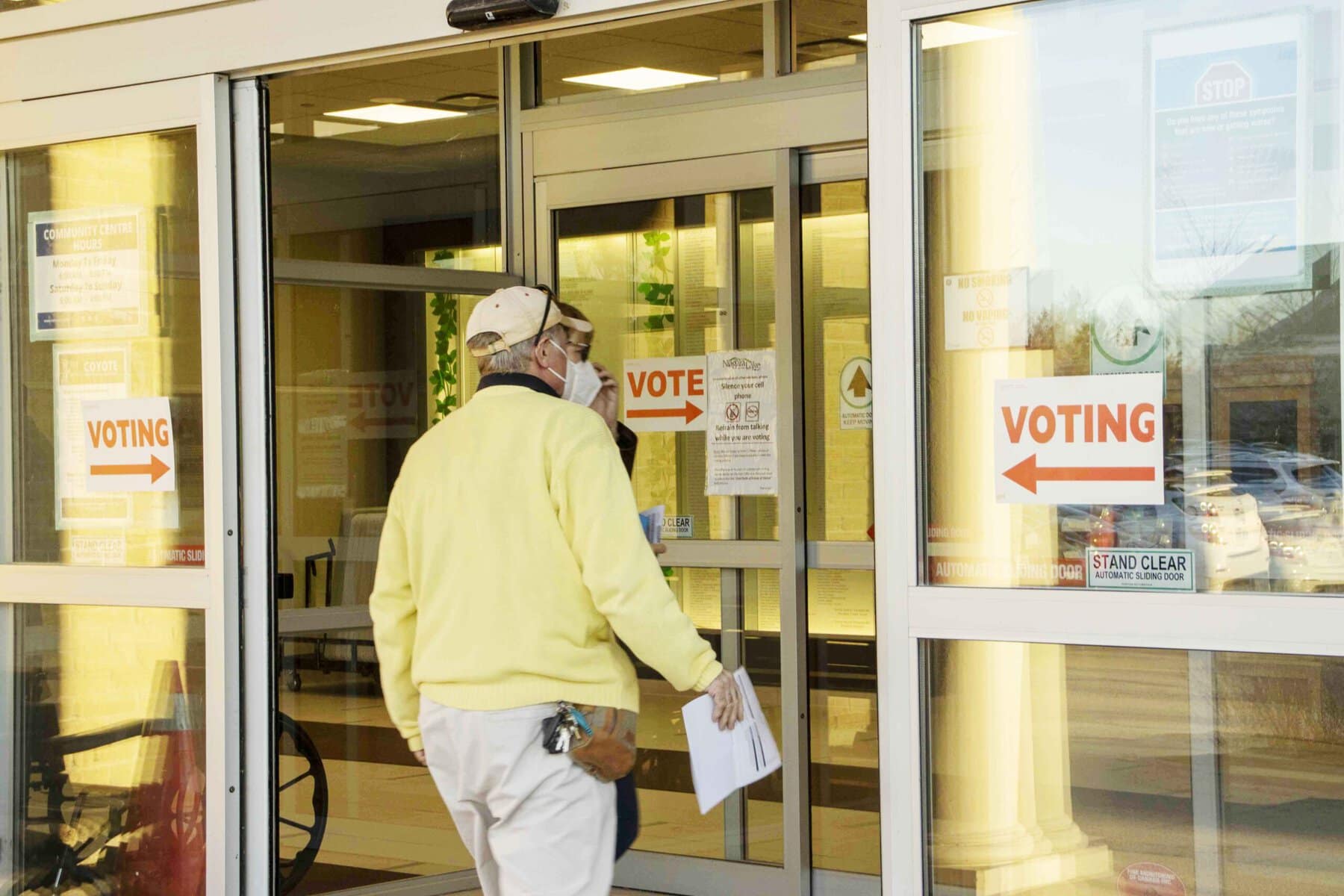


In a democratic system, an election is only as much of a representation of the people’s will insofar as it involves the participation of as many people in a community, region or nation as possible.
Looking at the participation of Niagara-on-the-Lake’s eligible voters during the last four election cycles, turnout has tended to oscillate between either slightly less than or slightly more than half of the eligible population of electors casting their ballots.
Four years ago, for example, the voter turnout was around 47 per cent, with 7,644 of the 16,100 residents eligible to vote casting their ballots in 2022 on election day or in advance polls.
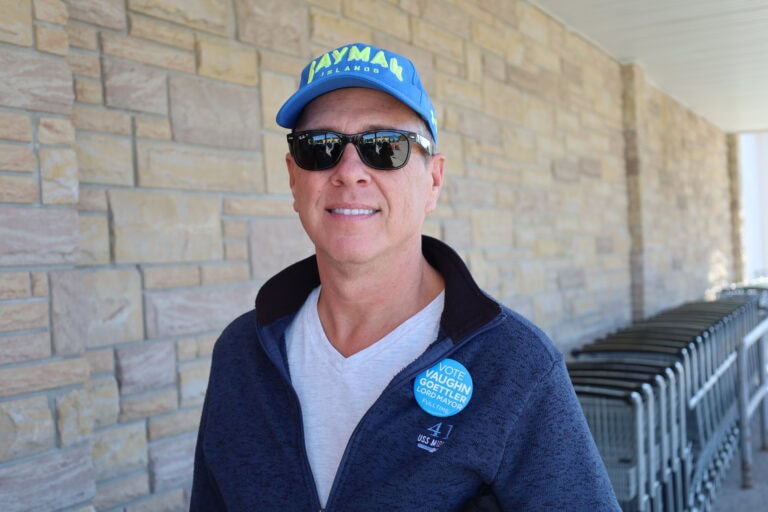
That year, Lord Mayor Gary Zalepa received 3,724 votes, beating out the previous term’s mayor, Betty Disero, by 1,138. The third candidate, Vaughn Goettler, who’s running for lord mayor again this year, got 1,268 votes.
However, the most votes cast for an individual candidate were not for Zalepa, Disero or Goettler, but Erwin Wiens, a current councillor who’s running this year for mayor — he got 4,978 votes.
Going back four years before that to 2018, Disero won the race for lord mayor by securing 4,169, which was 1,426 more than the incumbent lord mayor, Pat Darte.
The strongest difference between 2018 and 2022 was in the voter turnout: 59 per cent of eligible voters in 2018’s election casted their ballots, representing 8,394 actual voters out of 14,213 eligible voters. This is evident when looking at 2014’s voter turnout percentage of approximately 48.5 per cent.
When taking a look at how the votes broke among the five polling stations, situated in the five settlements of Niagara-on-the-Lake, one discrepancy emerges between this election and the 2022 election: in 2018, the majority of Disero’s votes were cast in Old Town, more than the other four settlements combined (2,335 in Old Town vs. 1,834 at the other four stations). In Virgil, for example, she received 874 votes.
However, in 2022, while Disero still received the majority of her votes in Old Town, for Zalepa, Virgil came through in spades: of the five settlements, the greater number of votes were cast there for him, at 1,504 votes. Disero, by comparison, got 484 votes in that settlement. Zalepa still saw strong support in Old Town, with 1,203 votes compared to Disero’s 1,463.
Travelling back even further to 2014, it’s evident 2018 represented a significant spike in voter turnout: 2014’s turnout was around 48.5 per cent, representing 6,531 of 13,477 eligible voters.
That year’s winner in the race for lord mayor, Pat Darte, earned 3,627 votes, 904 more than his sole competitor, Dave Eke. The most votes for a candidate went to John Wiens, who ran for council and received 3,641 votes.
In 2010, back at the start of the last decade, Dave Eke came out on top in the mayoral race, earning 2,310 votes, running against three candidates. Maria Bau-Coote, who ran for and won a seat on council, received the most votes at 3,778.
Information about the number of eligible voters and total number of ballots cast during that election was not publicly available before press time, however, federal census data from 2011 indicates the population of Niagara-on-the-Lake that was under the age of 18 (the legal voting age) was 12,840.
Finally, looking back 20 years ago, the 2006 election saw current councillor Gary Burroughs, who served as lord mayor from 2000 to 2010, win another term, receiving 3,420 votes, 874 more than the other candidate, Tom Braybrook. Council candidate Terry Flynn received the most votes in the race, earning 3,553.
Voter turnout this year was 47.04 per cent, representing 6,118 voters out of 13,006 eligible voters.
A few familiar names popped up on the ballots over the years, with varying degrees of success year-to-year.
Zalepa has ran a few times for council in the past two decades, receiving 2,057 votes in the 2006 election, 2,823 votes in 2010 and 2,200 votes in 2014. He served as a councillor from 2010 to 2014. In 2018, he was voted NOTL regional councillor with 2,408 votes and held the role for four years before throwing his hat in the ring for lord mayor in 2022.
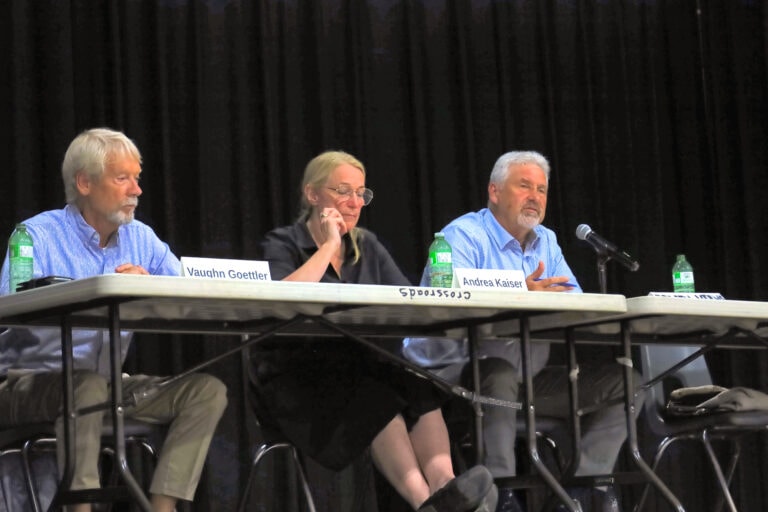
Andrea Kaiser, NOTL’s current regional councillor, is running against Wiens and Goettler to become the lord mayor. She served on NOTL council for eight years after winning back-to-back elections in 2006 and 2010, receiving 2,832 and 2,618 votes, respectively.
She wasn’t a nominee in the 2014 or 2018 elections, but joined the local race four years ago and earned the regional councillor spot, running against four other candidates and securing 3,100 votes.