


Niagara-on-the-Lake is spending about $13 million less each year than staff say it needs to keep its infrastructure in shape.
Now, council has backed staff’s recommended long-term funding targets, which would mean tax and rate increases over the next five to 20 years in an effort to close that gap.
The vote Tuesday night does not lock in those tax hikes just yet, nor does it approve the final asset management plan. It selects the levels of service for roads, stormwater, water and wastewater — some of the town’s highest-risk, highest-impact infrastructure systems that were identified through council, staff and resident feedback.
The approval of staff’s recommendation still needs formal adoption at the June 23 council meeting.
The final plan was originally expected in November, but treasurer Kyle Freeborn said it’s ahead of schedule and could return to council for approval as early as September or October, now that this phase is approved.
Most town assets might still be in decent shape — with 79 per cent rated fair or better — but the town needs about $22.27 million a year in capital investment to maintain municipal assets.
It has about $9.19 million in sustainable funding, leaving an annual infrastructure gap of about $13.08 million.
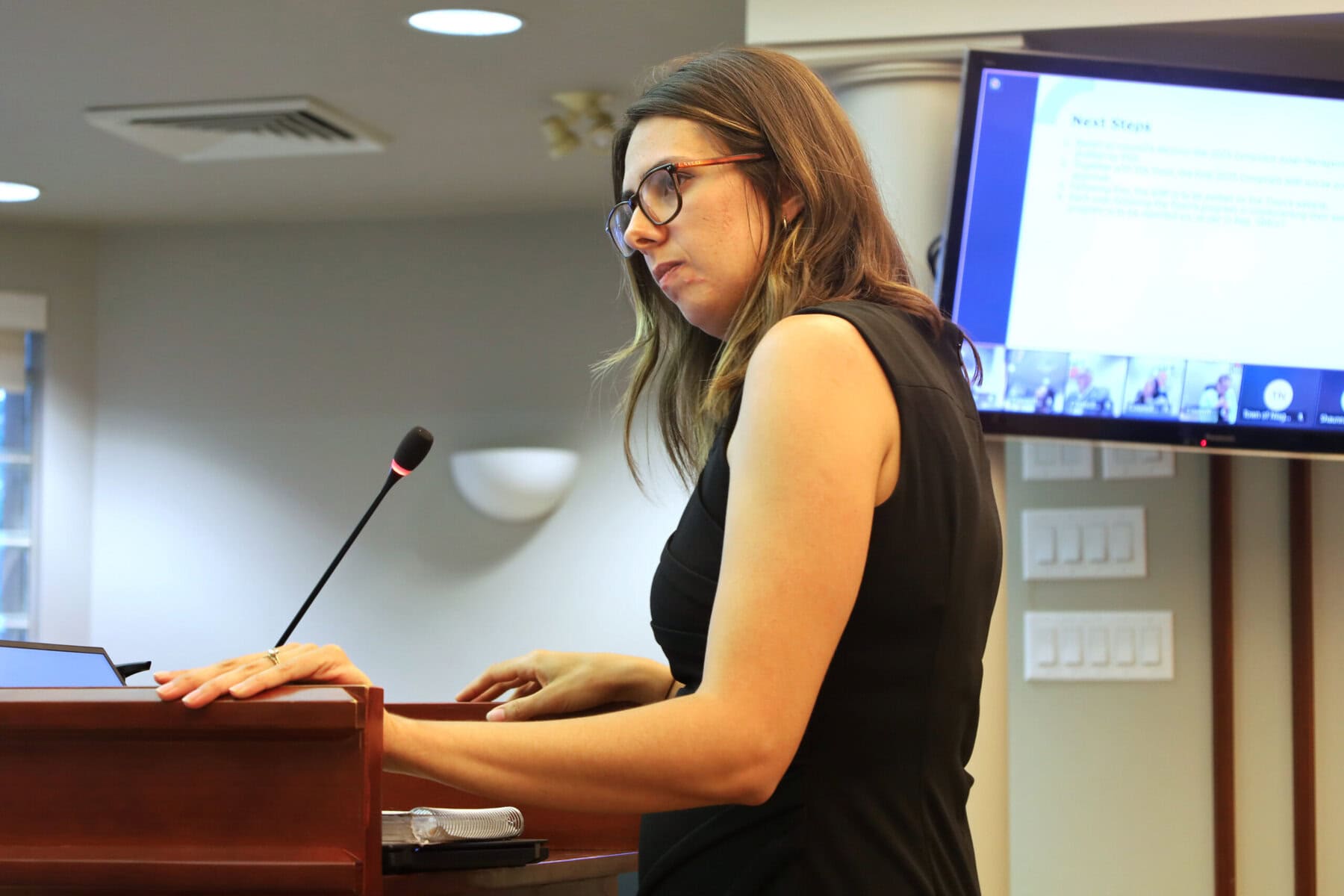
Marisa Banuelos-Spencer, an asset management adviser with PSD Citywide, told council the town looked at three options: keep current funding, fund as much as it can or take a middle-ground approach.
While staying at current funding levels could worsen asset conditions and raise risk, backlogged work and service disruptions, Banuelos-Spencer said, full “optimal funding” would come at the highest cost to taxpayers and ratepayers. It would, however, bring the best long-term results.
Staff recommended a hybrid approach, which council ultimately backed.
The approach puts tax-funded assets on the middle-ground track, moving toward 70 per cent of ideal funding over 20 years. That would mean an estimated 1.5 per cent annual increase on the tax levy, not including inflation.
Stormwater would be funded more aggressively. Staff recommended reaching 100 per cent of optimal stormwater funding over 20 years, which would mean an estimated 4.3 per cent annual increase on the stormwater levy.
Water and wastewater would also move to 100 per cent of optimal funding, but over five years. That would mean estimated annual increases of 1.9 per cent for water and 0.6 per cent for wastewater.
Banuelos-Spencer said the town will be able to review its progress annually and adjust the target, but that would also affect its ability to reach the service levels being set now.
“Approval of this plan is not binding the town to, for example, budgetary decisions,” she said.
Coun. Erwin Wiens said the town must focus on fixing the infrastructure it already has before committing to new projects, something he said town staff has brought to his attention.
“I’ve heard for the last eight years,” he said, “we’re not funding the buildings we have, before we build new buildings.”
“We have to remember that the next time someone says, ‘Let’s build something for the good of the community,’” Wiens said. “How are we going to fund it?”
Coun. Sandra O’Connor pushed for a note about green infrastructure and natural assets, saying that part of the regulation was not reflected in the recommendation before council.
“(The staff report) says, ‘Consistent with the requirements of Ontario regulation,’” said O’Connor. “It’s not entirely consistent, because the regulation talks about green infrastructure.”
Freeborn said green assets are not included in the recommendation report but that work is being handled separately and will be included in the complete plan.
O’Connor tried to add a separate item making clear that staff still have to complete the green infrastructure portion, but the amendment did not get a seconder.
Coun. Andrew Niven questioned whether municipal accommodation tax money could be used to help reduce pressure on the general levy.
Staff’s report says municipal accommodation tax money could be explored as a way to help pay for infrastructure, especially because tourism puts pressure on town assets.
“I thought we had an approved framework that would guide how the money is spent,” said Niven.
There is a draft framework, Freeborn said, but staff want to revisit it in light of asset management.
Wiens linked the infrastructure funding gap partly to past councils not keeping up with capital spending.
“It started in 1995,” he said, “when the province started sending less and less money to the municipalities.”
“Councils chose not to support capital infrastructure spending.”
He said that’s why the town “better buckle up for the next budget.”
“We gotta fix our roads, our infrastructure, our culverts, our ditching, all of that stuff,” said Wiens.
But Coun. Gary Burroughs said the issue is bigger than NOTL’s budget choices.
“We have a habit on this council of blaming everything that’s wrong on past councils.”
He said municipalities have been handed more responsibilities, but not the funding that used to come with them.
“The funding that we used to receive from both the provincial and federal governments has dried up and the downloading of more requirements has increased — without funding,” he said.
Wiens said his point was not to assign blame.
“Every decision we make, it doesn’t work in a silo. It works in conjunction with everything else,” he said.