



Incumbent Coun. Andrew Niven says Niagara-on-the-Lake needs to protect what makes it different as it grows — and after almost two years helping make those decisions on council, he’s ready to put his record before voters.
Seeking his first elected term after being appointed to council in October 2024 (following former councillor Nick Ruller’s resignation), Niven says he knew from the beginning he would have to prove himself and earn residents’ trust.
“Ultimately, I hope residents look at my performance over the past two years — my participation, my voting record and, just as importantly, my willingness to be available and responsive to residents — and make their decision from there.”
Part of that record is his approach to development, which Niven boils down simply.
“My position has been pretty consistent over the past two years: if a development fits, I’m prepared to support it. If it doesn’t fit, I’m not.”
Niven says that test — whether development fits — is ultimately about protecting what makes NOTL unique.
“There are very few communities that combine heritage, agriculture, world-class wineries, natural beauty and vibrant villages in the way Niagara-on-the-Lake does,” he said.
“The biggest threat is losing sight of what makes us special. Whether we’re talking about growth, planning, infrastructure or economic development, we need to make sure we’re making decisions that enhance our community rather than slowly eroding the qualities that residents value most.”
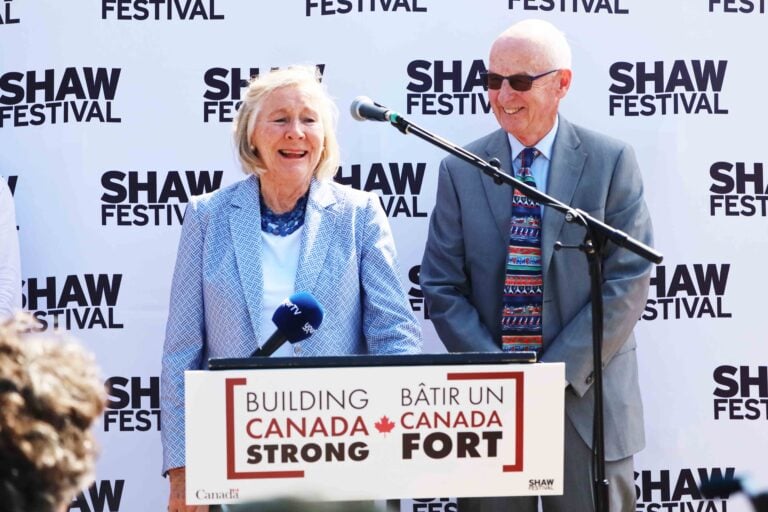
One major proposal Niven didn’t support was the Royal George Theatre rebuild.
He voted against the proposal that came before council, despite saying he “absolutely” supports the Shaw Festival and recognizes its importance to NOTL’s culture and tourism economy.
“My concerns were primarily around the scale (and) massing of the proposed building, I also had questions around the cash-in-lieu of parking component,” Niven said.
“I think it’s important that we can support an institution like the Shaw while still asking tough questions about how a project fits within our community.”
Niven takes a similarly measured position on the Rand Estate.
He is open to “appropriate redevelopment,” but says it needs to respect the property’s heritage value, follow the town’s planning framework and make sense for the surrounding community.
“To me, it’s a perfect example of where thoughtful planning matters more than simply saying yes or no.”
But Niven doesn’t see NOTL’s development debates as a simple fight between builders and the people who already live here.
“I don’t think it should be framed as developers versus residents,” he said.
Developers can bring investment and new opportunities, he said, while residents deserve to know their concerns are being heard and genuinely considered.
“My job as a councillor isn’t to automatically take one side or the other. It’s to look at the application, understand the planning policies, consider the community impact and decide what is in the best interest of Niagara-on-the-Lake.”
Asked what should happen if a developer repeatedly operates without regard for town rules or approvals, Niven said developers shouldn’t be treated differently from anyone else.
“The rules have to apply equally to everyone. Residents, businesses and developers all have an obligation to follow the bylaws, approvals and regulations that are in place.”
If those requirements are repeatedly ignored, he said the town should use the enforcement tools available to make sure they are followed.
“People need to have confidence that the rules apply fairly and that no one gets special treatment.”
Niven is also urging patience on another major decision facing the town: what to do with the old hospital on Wellington Street.
He called it one of NOTL’s most significant properties and said whatever happens there will affect the community for generations.
“I supported taking the time to fully understand the opportunities, the constraints and what the community needs before rushing into a decision,” he said.
“For me, the focus should be on finding a future use that provides a real, long-term benefit to the community, while also being financially responsible and appropriate for the surrounding area.”
Niven also weighed in on the town’s approach to dealing with the media. Earlier this year, chief administrative officer Nick Ruller directed staff not to respond to what the town considers opinion-based media requests, instead focusing on factual and policy-related questions.
Niven said transparency is “fundamental to good local government,” while acknowledging the town has responsibilities around accuracy and may sometimes have legal or other considerations to take into account.
But he said residents benefit when reporters can directly seek answers.
“Residents are best served when the media can ask questions, seek clarification and report accurately.”
Niven says the next council shouldn’t treat a new term as a reset.
He wants continued attention on roads, connectivity, wastewater and stormwater infrastructure and responsible growth, along with progress on parks and recreation, short-term rentals and Queen Street planning.
And with the next council shrinking to seven members from nine, he says every person — and every vote — will matter more.
“There may be fewer people around the table, but the responsibility is exactly the same: representing residents and making decisions that are in the best interest of the community.”