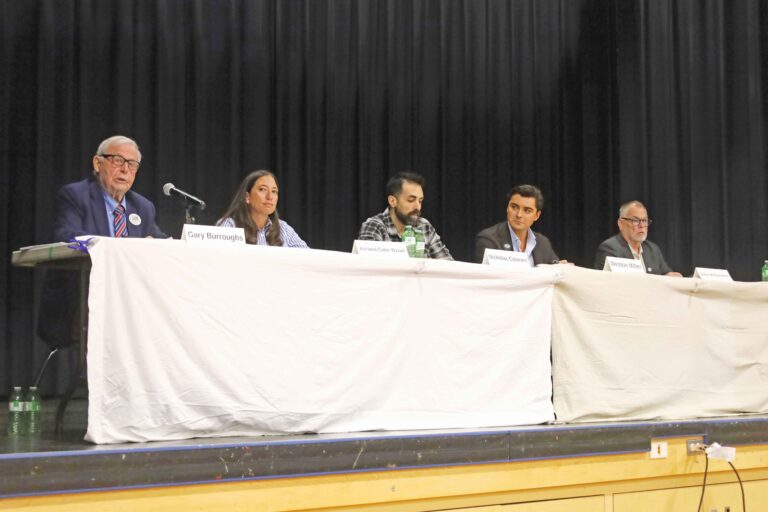

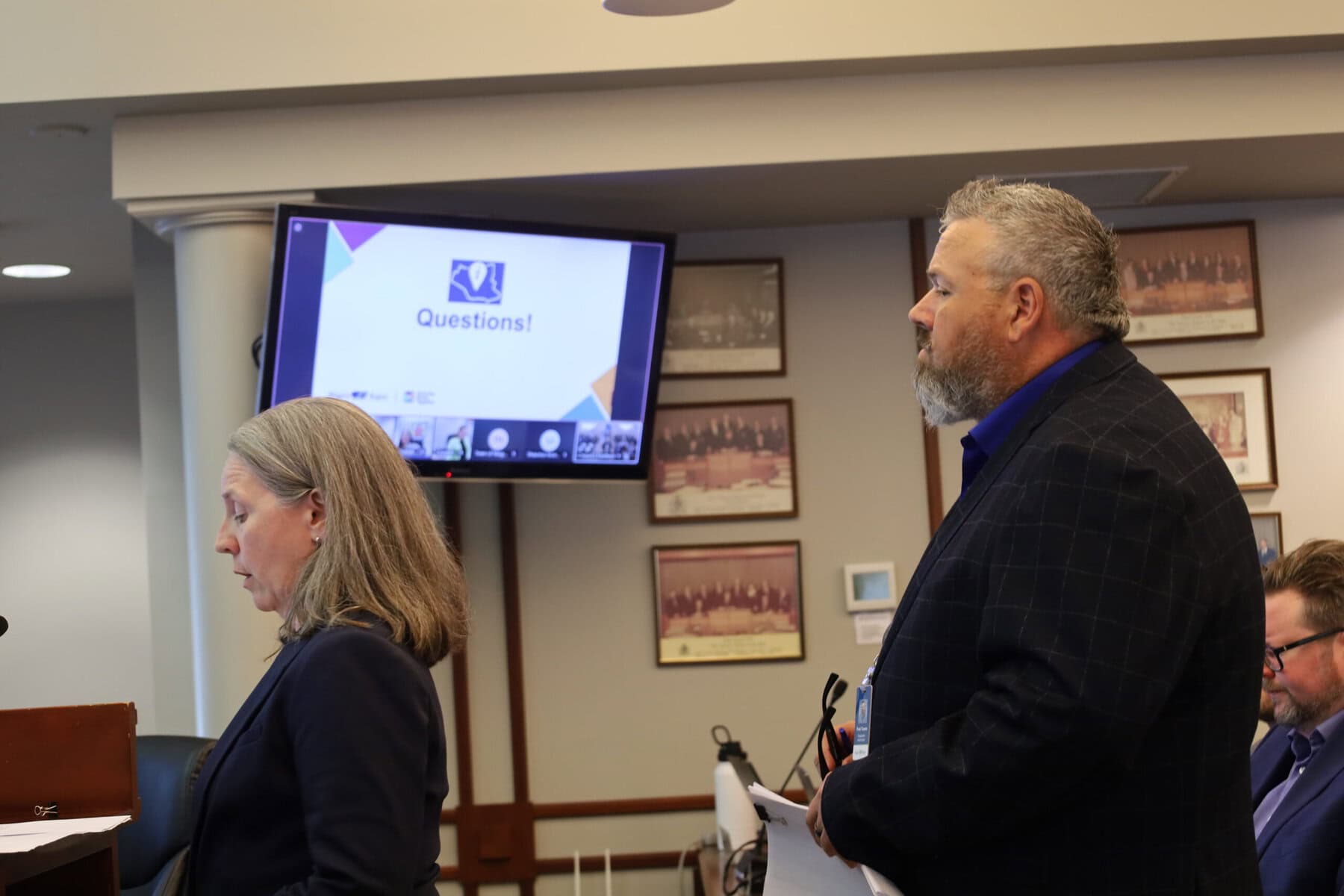


Niagara-on-the-Lake might be small on paper, but its roads are not.
That was the message councillors pressed on Niagara Region staff Tuesday, as a long-range transportation update turned into a pointed discussion about tourism traffic, summer road work, cycling, walkability, airport plans and whether the town is being heard.
Region staff were at NOTL’s committee of the whole general meeting to present an update on the Niagara Transportation Plan 2051, a regional plan meant to guide future decisions on roads, transit, cycling, walking and commercial transportation.
The plan is still early. Regional staff is now looking at where the transportation system is under pressure before deciding which projects should move forward, what they could cost and when they could happen.
But councillors quickly made the discussion local.
Coun. Wendy Cheropita said the town’s transportation needs cannot be measured only by its population.
She said NOTL has “much bigger needs than the size of our municipality.”
“Yet, I don’t see any indication that the servicing in our community addresses that,” Cheropita said.
Jill Stephen, the region’s associate director of infrastructure planning, told Cheropita the region is including “a tourism scenario” in its modelling.
The region, she said, will look beyond regular weekday travel patterns to consider how tourists get to destinations such as NOTL and how they move between Niagara destinations once they arrive.
Coun. Gary Burroughs questioned how much say the town has when regional work affects local traffic, saying the relationship between the region and NOTL appears to be a “top-down relationship.”
He pointed to work on Niagara Stone Road planned during the summer.
“As a tourist area, that’s the worst time that we could possibly be doing (that),” Burroughs said.
Frank Tassone, the region’s director of transportation services, said the region works with local municipalities on scheduling and tries to limit disruption, but some work has to happen in good weather.
“It’s unfortunate, but it’s the truth that transportation projects do cause some level of disruption,” Tassone said.
Burroughs asked whether traffic would still be able to move through the summer work on Niagara Stone Road.
Tassone said he could not speak to the exact construction plan, but said “the road will be open.”
Burroughs also raised the area around Airport Road and Niagara Stone Road, asking how the region would handle traffic control in an area he said is already backed up in summer.
“How are we ever going to deal with a traffic light, when in the summer, it’s stop and go both ways?” he said.
Tassone said the region has not made a final call on that intersection because it is waiting to see what happens with the Niagara District Airport as it plans to embark on a multi-year expansion — once complete, the airport hopes to accommodate up to 600,000 passengers a year.
“We have put a pause on making any decisions at that particular intersection, until we see exactly what the plans are for the airport,” he said, adding that the region will work with airport staff and town staff before choosing what will best suit the area.
Coun. Sandra O’Connor pushed the discussion toward consultation, pointing to council’s past opposition to the St. Davids roundabout.
“Yet, we received no feedback,” O’Connor said. “So, I’m not too sure what the purpose of this kind of consultation is.”
Tassone said the region did respond to a motion from the town by saying it would complete a safety audit and carry out a roundabout road-user training program, with specific emphasis on education for school-age children.
O’Connor said her concern was broader than one exchange.
“My point is about consultation and it seems to me as if we are not being heard when we do put forward ideas,” she said.
Shifting from roads to sidewalks, Coun. Erwin Wiens asked how walkability will be built into regional road planning in NOTL.
Tassone said the cost of pedestrian facilities generally falls to the municipality, which led to more questions about who pays for sidewalks, bike lanes and multi-use paths on regional roads.
After Coun. Maria Mavridis asked whether bike lanes are treated the same way as sidewalks, Stephen said cycling facilities on the road and inside the curb are generally the responsibility of the road authority — so for regional roads, the region — while facilities outside the curb are generally the municipality’s responsibility.
Tassone said multi-use paths are less clear: cycling facilities belong to the region and sidewalks to the municipality, but multi-use paths, which aren’t mentioned in the Municipal Act, are a grey area.
Tassone said local and regional routes must work as one connected system, “making the best connections, on behalf of us as a whole.”
Coun. Andrew Niven said NOTL needs to be treated differently because of its mix of tourism, heritage, agriculture and seasonal demand.
“We are unique,” he said. “That would be my only assurance: that we remain unique.”
The region will continue presenting the transportation update to local councils, review feedback from its first round of public consultation and move toward the next phase from late 2026 into early 2027.
A final transportation plan and 10-year implementation plan are expected by the end of 2027.