

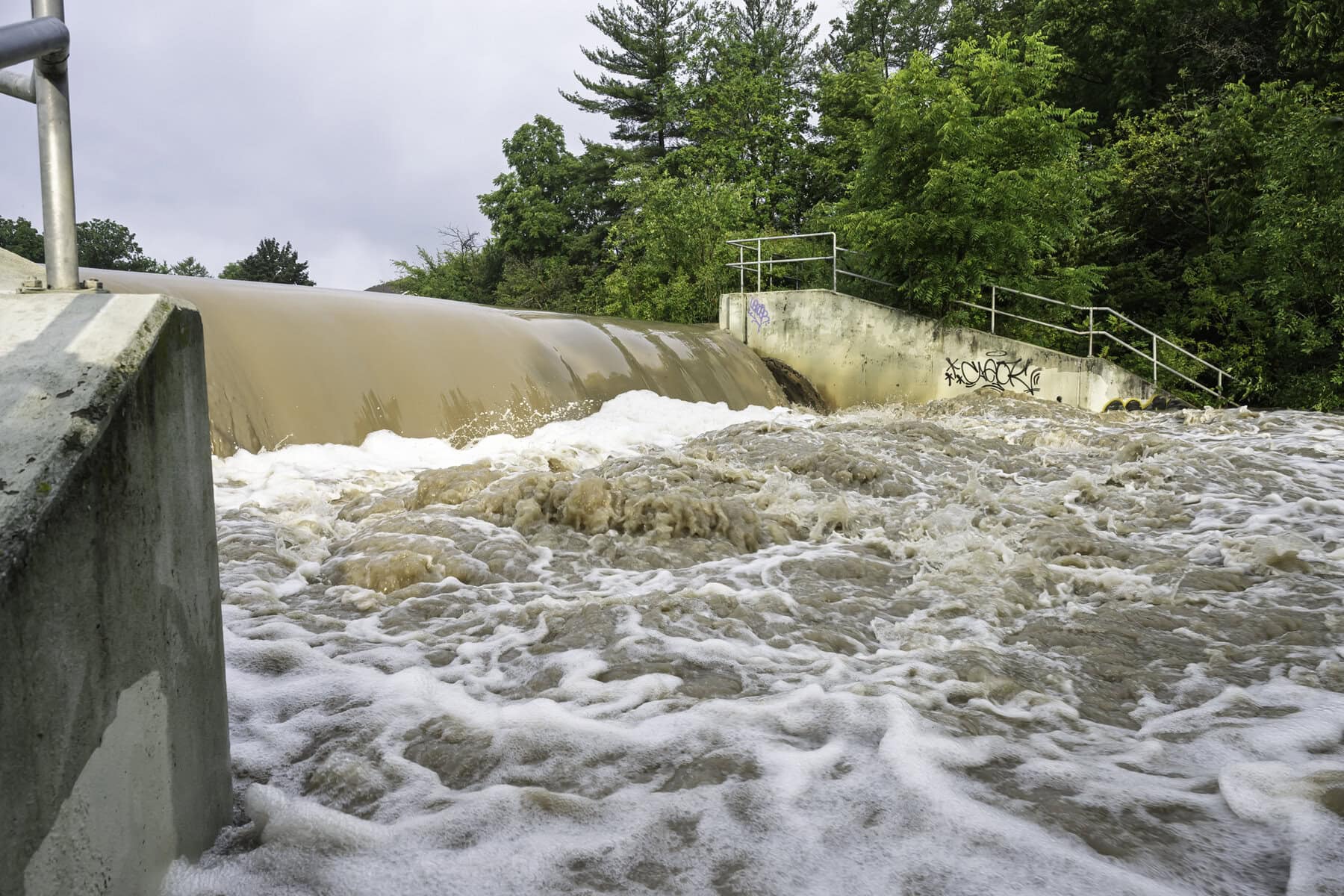


The Town of Niagara-on-the-Lake is responding to what it says are misconceptions about municipal emergency declaration after two extreme rainstorms last week led to widespread flooding in town.
In a media release from Thursday, chief administrative officer Nick Ruller said media coverage and online commentary have incorrectly suggested that declaring a state of emergency would automatically provide access to provincial or federal funding.
That is not the case, he said.
Ontario guidance states that an emergency declaration does not provide automatic access to funding, legal protections or expedited access to resources. Municipalities can also request a range of provincial assistance without declaring an emergency.
He described an emergency declaration as a specific legal and operational tool intended for circumstances in which extraordinary measures are required to protect the community or support a municipal response. It is not a measure of the seriousness of damage or losses experienced by residents.
The Niagara area, including NOTL, experienced two large rainstorms on July 28 and Aug. 2.
The town recognizes that last week’s rainfall and flooding have caused significant and consequential damage to homes, farms and businesses, Ruller said.
“The damage to homes, farms and businesses is significant and deeply consequential, regardless of whether a declaration is made,” he said. “The absence of a declaration does not diminish that hardship, nor does it mean the town is failing to act.”
Niagara-on-the-Lake continues to assess its circumstances against the established criteria in its emergency response plan.
Ruller said his assessment is informed by more than 25 years of experience in public safety and municipal leadership, including experience as a community emergency management co-ordinator in Ontario and formal training through Emergency Management Ontario, UNC-Chapel Hill and the U.S. Department of Homeland Security’s federal emergency management institute.
The City of St. Catharines declared a state of emergency on Aug. 4. Ruller noted that an emergency declaration by “a neighbouring municipality” reflects that municipality’s own conditions, risks and operational requirements. It does not necessarily mean the same action is required or appropriate in NOTL.
“Declaring an emergency simply because another municipality has done so would be irresponsible and contrary to the evidence-based process expected of municipal leaders,” Ruller said.
Municipal staff continue to respond to the flooding, assess damage, document costs, investigate infrastructure concerns and pursue available forms of assistance. Those actions do not depend on an emergency declaration.
The town will continue to monitor conditions and assess whether the established criteria for declaring an emergency have been met, he said.
“If a declaration becomes necessary to protect the community or strengthen the municipal response, the town will act without hesitation,” Ruller said.
The town said public scrutiny of its response is appropriate, but emphasized that information about the purpose and effect of emergency declarations should be accurate, particularly as residents continue to deal with the effects of this summer’s flooding.