


Niagara-on-the-Lake experienced torrential downpours and flooding in several roads, homes and fields over the summer. Now, grape growers are beginning their harvest and, despite this bout of extreme weather, are optimistic about this year’s yields.
Overnight July 27 into July 28, NOTL received six inches of rainfall, overwhelming the municipality’s stormwater systems. Six days later, on Aug. 2, more than four inches of rain fell.
During the Cuvée Royale Harvest Celebration at Chateau Des Charmes on Friday, guests and friends of the winery had the opportunity to help harvest chardonnay grapes.
Svetlana Sidorenko, the winery’s director of brand marketing, told The Lake Report the winery was happy the grapes were ready for harvest after the wet season.
Kevin Watson, chair of the Grape Growers of Ontario, is similarly hopeful.
The first variety struggled after the rain, and he was not happy with the quality, but more recent varieties have been faring well, he said.
“Hopefully we’ve turned a corner. It depends on the weather.”
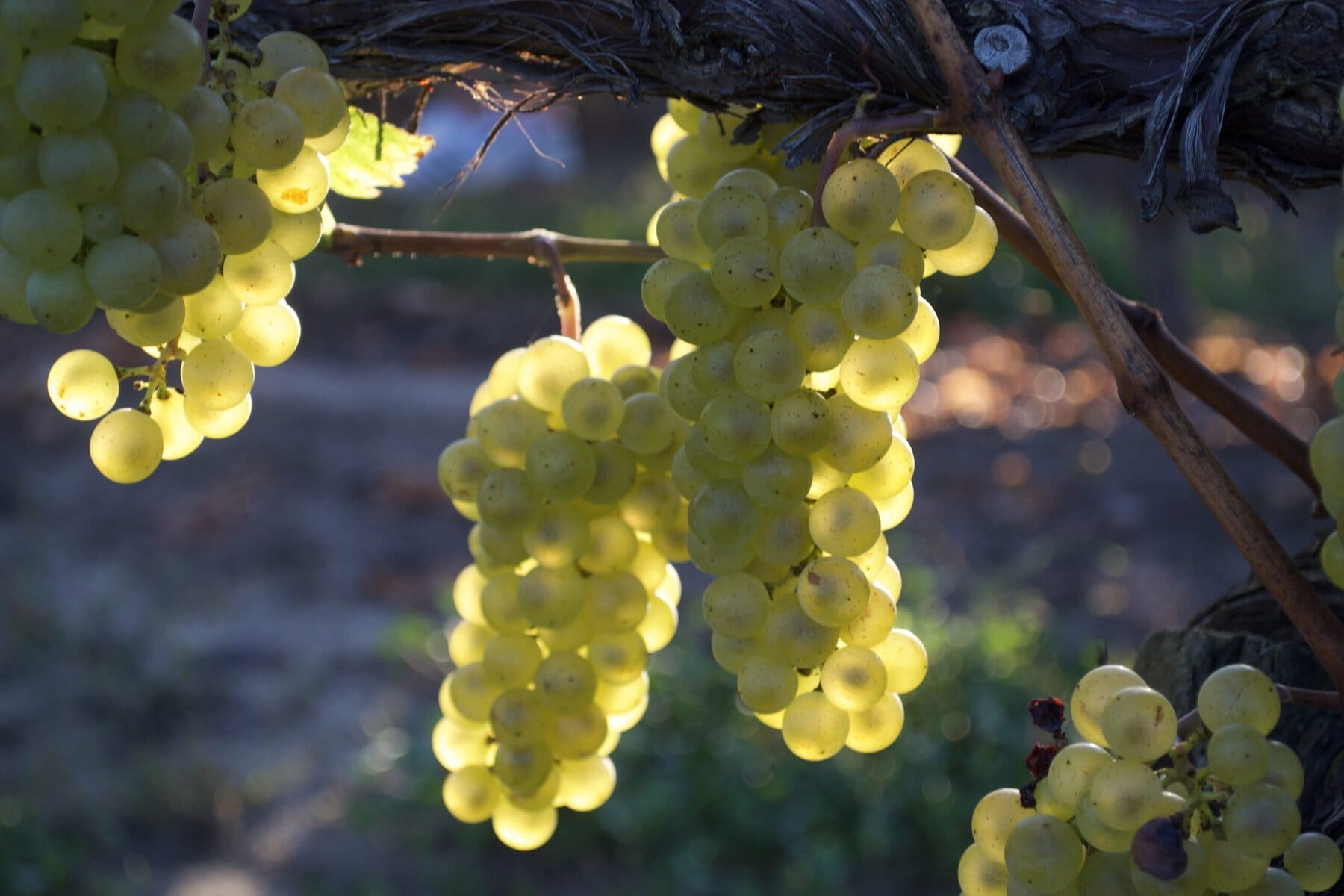
Watson said thicker-skinned varieties, such as Cabernet Sauvignon, Merlot, Petit Verdot, Vidal and Chardonnays, tend to do better during an exceptionally wet season.
Getting sunshine and no rain, as NOTL has had for the last week, is exactly what grape growers need, Watson said.
Growers have just begin harvesting pinot gris and red hybrid grapes, so the season is still fairly early, he said.
“Every year it depends on what Mother Nature throws at us in the fall time,” Watson said.
Thanks to the wet season, Niagara has a super healthy canopy, he said.
The canopy refers to the aboveground parts of a grapevine, including leaves, shoots, stems and fruit.
Many grape growers are happy with the sweetness and the sugar of the grapes, Watson said.
“It’s because the canopy is so healthy.”
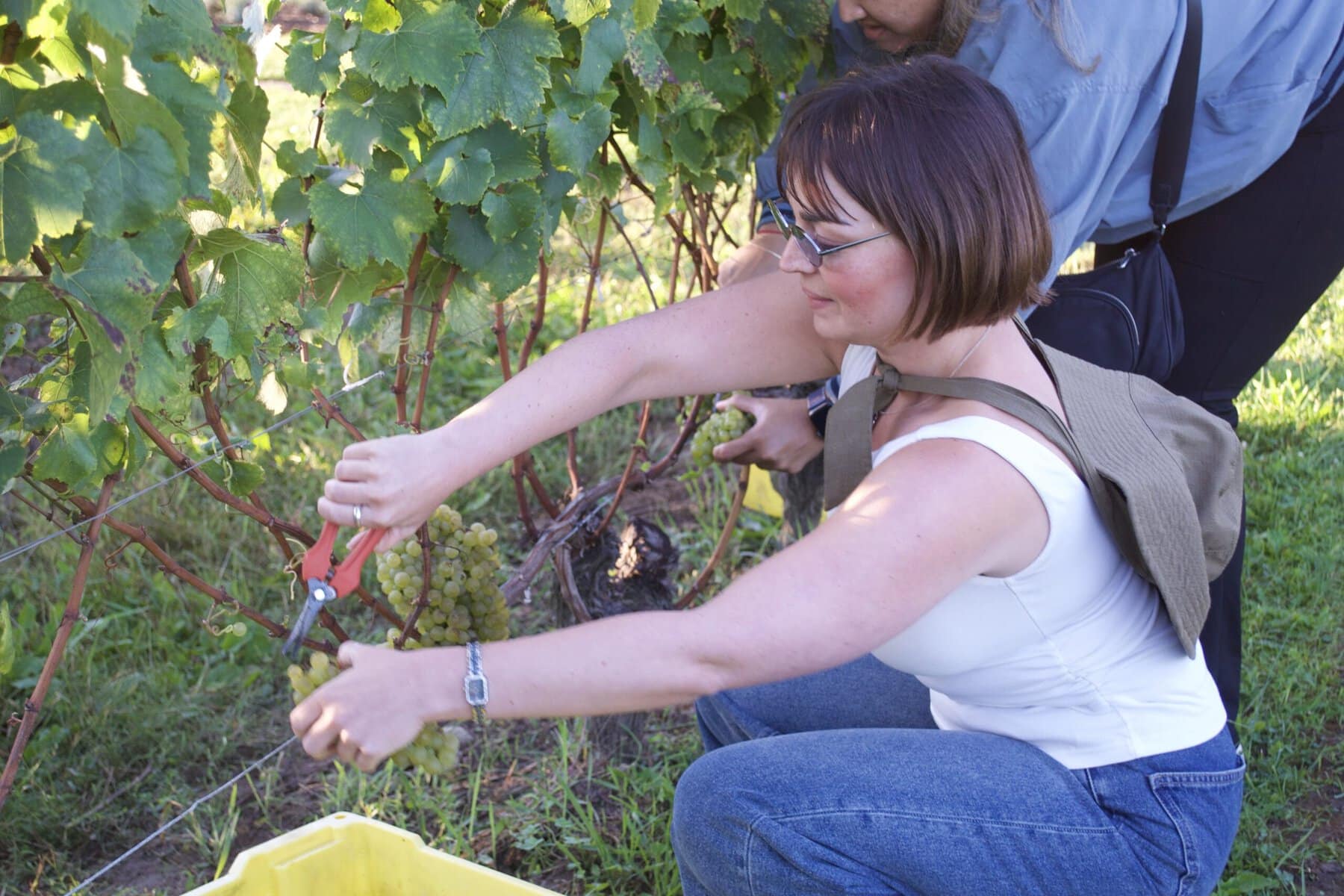
Credit: JULIA SACCO
Elisabeth Bouffard tries a hand at harvesting Chardonnay grapes at Chateau des Charmes.Bill Redelmeier, owner of Southbrook Vineyards, told The Lake Report the winery’s organic practices helped during the flooding.
“I wouldn’t say we benefitted, but we were maybe not as badly hit as conventional growers,” Redelmeier said.
Southbrook was the first wine estate in Canada to earn both organic and biodynamic certification for both its vineyard and winery.
Redelmeier says these practices have to do with how you’re treating your soil, your workers and your animals on an ongoing basis.
“We drained a lot faster than a lot of our compatriots in Niagara did,” he said.
After the first rainfall, Redelmeier said millions of worms had come up to the surface to die, leaving two-metre deep holes straight down to the winery’s drainage system.
“We were able to walk in the vineyard within a day or so of the first heavy rainfall,” he said.
With unnatural weather events becoming more and more common, Redelmeier says wine growers must work on building up resiliency.
He does not want his plea to sound confrontational, but hopes conventional grape growers will pick up some of the things organic farmers are doing.
“I don’t expect everyone to drop all chemical use,” he said. “Getting certification gets rid of that safety net, so I don’t expect everyone to want to do it.”
Despite the heavy rainfall, Redelmeier described his outlook for this year’s harvest as hopeful.
“We’ve got problems like everybody else does,” he said. “But I’m looking at this point, it could be our best harvest in 10 years.”