


This year saw no end to the trade war between the U.S. and Canada that kicked off in 2025, nor the economic pressures impacting many people at home and abroad. Here in border-town Niagara-on-the-Lake, it’s meant mixed results in tourism levels and engagement for businesses and visitor spots in downtown Old Town.
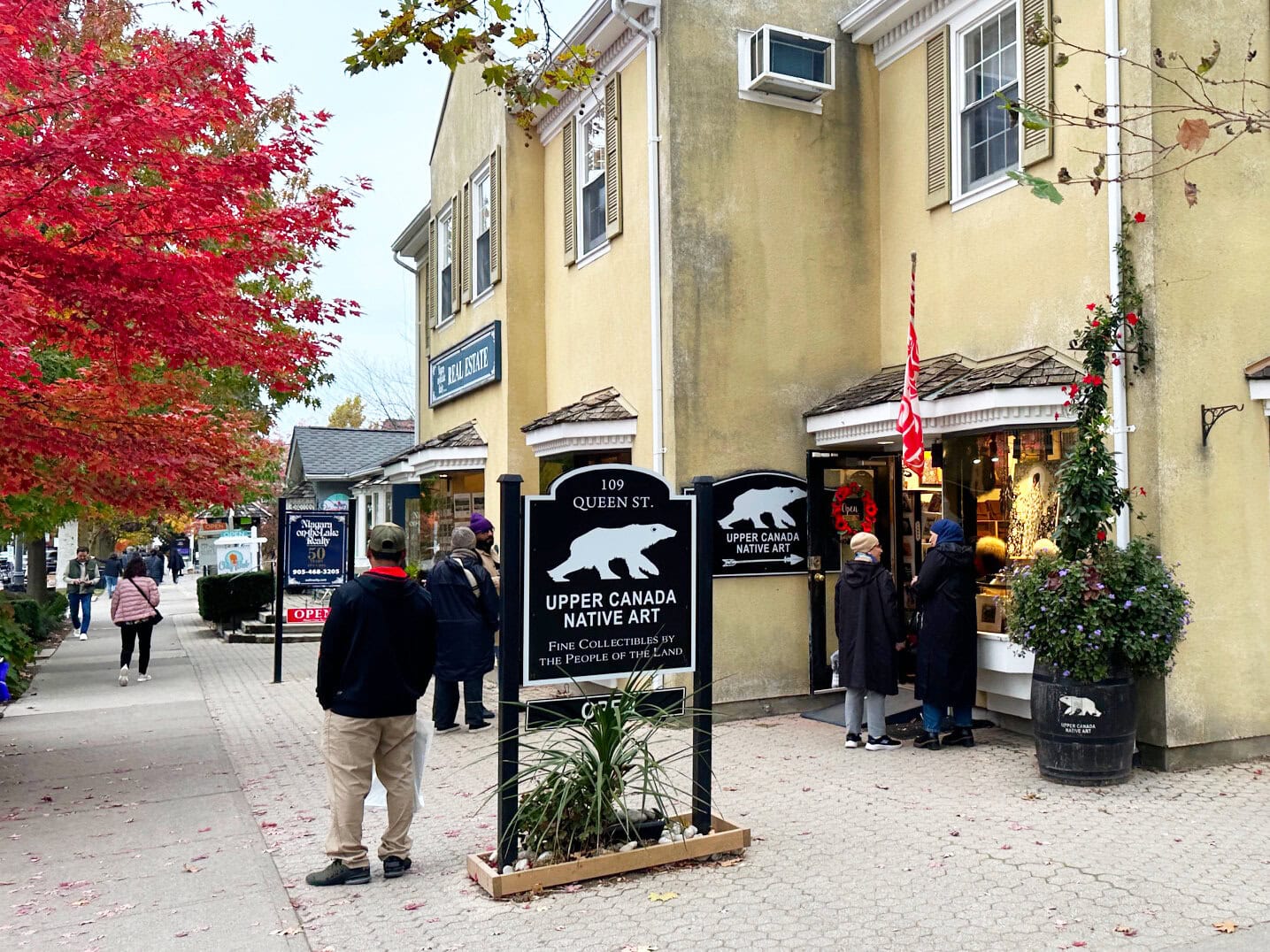
A $3,500 pieces of Indigenous art might once have been an attractive purchase for an American visitor to Niagara-on-the-Lake. These days, Tom Chapman is encouraging artists to think about making 10 pieces priced at $350 instead.
The owner of Upper Canada Native Art Gallery on Queen Street is working with Indigenous artists across Canada to produce smaller, more affordable pieces as U.S. tariffs make larger purchases increasingly difficult for American customers.
Chapman estimates a $10,000 sculpture could cost an American buyer another $5,000 to bring home. The shop has also stopped shipping to the U.S., citing increased paperwork and changes to the duty-free exemption for low-value shipments.
“Hey, can you scale this down? Make it more travel-friendly and approachable for a first-time buyer,” Chapman said, describing a typical conversations with an artist. “It’s smaller, it’s more economical when it comes into the gallery. It broadens our and their ability to keep the wheels turning.”
Despite the challenges, Chapman estimates gallery foot traffic has increased by more than 20 per cent this year.
Across Old Town, Niagara-on-the-Lake’s visitor ambassador program recorded more than 79,000 engagements between May 15 and Oct. 17, compared with about 62,000 during the same period in 2025, an increase of roughly 27 per cent.
“That’s when one of our ambassadors actually has a conversation with someone,” said Laurie Harley, the program’s lead, adding that visits to the courthouse also count as engagements. The program tracked visitors from 118 countries this year, up from 103 last year, with Harley personally noting “a lot more cultural diversity and a lot more families.”
Kathy Weiss, CEO of Tourism Niagara-on-the-Lake, said approximately 44,000 more visitor touchpoints were recorded so far in 2026 compared with the same period last year. Touchpoints include visitors to the courthouse information centre, the bus lot near Fort George and people speaking with ambassadors outside the courthouse.
Weiss said the town is working with a consultant to build its data-capturing system over the coming years.
“We want to know more things like how many people are staying overnight, how much are they spending, that kind of thing,” she said.
At the Shaw Festival, executive director Tim Jennings paints a picture of a different tourist season: following strong advance sales, attendance decreased in July and August, particularly among American visitors.
Jennings said headlines about severe flooding in Niagara may have discouraged visitors coming from far away. He compared it to the summer of 2023, when images of wildfire smoke across Canada and parts of the U.S. kept some tourists from crossing the border.
Rising costs are another concern that Jennings said visitors are increasingly aware of.
“Maybe they’ll vacation for three days instead of four days,” he said. “And so from our point of view, that’s a reduction of 25 per cent in terms of the number of shows they take in. And it’s … one less night in hotels, it’s probably two to three less meals, and maybe a day less shopping and going to the wineries.”
In a typical year, about 30 per cent of Shaw attendees come from the U.S., with another two to three per cent from overseas.
Meanwhile, Katherine McMichael, owner of Lady Lou Collective on Queen Street, sells mostly smaller items priced under $100, all sourced from Canadian businesses. She said has seen more traffic this year than last.
“Luckily for us, [the tariffs] don’t impact us because we focus on Canadian small businesses. We’re buying product from Canada, but some of our artists design in Canada and then make overseas, so they’ve had to deal with some tariffs, and they’ve lost sales,” McMichael said.
“I’m sure there’s an element of price increase a little bit on our side, but I don’t have to deal with tariffs on the day-to-day because I keep all of my buying within the country.”