



When asked to characterize the story of Niagara-on-the-Lake, Sarah Kaufman says it is one of people who step up to make a change for the better.
She traces that line of community involvement throughout a variety of events that have happened in town, from volunteers stepping up to fight in the War of 1812 to the immigrants who planted the seeds of NOTL’s vast fruit-growing and winery operations.
“Even today, there are people in the community who want to improve society or future generations,” she says. “It can be very inspiring history to learn from.”
This December, Kaufman is closing a chapter in the story of her own involvement to make Niagara-on-the-Lake a better place to live.
She is stepping down as the Niagara-on-the-Lake Museum’s CEO and curator, effective Dec. 31, after more than 15 years at the helm of the 130-year-old museum.
“It was a really difficult decision for me to make,” she says of leaving. “I’m sad. Excited to start new things, but also sad, because I really love this museum and I really love the community.”
In the new year, she’ll be taking on a position as the Port Colborne Historical and Marine Museum’s curator. Kaufman grew up in the city.
Her connection to NOTL starts early, through her family. Her mother was born here and some of them lived in town when she was young. Her grandmother was a member of the Royal Canadian Legion Branch 124, so she remembers visiting town every year on Remembrance Day as a kid.
Sixteen years ago, she joined the NOTL Museum to take on some contract work. A year later, she became the museum’s managing director.
“When I came on, it was just Amy (Klassen) and I. We were doing everything. I was changing the lightbulbs and shovelling the snow.”
Her work has been highly collaborative, she says, helping out in a number of departments.
“When you come into work, you might have your mind set on doing one project, but then you get pulled away into other things,” she says. “No day is the same.”
Since joining the museum, Kaufman has led the charge on putting together several new historical exhibitions and projects.
Alongside work on the permanent exhibitions at the museum’s main building on Castlereagh Street, the museum has put on a number of temporary exhibitions shedding light on unique aspects of NOTL’s history, plus historical landmarks around town, such as the Voices of Freedom Park in Old Town and the Landscape of Nations in Queenston.
A lot of this work is made possible through collaborations with others in Niagara, who lend their interest, knowledge and ideas to projects, she says.
One example of this is the museum’s 2023 exhibition, “Bound and Determined: Chloe Cooley, Enslavement, and the Fight for Freedom,” detailling a historical event involving an enslaved woman in Niagara-on-the-Lake, which led to the passing of the British Empire’s first anti-slavery legislation.
Community involvement, Kaufman says, made the work stronger.
“We run the museum, but it’s not our museum. We’re just the stewards on behalf of the community.”
She points to other initiatives the museum has led in recent years, including May’s neighbourhood walks, wherein each week, a new tour guide takes people through specific parts of NOTL, describing its history to them.
Kaufman says she’s aware that many people in town are deeply passionate about the historical parts of the community they live in. She says she believes the built landscape of NOTL is important and that people have a right to defend it.
NOTL’s nerves around change is not a new phenomenon, she adds — she points to a document inside the walls of the old Courthouse that is a petition from the 1800s by residents looking to ensure Fort Mississauga would be maintained and not destroyed.
“There is a need to adapt and change, but there is an opportunity to adaptively reuse a number of buildings in the town.”
Investing in heritage is important, she says. What that also means, she adds, is investing in places like the museum, so it can spread knowledge of that history.
As a result, “any residents, or new residents, or tourists, coming into the community, will already easily understand what it is they’re coming into,” she says.
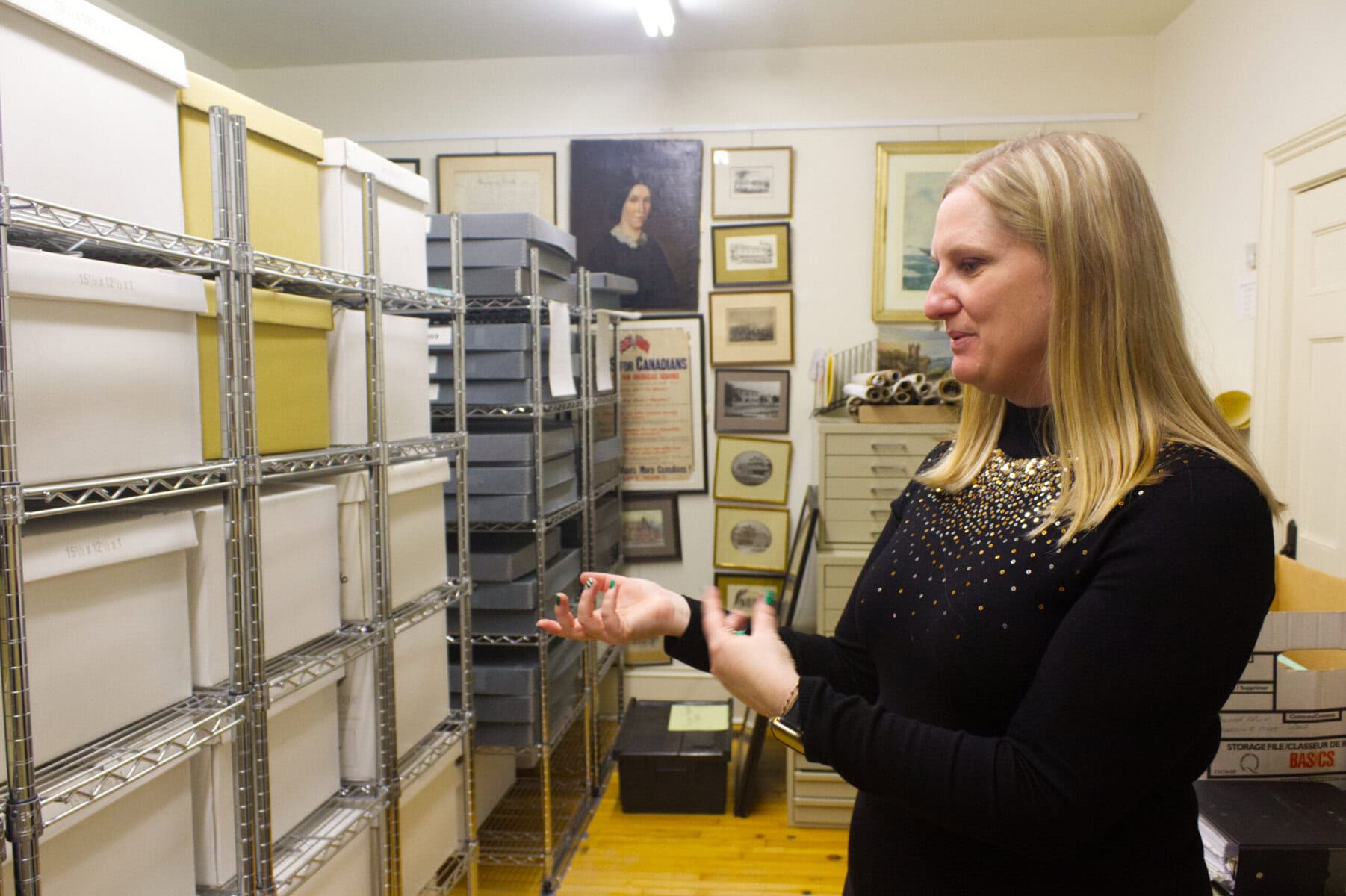
That investment is well underway. This year, the NOTL Museum received more than $2 million from a variety of sources to fund its 8,000-square-foot expansion, adding more space for its exhibitions and archives, plus upgrading its facilities for accessibility needs.
“I’m confident in where the project’s at,” Kaufman says. “I’m very confident that the project can continue.”
While she won’t be around as lead curator to cut the ribbon when the newly expanded museum opens, she says she still plans to help out at the museum from time to time as a volunteer.
“NOTL has been an amazing experience for me. I started very young here. I learned so much from the volunteers.”
Throughout her tenure at the museum, Kaufman worked to make history come alive for people and give it relevance to the present day.
One of the best ways to make history interesting and lively for people? Injecting a little levity in the conversation and showing them the ways events in the past connect to where they are today.
“I think there’s things in our history that can be connected to everyone living here or visiting here,” she says. “You just need to find the connection. And I think people learn by having fun.”