


The stone house at the end of Paxton Lane was one of a few to survive the fires set by American forces that destroyed much of St. Davids during the War of 1812. Now, the dilapidated house is getting a second chance, along with a few new additions to the property.
Niagara-on-the-Lake council greenlit the heritage committee’s recommendation last week to restore the historic David Secord House to its former glory, while also approving plans to build the three modern additions proposed for the property.
This approval came despite a warning from town staff that one of those additions could make the original building harder to see.
Town staff had recommended a different plan for the 226-year-old home, located at 46 Paxton Lane: approve the restoration and the south and west additions, but scale back the north addition before approving it, warning its size could diminish the house’s prominence when approached from Paxton Lane.
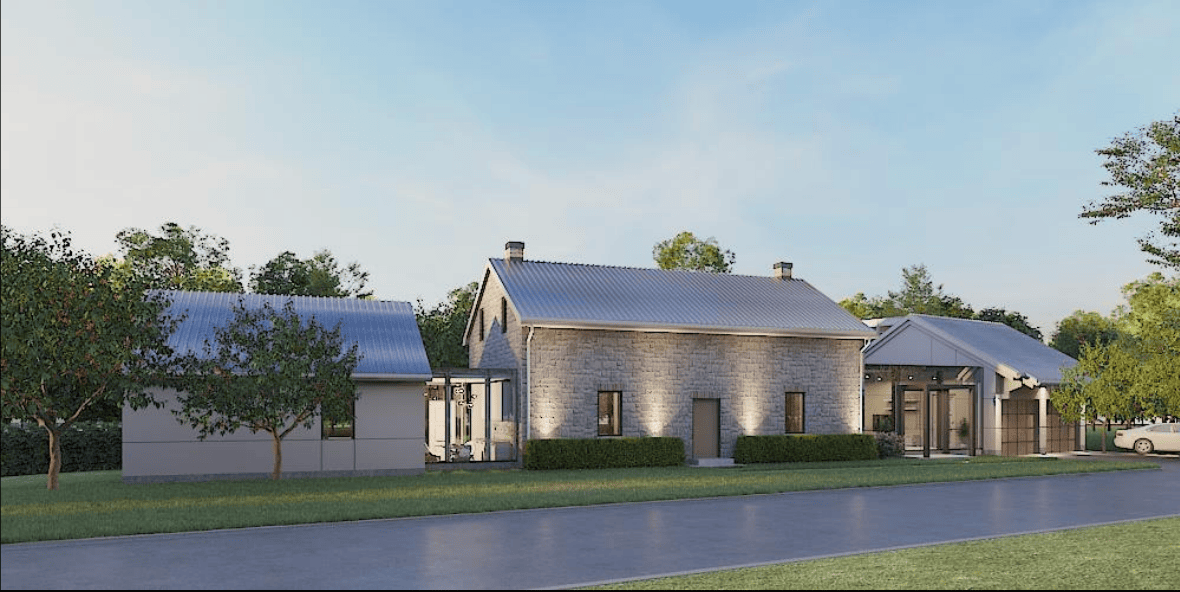
The plan would rebuild the damaged stone walls using original stone where possible, then add a bedroom wing to the south, a sunroom facing Four Mile Creek to the west and a garage with living space above and below it to the north. Glass connections would link the new sections to the historic house.
The project to restore and make additions to the house is being spearheaded by Hummel Properties Inc. Its owner, Rainer Hummel, introduced the proposal to the town a year ago.
Workers have been taking apart damaged sections of the stone walls under an emergency heritage permit issued by planning director Aimee Alderman, after the project’s masonry contractor found loose stonework and burned timber embedded in them.
The Lake Report asked the town whether staff or an independent specialist also inspected the walls, who will check which original stones can be reused, and when and under what authority Alderman issued the permit. The town had not responded by publication time.
Coun. Tim Balasiuk, who sits on the heritage committee, said members supported the design while calling for period-appropriate windows in the restored house “so that the heritage attributes of the building would reflect the era of the home.”
The committee’s main concern, he said, was “the heritage attributes of the actual home, not necessarily the additions.” He described its approach as “giving one to get the other, trying to work with the applicant.”
Council candidate Nicholas Colaneri, who has repeatedly spoken at town meetings about development at 46 Paxton Lane, urged council to restore the house but reject all three additions.
When asked afterward what residents would lose if the plan goes ahead, Colaneri said, “They lose our history. They lose the Secord House. They lose future protections for other historic buildings.”
He said the house could be made into a comfortable home within its original footprint: “I would have approved the real restoration of the house,” he said. “Zero additions.”
Colaneri also questioned why council considered the additions without a new heritage impact assessment, saying the 2020 assessment staff reviewed predates the proposed additions.
At the meeting, Coun. Sandra O’Connor asked staff: “Is there a heritage impact study that is still relevant for this?”
Alderman said staff considered the earlier assessment alongside the applicant’s new plans and supporting documents, including a letter from August describing the additions and arguing they would preserve the house’s historic character.
O’Connor moved to set aside the heritage committee’s recommendation in favour of staff’s narrower plan. Coun. Gary Burroughs seconded her motion, but it failed. Council then approved the committee’s recommendation.
Coun. Erwin Wiens called the outcome “a huge victory for all the people involved,” saying it would restore the house and make it usable.
The David Secord House was built in 1799, according to the NOTL Museum. David Secord, who owned the property and lived in it until his death in 1844, was a military officer, merchant and politician in Upper Canada.
The same night council approved plans for the home, it OK’ed an agreement requiring the completion of a heritage impact assessment before building permits can be issued for five blocks in the neighbouring Settlement at St. Davids subdivision.
That future study will examine how proposed buildings on those blocks could affect the Secord House. It does not assess the additions to the house itself.