

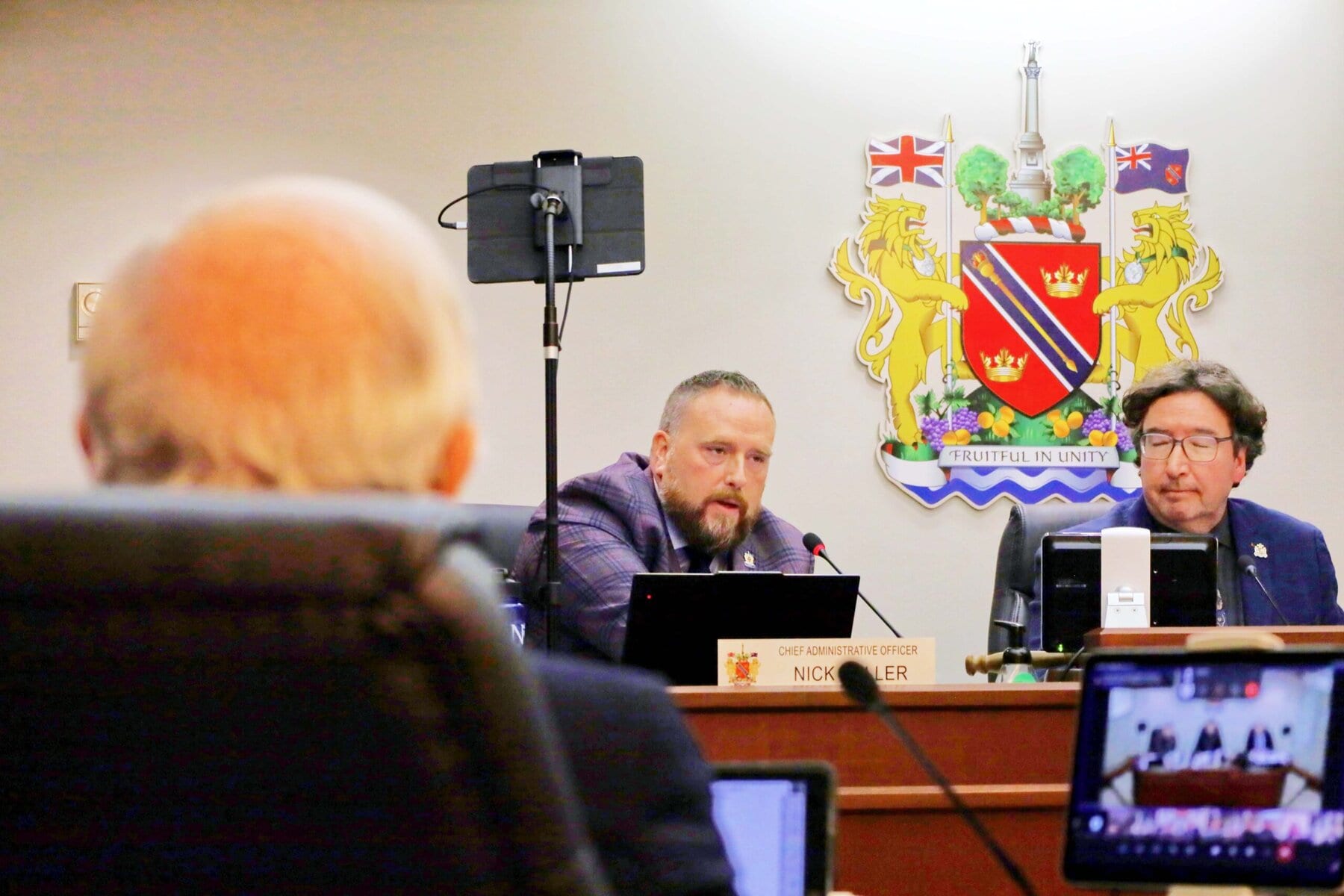


Much as I would not like to do so, this columnist feels compelled to comment on Nick Ruller’s (Niagara-on-the-Lake’s chief administrative officer), Feb. 5 letter to The Lake Report in which he states: “Town staff will no longer respond to information requests made in support of opinion, advocacy or commentary pieces.”
Quite frankly, in six years of writing the Arch-i-text, I have never requested supplementary information from town staff. Rather, I have depended on the publically accessible documents, staff recommendations and livestream videos of council and committee meetings.
Further, when the publicly shared reports and data went beyond my expertise, I have sought out professionals (legal, engineering, etc.) to properly inform my commentary.
Further, when the publically shared reports and data went beyond my expertise, I have sought out professionals (legal, engineering, etc.) to properly inform my commentary.
Moreover, except and whereas it was necessary to specify by name the source of a particular quotation, I have deliberately avoided identifying any member of town staff — below the managerial level — since I assumed they were marching according to the direction of their superiors within the town’s hierarchy.
In short, Mr. Ruller’s pronouncement will have very little impact on this writer and the content of this column.
However, there is a greater principle involved in this situation that must be considered.
To-wit, our municipal administration has taken it upon themselves to determine which citizen has, and which has not, the right to information contained in what can only be described as public documents — effectively imposing censorship by selection.
Setting aside the morphology inherent in the term “public servant,” the broadly accepted definition is an individual, elected to or employed by a government, who provides services to the public good.
Regarding the responsibilities inherent in the role, the Institute of Public Administration of Canada states: “They are committed to the highest degrees of integrity. They are committed to deliver the best administration possible. They are committed to fair and transparent governance, to delivering high-quality services, to a stewardship of government funds that will maximize cost-effectiveness and for accountability.”
This quotation from the Province of British Columbia demonstrates the expectations of public service employees to “not just to do their job but to: Serve ethically and with integrity, loyalty, impartiality and objectivity; put the interests of the public and the public service ahead of their own personal interests; and maintain and enhance the public’s trust and confidence in the public service.”
Fulfilment of which will: “make sure that our actions are impartial, objective and beyond reproach.”
And it is recognized by the Government of Canada, on page 13 of Public Service 2000, a public service reform initiative that: “Public servants know that they work in a goldfish bowl, each action subject to control and audit, to parliamentary and public scrutiny, and to legal requirements and conventional processes.”
In other words, it is fundamental to the job that the interests of the public are paramount and should be continually demonstrable in day-to-day performance; that their actions should be fair and transparent to the public’s satisfaction; and, that they and their work shall be subject to public scrutiny and review.
Nowhere, in any published document I could find, is the right to subjectively and selectively deny any part of the “public” open, fair and transparent disclosure conferred on the public service, except and whereas the information is deemed “secret” in the public interest.
Look, the fact is that no one is perfect — we all make mistakes. And, when a person makes a mistake, they should not be shamed but rather simply held accountable with an expectation for improved performance in the future.
Of course, if there is an undertaking — individual or concerted — to deny, hide or attempt to justify an action that is counter to what is generally considered by the electorate as the public good (at whatever level), it becomes an entirely different matter.
Contrary to what some bureaucrats may believe, public servants are ultimately employed by, and accountable to the public. It is the role of ethical professional journalism-based news media in all its parts — reporting, editorializing and opinion commentary — to ensure the public is kept informed.
May I observe that if the public service provided full, complete, easily obtainable access to all documentation in its possession and communicated with its citizens in an open, straight-forward manner, it would largely eliminate this municipality’s issues with news media.
It would certainly be a remarkable departure from the “us-versus-them” CYA construct of the “two solitudes” that has been constructed between public service and the public they serve.
Shifting gears …
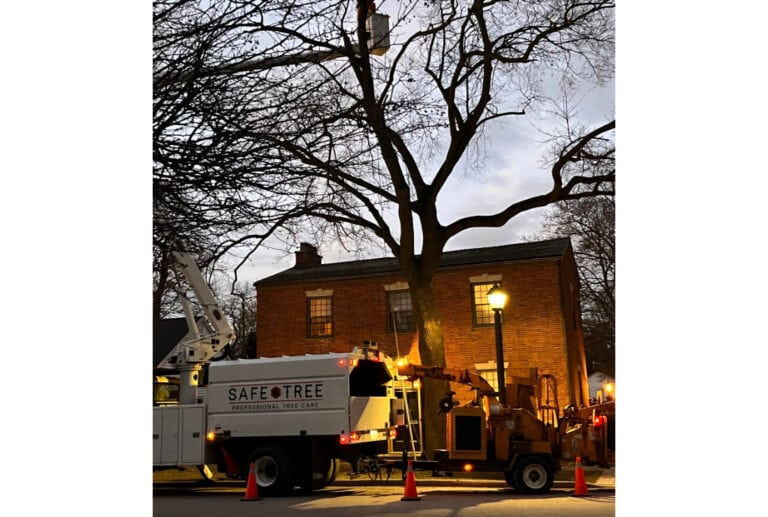
In light of the appeal before the Superior Court of Ontario (“Judicial review seeks to quash Royal George demolition approval,” Feb. 5) I was astounded to witness the demolition of the mid-19th century building at 187 Victoria St. — as ordered by the Shaw Festival in accordance with town generated demolition permits — was allowed to proceed by the Shaw.
Apparently the Shaw Festival has adopted a “do it now and ask forgiveness later” go-forward commencing the Victoria Street demolition on Monday — the day before the motion to stay was scheduled to come before the court.
And, this arrogant action resulted in the applicant withdrawing the motion for a stay on 178 and 187 Victoria — after all, two of the three buildings were already reduced to rubble while work had commenced on the final one and it’s sort of difficult to ask the court to stop something that has already happened.
However, the motion for a stay relative to the old theatre and box office buildings on Queen Street was heard and the court granted the motion so it’s all-stop on Queen pending the outcome of the judicial review, which is scheduled to come before the court on Feb. 26.
It could be said that the Shaw’s actions on Victoria were ill-advised. In my experience, it’s never wise to appear to act in bad faith vis-a-vis legal process while waiting for main event to come before the court — the judiciary rarely looks kindly on such behavior.
Finally, allow me to observe, the Ford government is completely in your corner until the ground-swell of voter opinion is contrary — then, you are out on your own without a paddle.
Brian Marshall is a NOTL realtor, author and expert consultant on architectural design, restoration and heritage.