


Marlene Bridgman’s father never went overseas during the Second World War, but his military service left him with hearing problems that lasted the rest of his life.
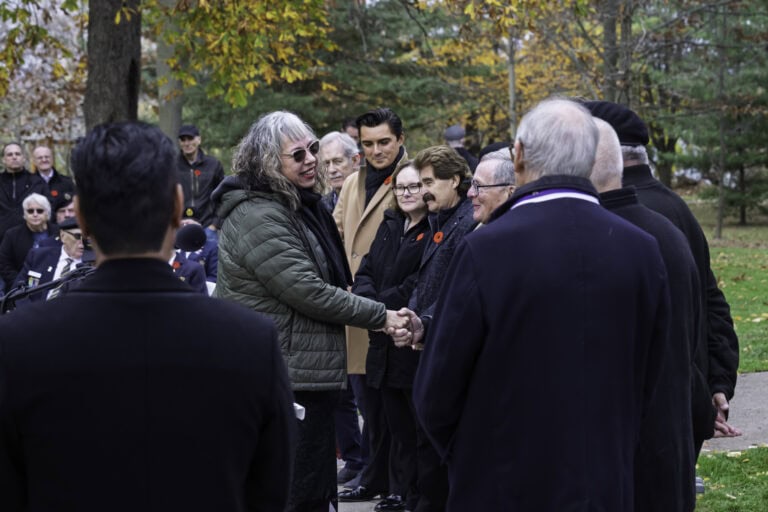
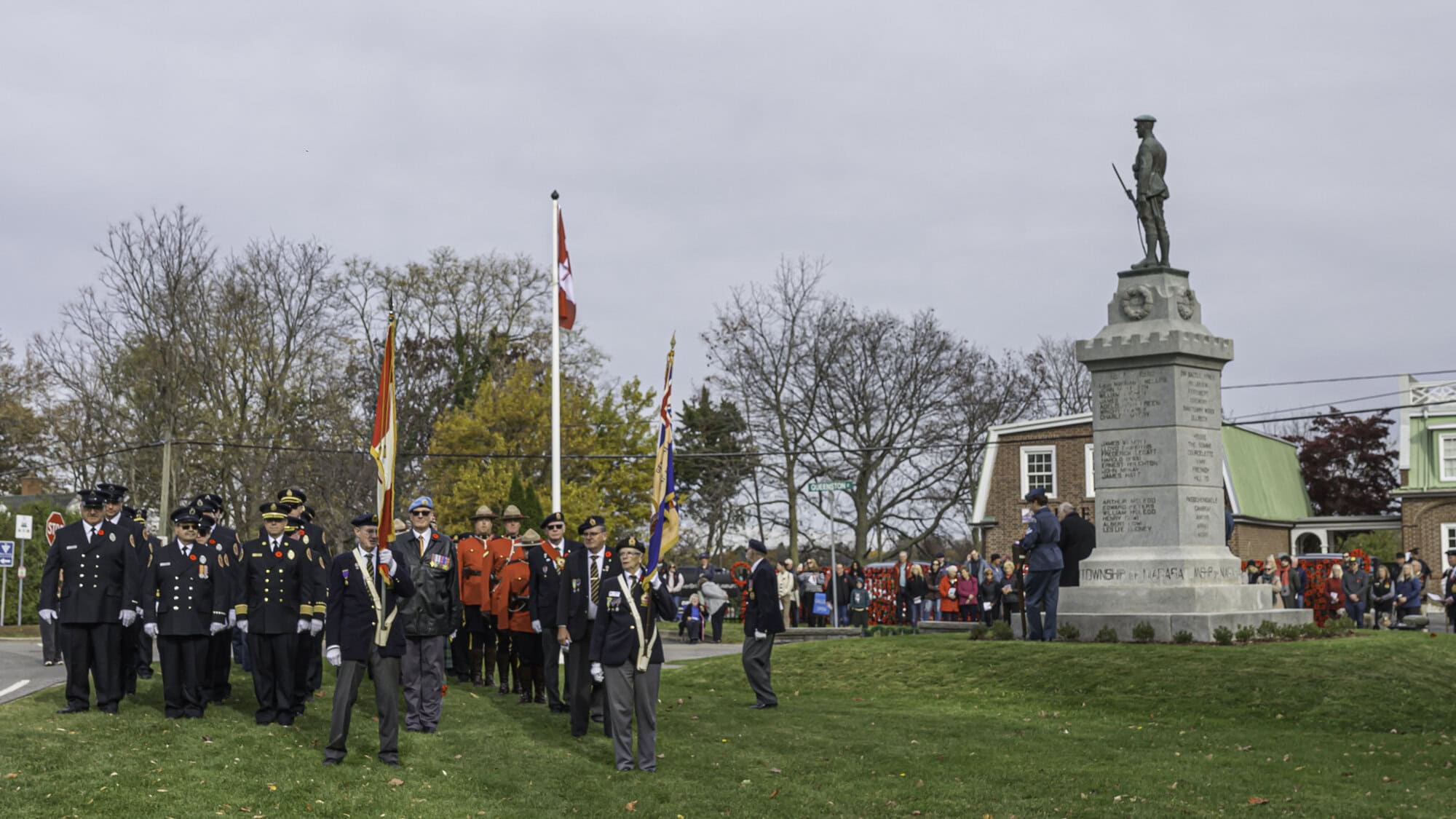
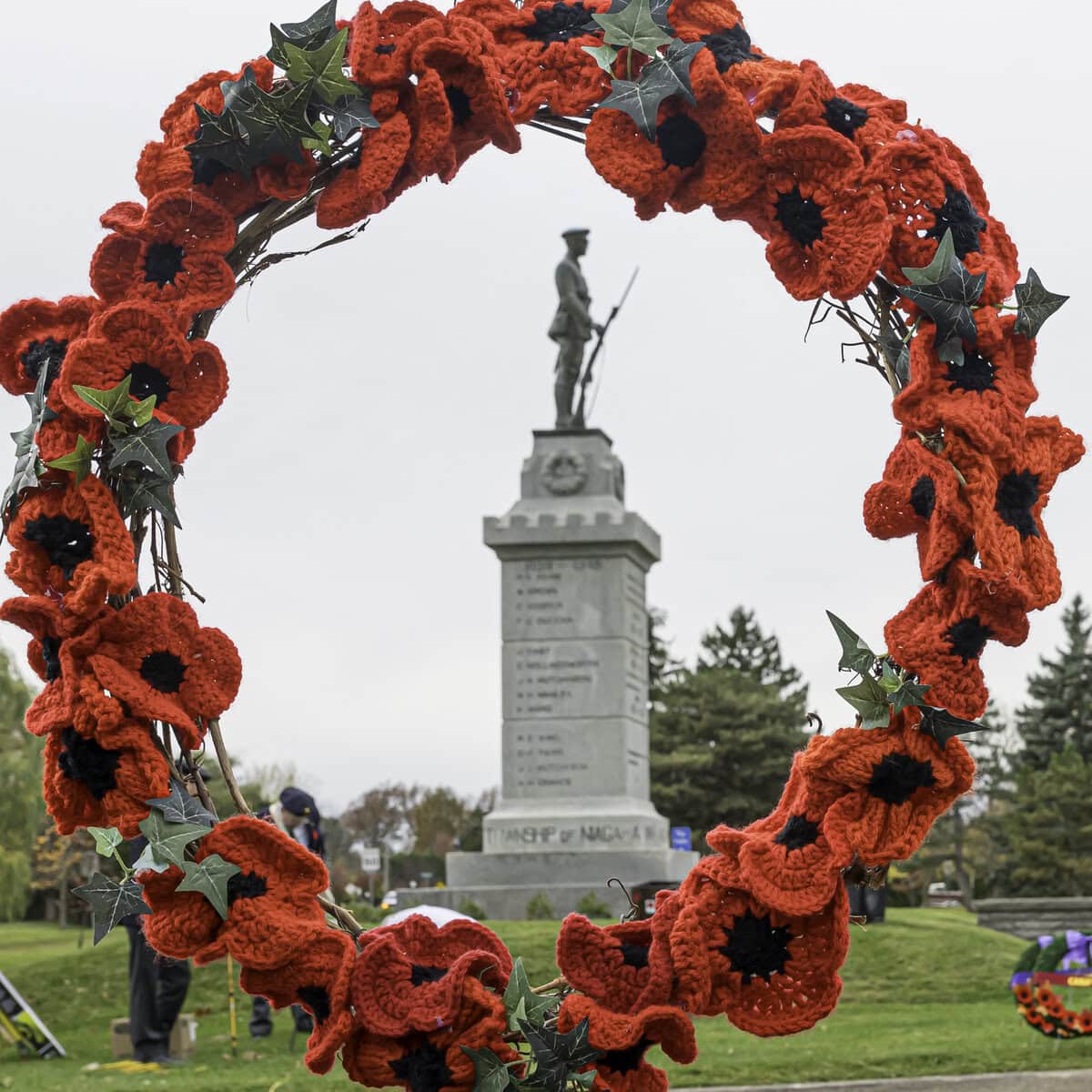
At the Queenston cenotaph Wednesday, she was among those remembering the sacrifices made by family, friends and neighbours — and the effects of war that endured long after the fighting stopped.
“He didn’t make it overseas because he was colourblind, but he worked on planes out west and from that he was left with hearing issues,” Bridgman said. “He dealt with that the rest of his life.”
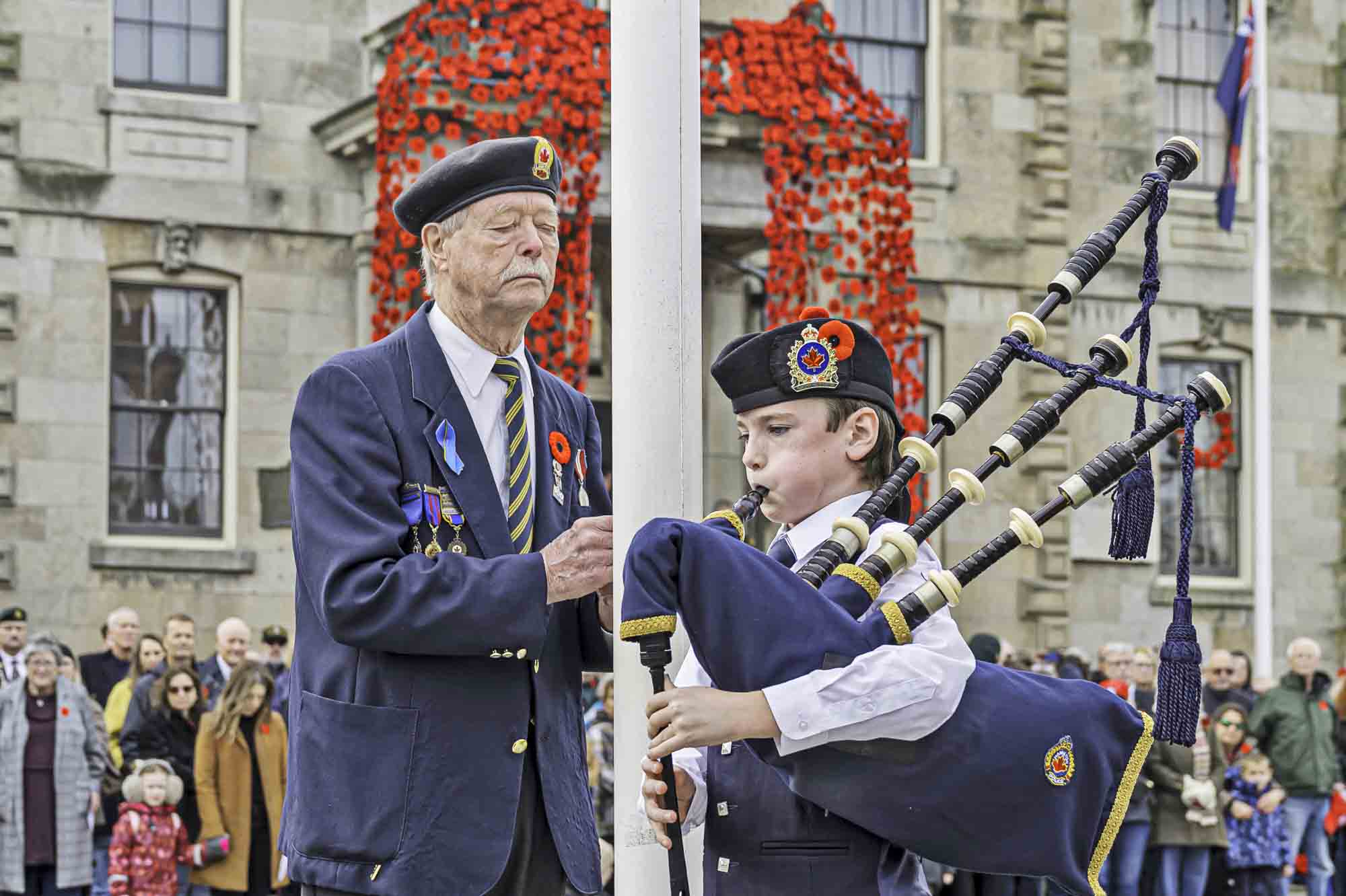
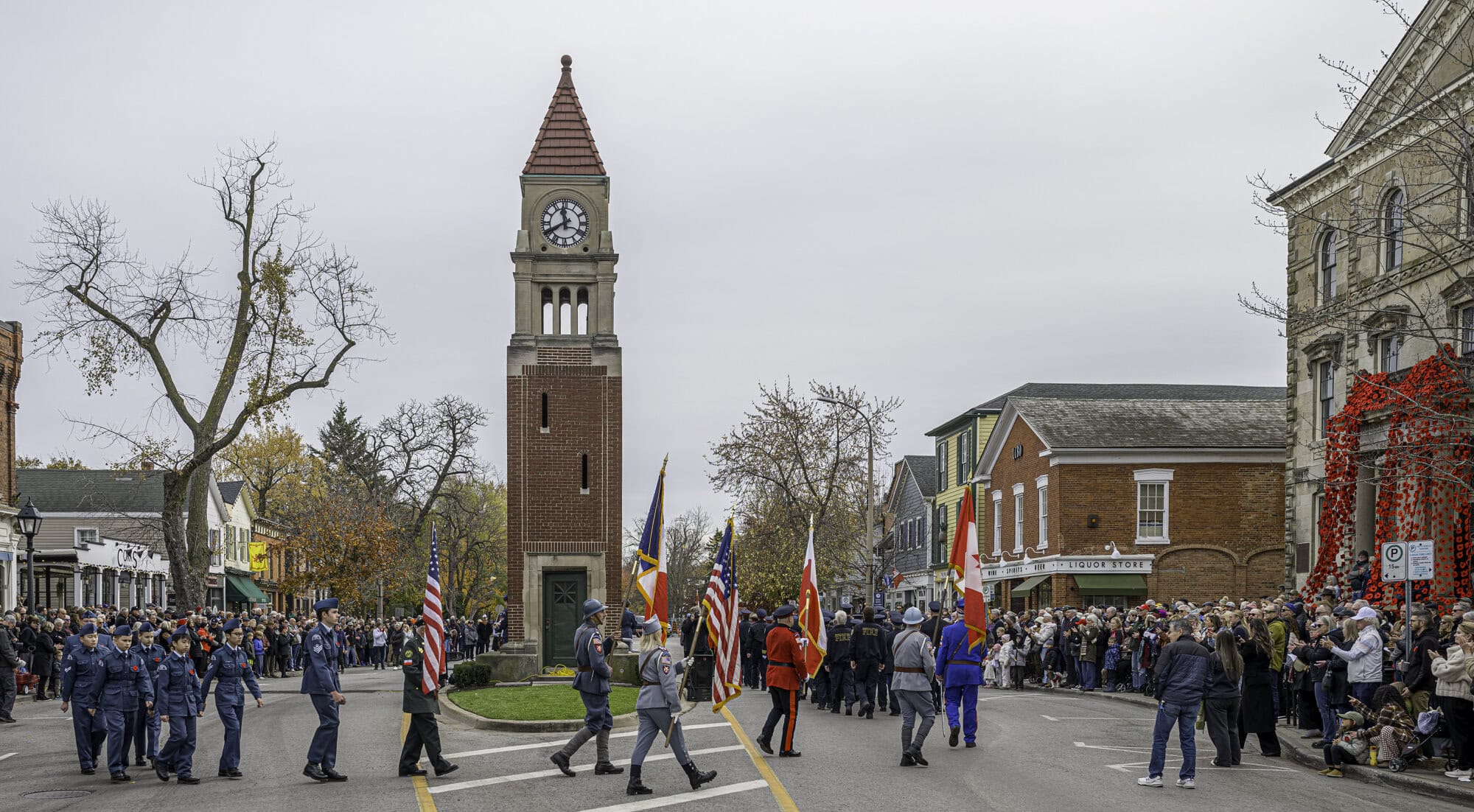
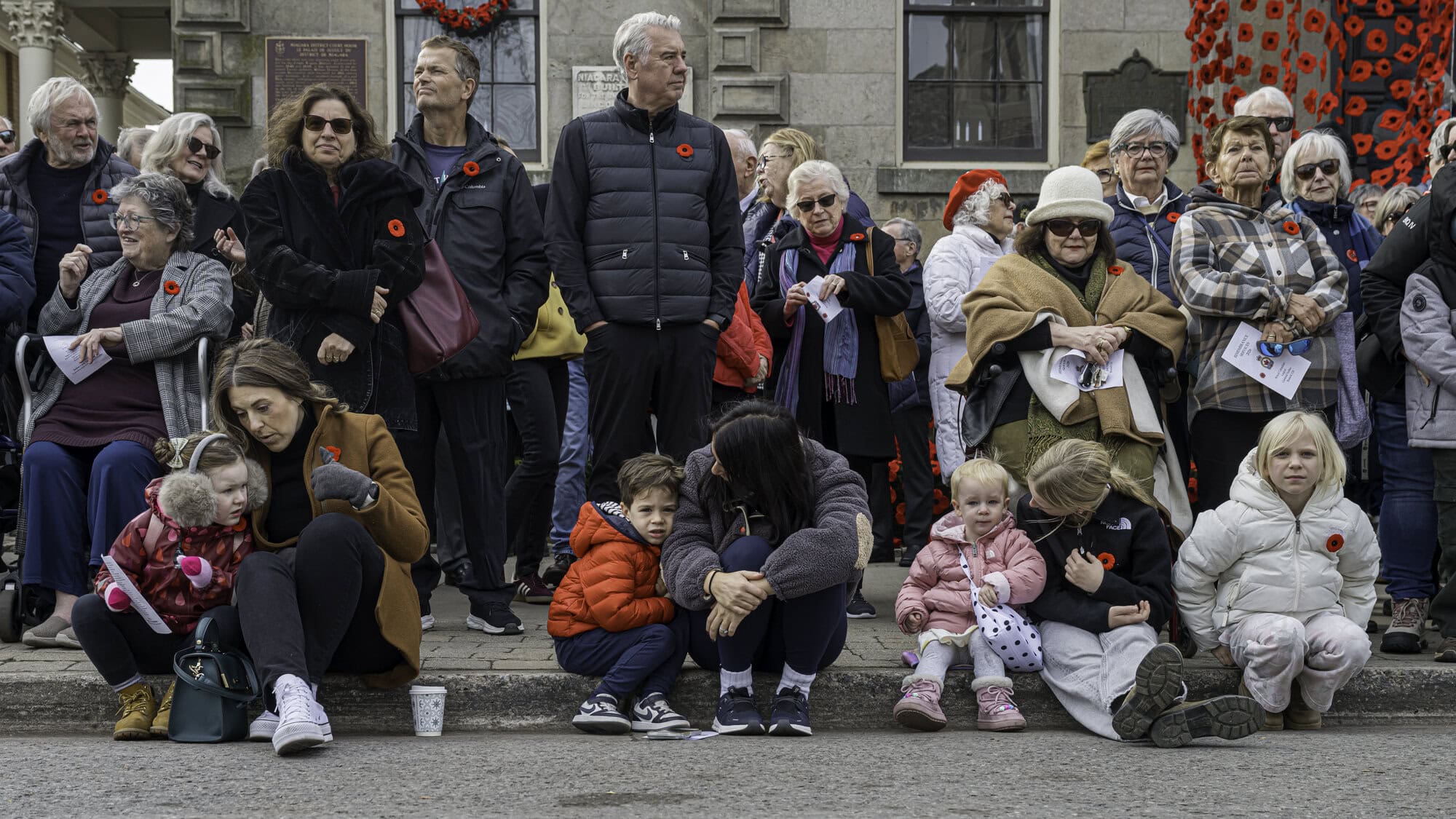
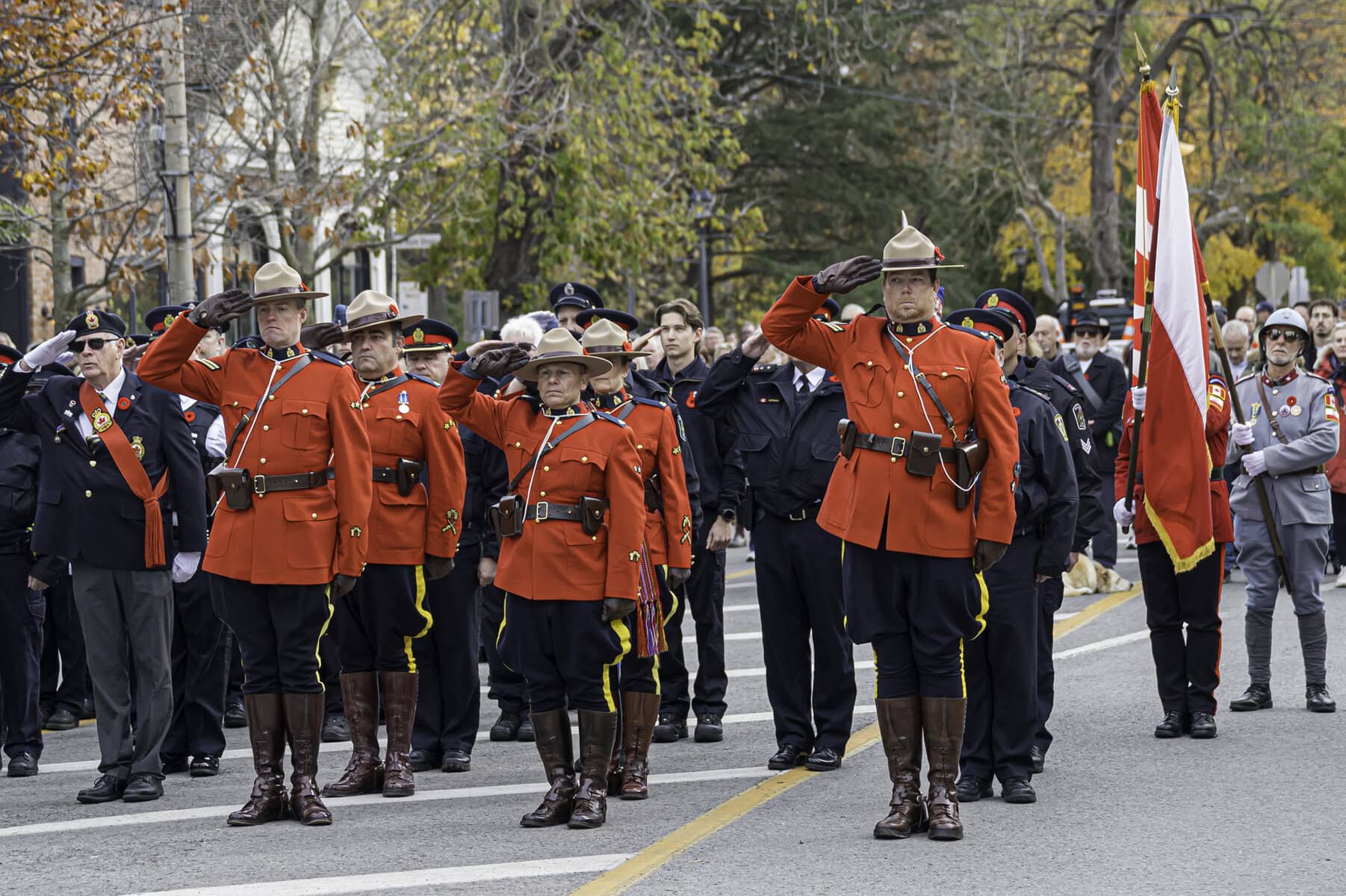
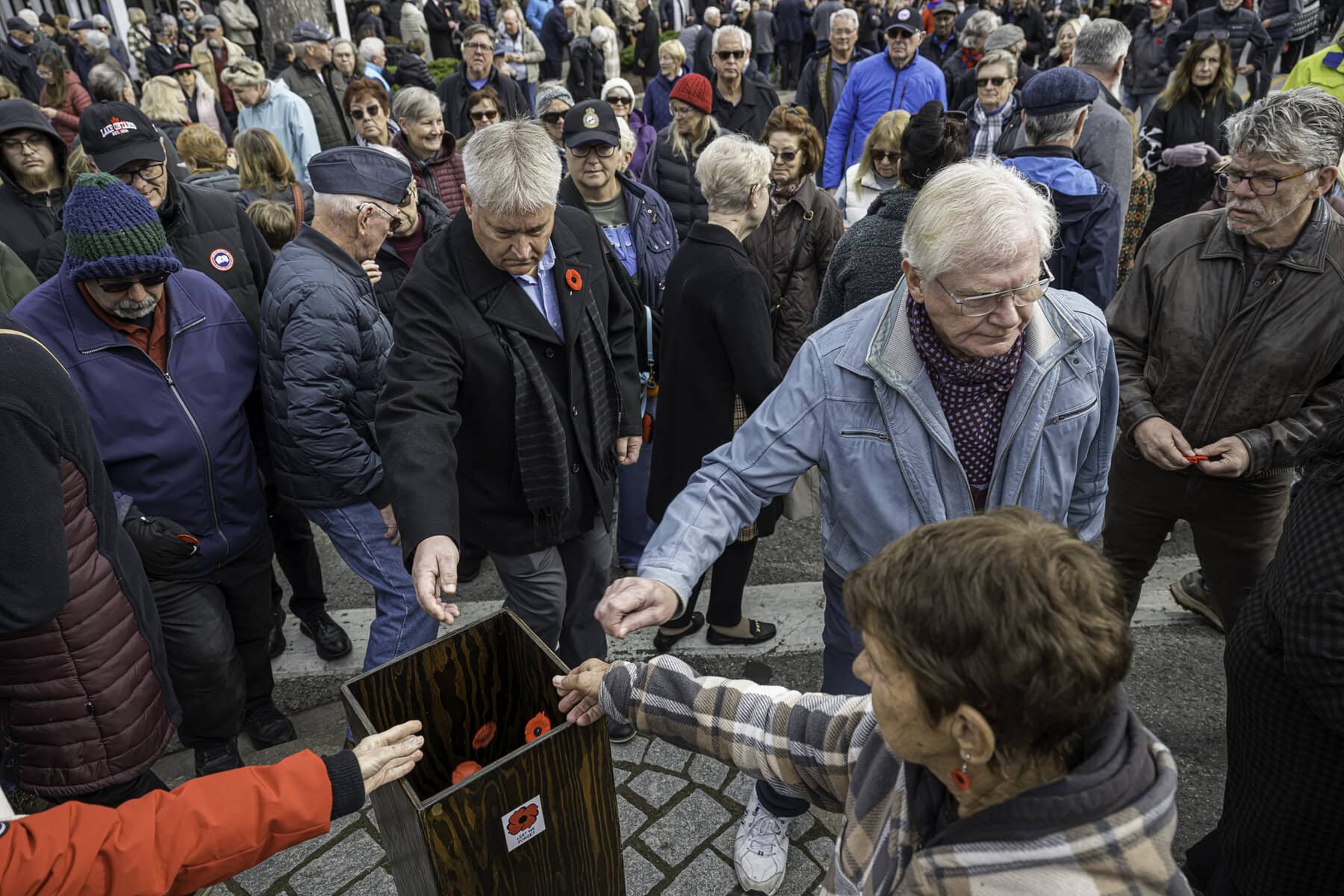
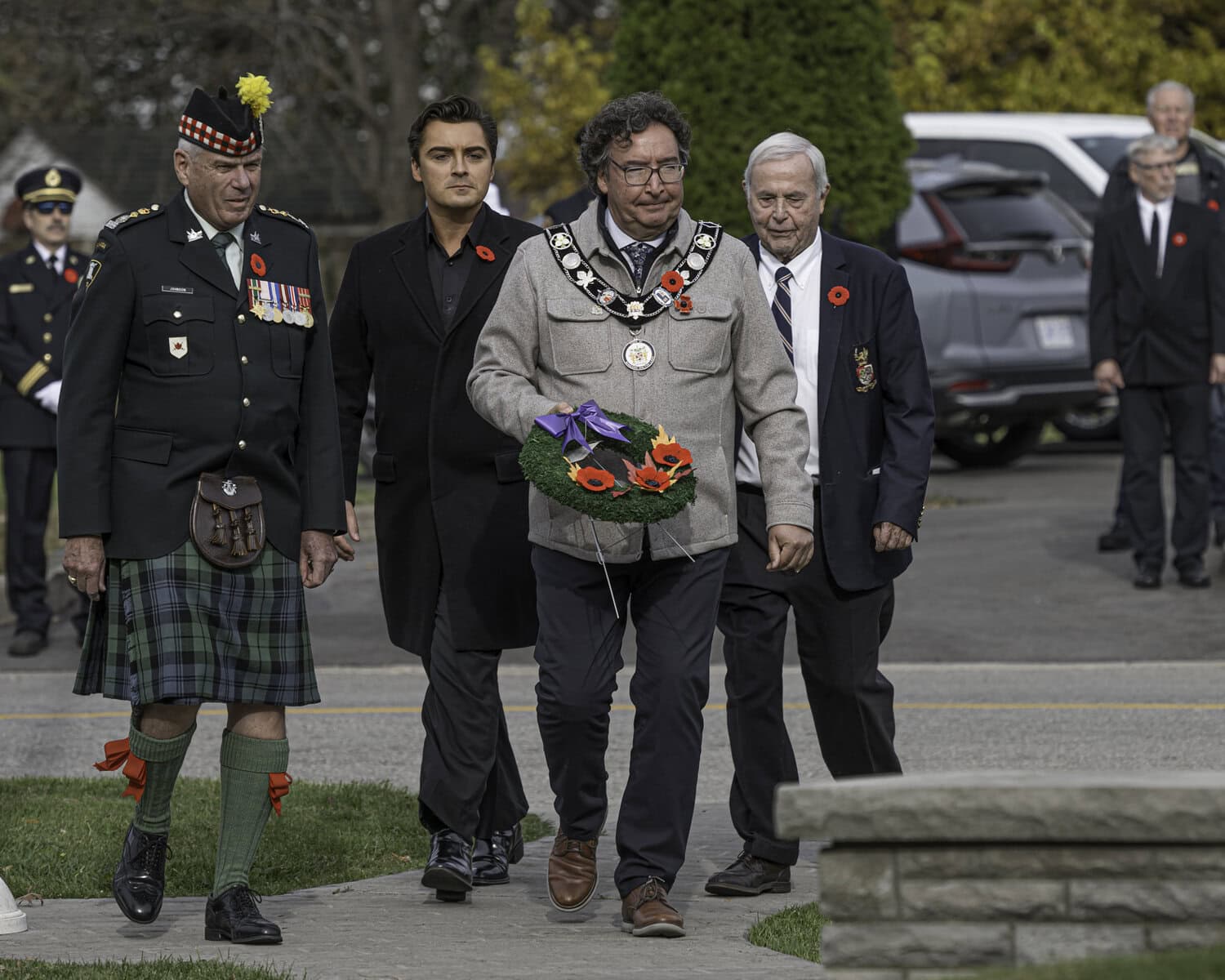
Residents and visitors gathered for Remembrance Day ceremonies in Queenston and Old Town, bringing their own connections to military service and a shared concern for keeping those memories alive.
For Ruth de Laat, those connections include two uncles who served during the Second World War. One of them, her uncle Bill, rarely spoke about it.
“He didn’t talk about it much,” she said. “He always said, ‘I’ve lost too many friends.’”
Speaking after the Queenston ceremony, Marion Bottomley said remembrance must extend to everyone whose lives were changed by war.
“I think we need to remember the influence of war on everybody, on common people and families and their losses that are left behind.”
Bridgman said she hopes future generations will continue to enjoy a free Canada, though she worries about what lies ahead.
“History is repeating itself somehow — and that’s pretty scary.”
During his address at the afternoon ceremony in Queenston, Lord Mayor Gary Zalepa spoke about the community’s deep ties to those being remembered.
“Many of the names we’ve heard today, we recognize from our community,” he said. “Many of us here are friends of those mentioned. Some were neighbours. Some here today are their relatives.”
His own family’s connection to military service continues today: His son Nathan serves with the Royal Canadian Navy.
In Old Town, the ceremony opened with an Indigenous land acknowledgment from Zalepa, followed by a call to prayer from Rev. Sheldon Kofsky.
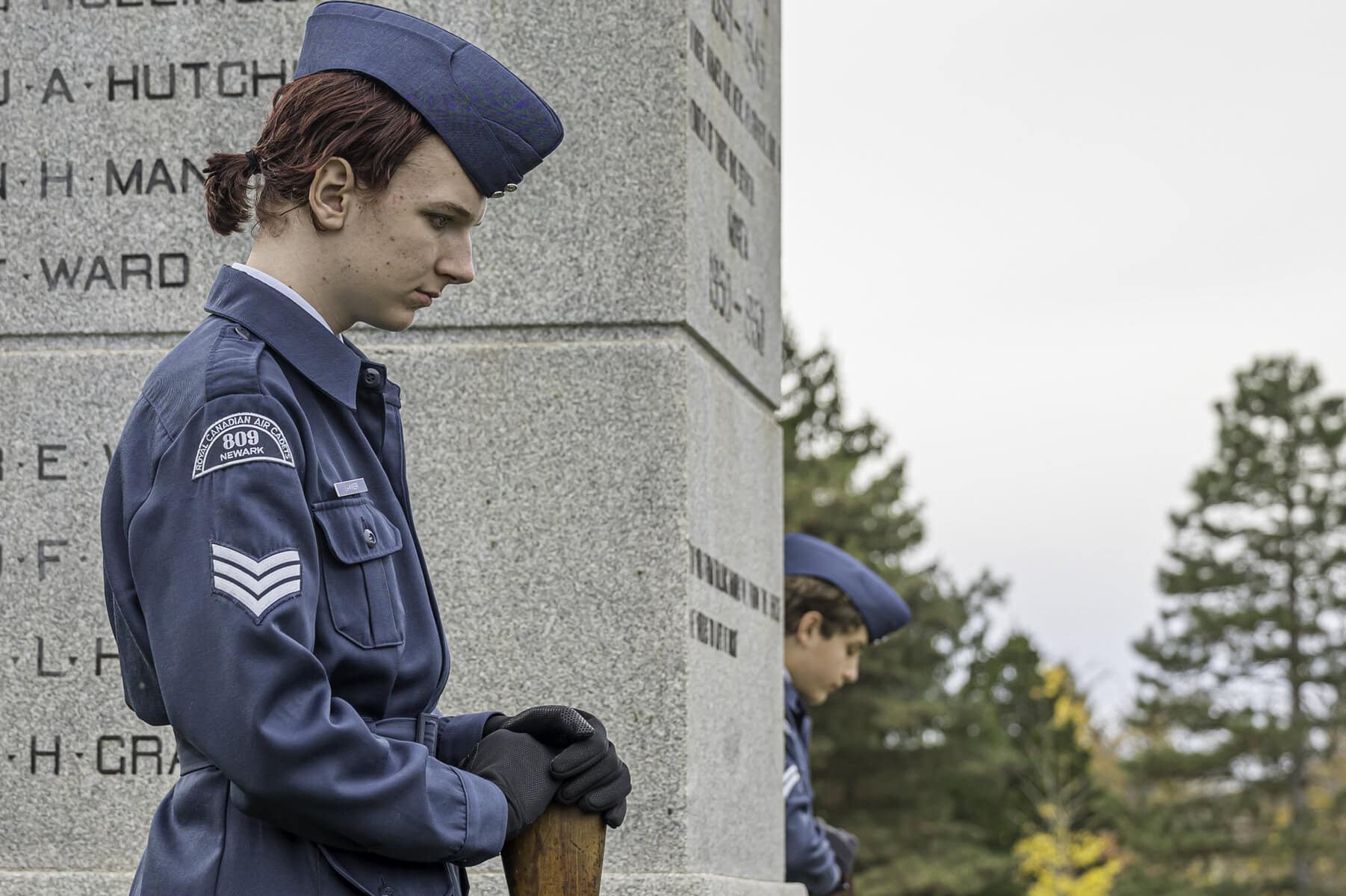
Teia Epp, a 16-year-old flight sergeant with the cadets, recited In Flanders Fields.
For Kathy Taylor, the presence of young people, including students from Crossroads Public School, was especially meaningful.
“I think it’s great that the kids are here, those from Crossroads (Public) School. That really makes them aware of the number of people that are here,” she said.
Debi Pratt said she hoped young people would understand the courage behind the decision to serve.
“They all signed up and it’s that courage, not to be told that you should do something, but to volunteer to do it,” she said. “That’s pride in their country.”
Keeping the impact of war alive in the minds of future generations means continuing to share those experiences, Pratt said.
“We keep telling these stories, we keep that message. It’s a message that has to be passed on.”