


A local radio talk show host on 610 CKTB, Jon Gonzo, runs a weekly segment titled “Myth, Fact and Misinformation,” in which he puts a variety of claims through a fact-checking screen to determine their veracity.
This week, I’d like to take a page out of his book to look at the question of declaring a municipal moratorium on development.
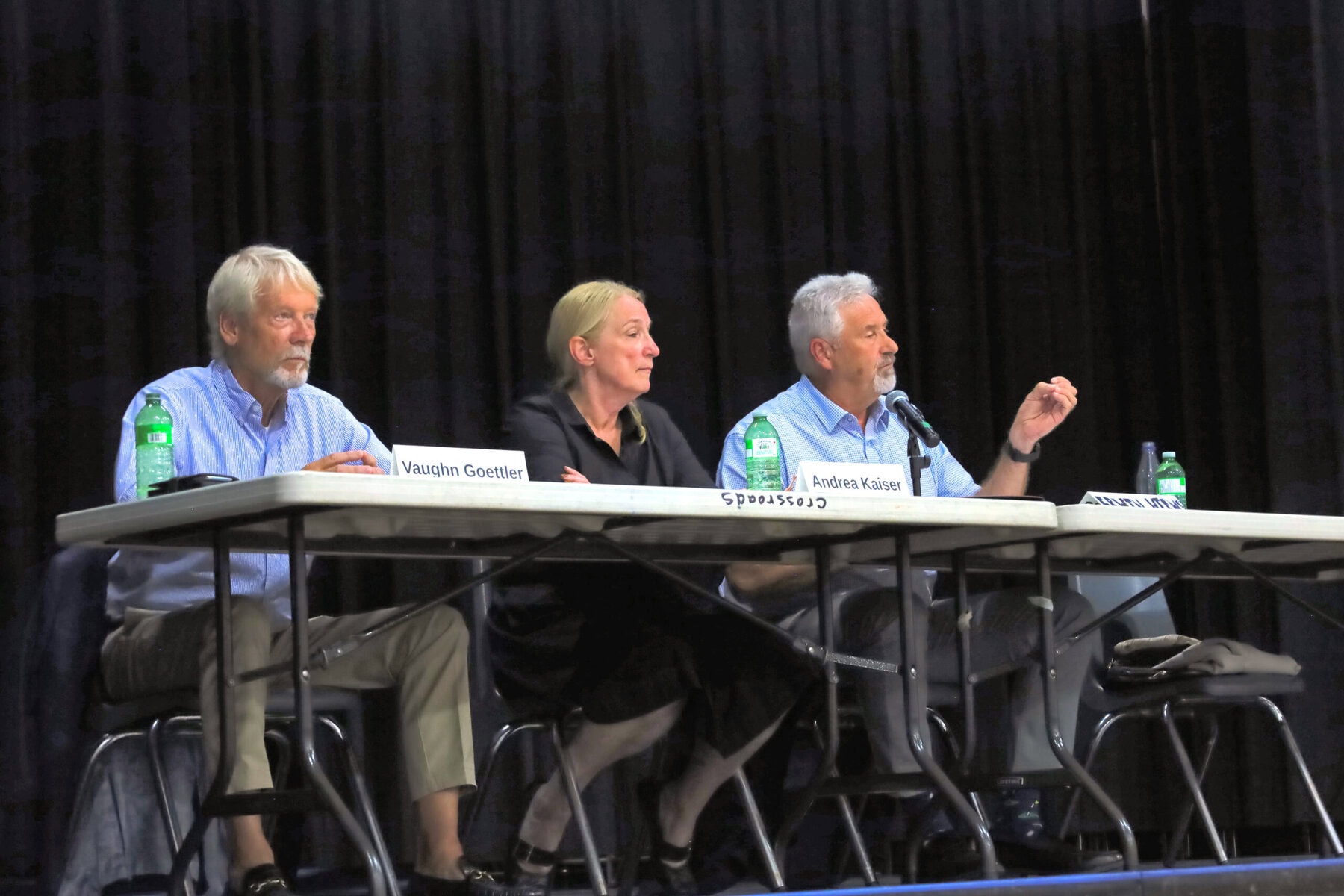
To put this in context, during the mayoral candidate forum held by the Niagara-on-the-Lake Residents Association on Sept. 14, Vaughn Goettler called for such a moratorium and suggested that this temporary suspension would allow the town to complete an infrastructure study that would ensure that any development applications would not overload the existing capacity, which could result in flooding, drainage issues and sewage backups.
Another candidate, Andrea Kaiser, countered this by stating that, “Random moratoriums bring us back to court legal cases,” and claimed — apparently believing that even in absence of a thorough understanding of existing infrastructure capacity and limitations — the official plan, zoning bylaw and other planning tools would suffice.
Echoing Kaiser’s opposition to the Goettler proposal, the third candidate, Erwin Wiens, observed that a past moratorium bylaw vis-à-vis development (enacted by town council in December 2018) was “kicked to the curb” by Justice Peter D. Lauwers of the Ontario Court of Appeal (hence the out-of-court $1 million settlement with Hummel Properties Inc. a year ago) and, similar to Kaiser, pointed to investing in an asset management plan apparently developed in absence of a complete holistic understanding of the existing infrastructure.
That said, let’s first understand what a municipality can do under existent provincial legislation.
In Part V of the Ontario Planning Act (land use controls and related administration), Section 38 provides a municipality with the authority to pass an interim control bylaw that effectively establishes a moratorium on development in order that a “review or study be undertaken in respect of land use planning policies in the municipality or in any defined area or areas thereof.”
Further, the Act establishes strict time limits that such a bylaw may be in force — one year with an option for council to extend for an additional year if required, which may not exceed two years in total. It defines that the pause in development must be for a bona fide planning reason(s) which might include such activities as evaluating waste water capacity, traffic grids and so on.
In addition it prohibits the use of an interim control bylaw to be used as an arbitrary way to block a specific, disliked project.
During the first year of the bylaw, only the provincial Minister of Municipal Affairs and Housing may appeal it. However, should the municipality extend it into a second year, individuals and developers have the right to appeal the extension to the Ontario Land Tribunal.
Now, in the event that a bona fide study has been undertaken and requires the additional year to be completed, it is extremely unlikely that such an appeal would be launched, since there is a very high likelihood that the Ontario Land Tribunal would refuse to hear such an application.
Therefore, we can suggest that a moratorium for a maximum of two years, such as Mr. Goettler called for in order to conduct an infrastructure study, would be both legal and free from the threat of litigation.
That said, one must ask why the interim control bylaw passed in 2018 did not pass the acid test for legality.
Quite simply, the 2018 bylaw attempted to not only suspend land use applications but also applications for subdivision of land which, according to the ruling of Justice Peter Lauwers in the Court of Appeal for Ontario, are two separate things under the Planning Act (the provisions, processes and appeals governing subdivision of lands being detailed in Part VI of the Planning Act).
As a result, Lauwers determined that the bylaw was enacted for an improper purpose and therefore illegal.
To be fair to the town’s legal counsel, who I assume they consulted prior to trotting out the bylaw, the Ontario Supreme Court justice actually ruled in favour of the municipality’s position — it took the senior court to overturn that decision and establish a clear legal precedent in Ontario separating “land use” from “subdivision.”
But the senior court did not stop there. Justice Lauwers also questioned whether the immunity provisions contained in Ontario’s Municipalities Act, which protect the municipality from a tort remedy (legal requirement to compensate the “injured person” for financial and non-monetary losses) if, in a future trial, “bad faith” could be legally demonstrated, thereby exposing the town to malfeasance liability and a court-imposed financial settlement to be paid to the plaintiff based on their proving financial and non-monetary losses by the enactment of the bylaw.
We will never know if the $1 million dollar out-of-court settlement with the plaintiff (Hummel Properties Inc.) was reasonable or completely out of bounds, since there was no published requirement for the developer to actually prove monetary losses pursuant to the settlement.
All this said, should any future council enact an interim control bylaw, underwritten by a duly compliant study, it will be largely legally unassailable.
So, does the claim that a development moratorium shall result in litigation fall into myth, fact or misinformation?
For a properly framed and executed bylaw, the answer is misinformation.
Brian Marshall is a NOTL realtor, author and expert consultant on design, restoration and heritage.