
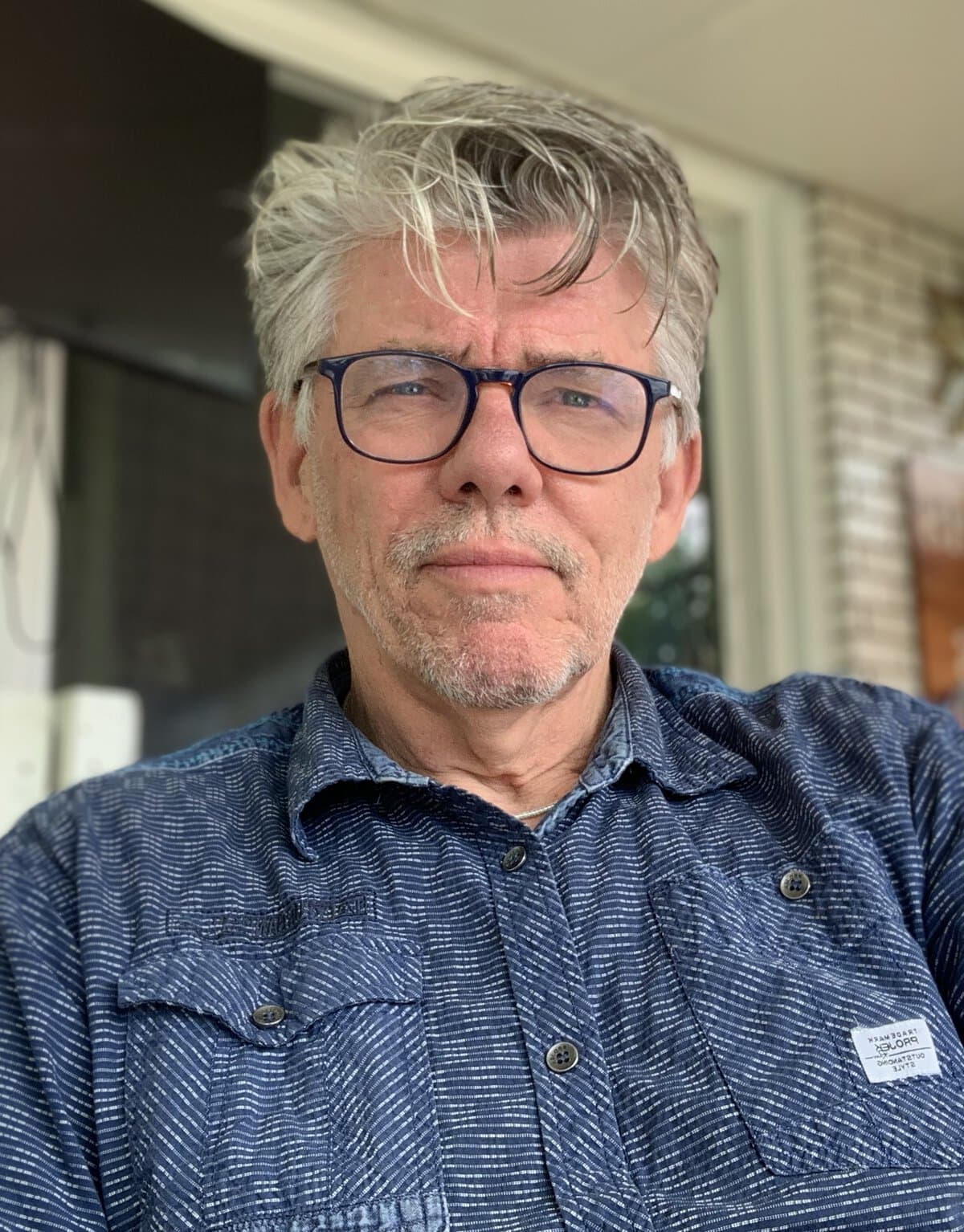


At 1:55 p.m. on Aug. 21, Rick Mills was still sitting inside Niagara-on-the-Lake town hall finishing the paperwork that would put his name on the ballot.
Nominations closed at 2 p.m. that day.
Mills had spent years thinking about running for council, weeks collecting signatures and talking it over with his wife — and still waited until almost the final possible moment to make it official.
“It was emotional,” he said.
That was also why Mills kept to himself at town hall that afternoon, initially declining to speak with The Lake Report or identify himself as he filed. He said he did not know who the reporter was at first and, after such a difficult decision, simply wanted to go in and get it done.
Now that he’s in the race, Mills is speaking publicly about what he sees as NOTL’s biggest threat: overdevelopment.
“I think development has gone too quick and I think that it needs to be reined in — and reined in responsibly,” he said.
The lifelong NOTL resident was born in the town’s former hospital, grew up across from the museum on Castlereagh Street and has lived in Virgil for the past 33 years.
His wife is also a lifelong NOTL resident — the two started dating while working as lifeguards at the Niagara Pool in the 1970s.
Over the years, people had encouraged Mills to consider running for council, he said, but he did not want to make the decision casually.
Even gathering the required nomination signatures became a test.
Instead of knocking on nearby doors until he had enough, Mills said he intentionally went into all five of NOTL’s communities and sat down with people before asking them to sign.
“I had to sit and listen.”
He told people signing his nomination papers that his name still might not appear on the ballot.
“So if that ticks you off, then you don’t have to sign.”
But by the time he finished, Mills said those conversations had pushed him toward running.
Not everybody in his life thought running for council sounded sane, though.
Mills recalled recently visiting his cousin, Fred Sentineal of Sentineal Carriages, in hospital after he was accidentally run over by his own tractor in the Gales parking lot earlier this month.
“‘You know what? I am the second craziest person in this room,'” Mills recalled Sentineal telling him.
Mills asked who was first.
“’You. You’re running for council.’”
Mills does not describe himself as a politician.
“I just love my town and I think I have something to offer,” he said.
“I’m not coming in this as a politician,” he said. “I’m coming in as a participant.”
Taxes and development are among the first issues he wants to tackle.
Mills said his own property taxes “are increasing quicker than they ever have,” particularly in the past few years. Mills does not mind paying taxes, he said, but wants to be part of council’s discussions and decisions around them.
On development, he said things have moved too fast, but stopped short of calling it out of control.
“I’m not giving up on my town,” he said.
Asked what should happen when a developer repeatedly proceeds without town approvals or breaks municipal rules, Mills did not hesitate.
“Enforcement, of course.”
“Without accountability, we’re all in trouble,” he said. “Everybody needs to be accountable. Our mayor needs to be accountable. Our (chief administrative officer) needs to be accountable. The councillors need to be accountable.”
That includes developers, Mills said.
He said they have rights, should be respected and are entitled to bring applications forward — but that does not put them above the people who already live here.
“A developer is not greater than a resident,” he said.
On the Royal George Theatre redevelopment, Mills said he followed council’s debate and recognized councillors faced a difficult decision.
But he questioned whether renovation could have played a larger role instead of full replacement.
His answer to what he would have done differently was brief.
“I would have gone slower,” he said.
Mills takes much the same approach to the Rand Estate.
“Proceed with caution.”
He said its heritage and the effect on surrounding residents need to remain central as the property’s future is decided.
Mills was born at the old hospital, but he is not ready to put forward a specific vision for the site.
Instead, he said he is glad the town owns the property and has not rushed into a decision.
“I look forward to being a part of that discussion,” he said.
If elected, Mills would also join a smaller council.
The next term will have six councillors instead of eight, something Mills said he does not particularly like.
But if a smaller council helps NOTL in its efforts to avoid amalgamation, he said, “then so be it.”
His concern is representation.
Mills said Old Town may be NOTL’s best-known identity, but Queenston, St. Davids, Glendale and Virgil all need a voice around the table too.
“They deserve to be acknowledged and very much included, just as much as the people in Old Town are,” he said.
Mills also weighed in on the town’s current approach to local media access. Earlier this year, chief administrative officer Nick Ruller directed staff not to answer requests supporting opinion, advocacy or commentary pieces, while continuing to answer factual questions from reporters.
Mills said staff deserve respect and town leadership has a responsibility to protect its employees.
Councillors and staff likely read local coverage and benefit from it, he said, but added that the relationship with the press needs to be “honed” and built on trust.
“(The press) is very important, but it can’t be misused,” he said.
For all his concerns about where the town could be headed, Mills said what gives him confidence in NOTL is much simpler.
“What we have going for us is one another,” he said. “And we have hope.”