


The long-promised 30-minute hovercraft ride between Niagara and Toronto has a new checkpoint: authorization to build a terminal by the end of this year.
Hoverlink president Erika Potrz told The Lake Report that final permitting for the company’s 18-acre South Shore waterfront terminal on Lake Ontario is expected to be completed in late 2026. The company still hopes to launch the service in 2028.
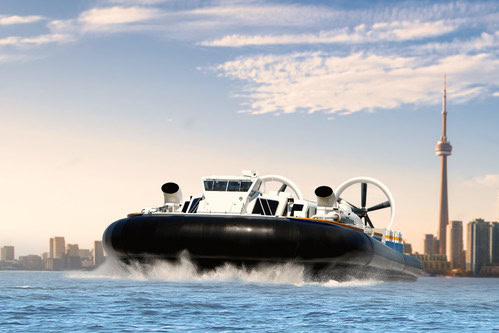
The terminal is part of Hoverlink’s proposed high-speed passenger service across Lake Ontario, which would connect Toronto to Port Weller in St. Catharines, and back, in about 30 minutes.
The service would not launch from Niagara-on-the-Lake, but could eventually give Niagara travellers another way to reach the Greater Toronto Area without using the Queen Elizabeth Way.
The proposed service would use two large hovercraft, each with room for 180 passengers but no vehicles.
The hovercraft are designed to operate year-round, including in a wide range of weather and ice conditions. The service would run 18 hours a day, with up to 48 crossings daily.
The company estimates the service could remove up to 8,000 vehicles a day from the QEW.
Hoverlink has not released final ticket prices. Company materials say fares are expected to be comparable to existing public transit options, which it lists at about $42 round trip by bus and train.
“We expect that the pricing will be comparable to existing transit options between Niagara and Toronto,” Potrz said.
She said regular meetings are continuing with the Toronto Port Authority and the St. Lawrence Seaway Management Corporation as the project moves toward construction and operations.
A City of Toronto staff report from March says Hoverlink proposes to begin service in early 2028 at the earliest.
The company has not yet developed a formal public engagement plan, but the Toronto report says Hoverlink will begin public engagement activities in 2027.
Potrz said tariffs created “significant challenges” for vessel manufacturing and procurement, forcing the company to rethink how the hovercraft would be built.
Founder and CEO Chris Morgan led work to establish a Canadian-based supply chain with Canadian vessel manufacturers and domestic suppliers, she said.
“This process required considerable time, coordination and approvals, but has positioned the project with a stronger and more resilient Canadian supply chain,” Potrz said.
She said Hoverlink secured its Toronto docking location last May through what she called “a landmark operating agreement” with the Toronto Port Authority.
Because the proposed Toronto terminal is on Toronto Port Authority lands, Toronto staff say the city does not have its own approval or regulatory process for that site.
City staff are still reviewing technical information related to the proposal and expect to report back in the second quarter of 2027. The report says that review “may result in future discussions with Hoverlink to resolve outstanding matters.”
Asked how much has been spent on the project so far, whether a yearly breakdown is available and what milestones have been reached with that investment, Potrz did not provide a dollar figure or annual breakdown.
She said the project is privately funded and has advanced without direct government financial support.
“Despite this, the company has secured critical waterfront infrastructure, long-term operating agreements, regulatory approvals, strategic partnerships and a viable path to commercialization,” she said.