


Niagara-on-the-Lake is trying to win about $3 million in infrastructure funding by signalling it may cut the fees it charges on new homes.
But councillors first wanted to know one thing: if the province says no, is the town still stuck giving developers a break?
Councillors voted 5-3 Tuesday to let staff apply to Ontario’s Development Charge Reduction Program, ahead of the June 19 deadline.
The program offers municipalities up to 90 per cent funding for eligible projects to support housing. In return, municipalities must commit to reducing residential development charges by 30 to 50 per cent, or more, for at least three years.
Development charges are fees tied to new construction. Any cut would apply only to residential development charges, not commercial ones.
The vote only allows staff to apply for funding before the deadline. Before the town commits to any lost development charge revenue, the matter would have to return to council through the annual budget process or a future report.
Treasurer Kyle Freeborn said residential development charges are already relatively low in NOTL, at about $17,000 per unit, compared with Fort Erie, which he said is about $75,000 per unit.
The amount the town makes in development charges varies annually, but in 2025, it collected about $312,000 from residential development, he said.
So councillors asked: if the town already charges less than others, does cutting development charges further make sense?
Staff say yes, Freeborn said.
“At first glance, we did not think we were eligible,” he said. “We are coming to a point where we do believe we may be eligible.”
The town is applying for 90 per cent funding on about $3.4 million in project costs, equalling around $3.06 million.
Freeborn said preliminary calculations show a 30 per cent reduction would mean about $180,000 a year in lost revenue, or $540,000 over three years.
A 50 per cent reduction would mean about $300,000 a year, or $900,000 over three years.
So either way, the town would come out ahead on paper.
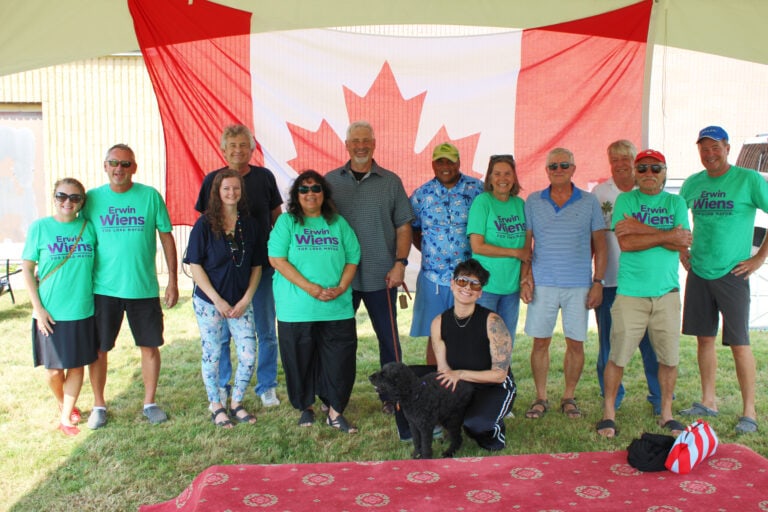
Coun. Erwin Wiens pressed Freeborn on whether the town would still have to give up development charge revenue if the grant money did not come through.
“So what happens if we don’t get the grant?” he asked.
Wiens pushed further: “The province denies us, are we out 50 per cent of the (development charges)?”
Freeborn said no.
“If we do not get those funds, we should not reduce (development charges),” he said, later adding “that’s correct” when Wiens clarified once more the town would not be obligated to move ahead with cuts without the grant.
Coun. Gary Burroughs questioned whether the town could lose more than it gains if a lot of housing is built during the three-year reduction.
But Freeborn said based on the above calculations and historic averages, staff believe the funding would outweigh the lost revenue.
The final application to the province will be circulated to council for information once completed.