

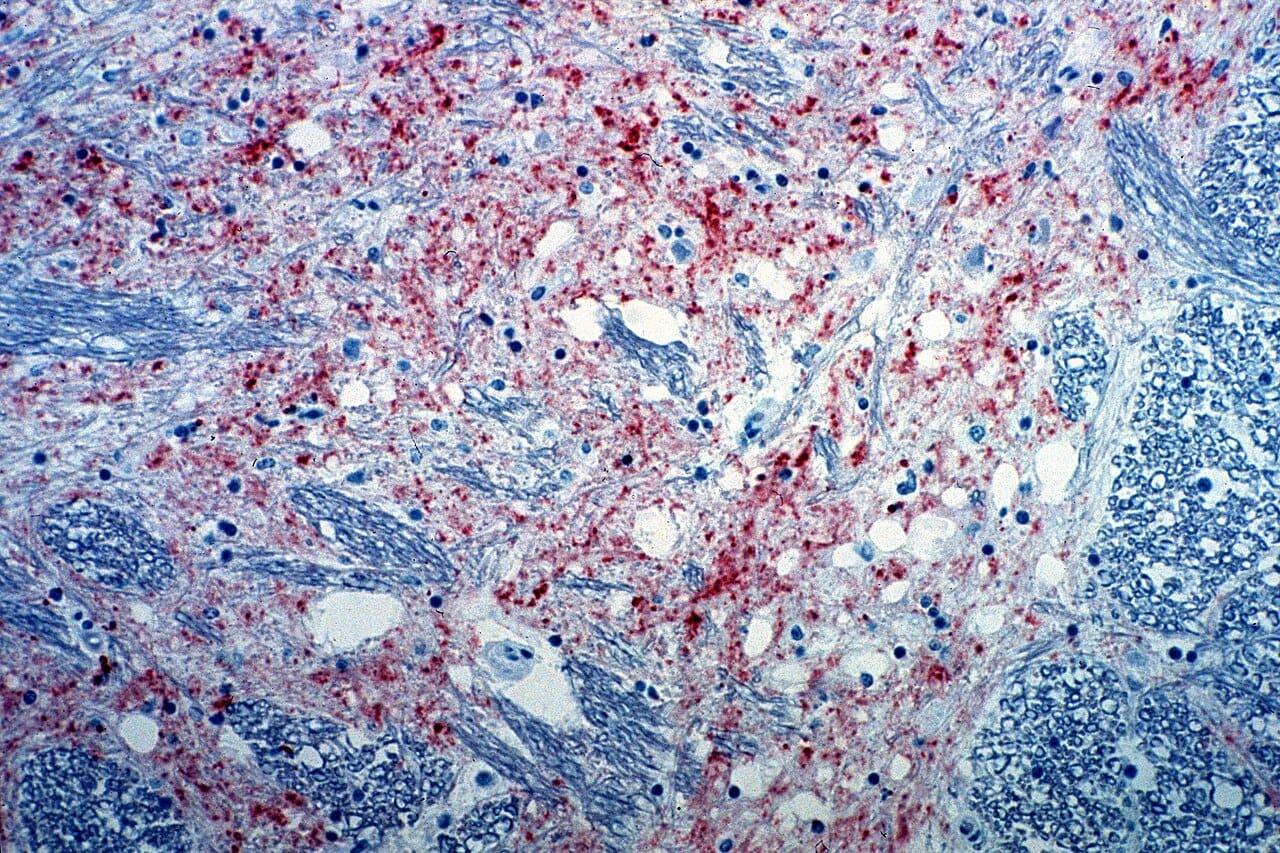


The recent COVID-19 pandemic reminded us how catchable and dangerous some viral diseases can be for the vulnerable — especially those with weak immune systems and the old. But it was also a lesson in how novel effective off-the-shelf technology for mRNA vaccines could be in preventing serious infections.
Without prior work on mRNA vaccines by scientists in Europe and the United States, the pandemic would have been much worse, as it turned out to be the case in regions of the world where there were no vaccines available to stem the COVID tide.
The pandemic reminded us that infections ranging from viruses to bacteria and fungi depend on RNA or DNA. Indeed prior to the 1970s, all infections were considered to be caused by transmissible and pathogenic versions of RNA or DNA.
That assumption was shown to be wrong by strange diseases in such as kuru disease, Creutzfeldt-Jakob disease, variant Creutzfeldt-Jakob disease, Gerstmann-Straussler-Scheinker disease and fatal familial insomnia in humans, and in animals, scrapie in sheep ,which later spread to mink, deer, mice, and in cows caused bovine spongiform encephalopathy, better known as mad cow disease, which can be transmitted to humans.
All were later shown to be transmitted by mutant versions of proteins (prions) capable of inducing similar pathological changes in normal versions of the same protein — thus spreading within the nervous system and to other tissues — without DNA or RNA playing roles.
The modern story of these diseases began with the work of Carleton Gajdusek on kuru among the Fore people in New Guinea, who were shown to transmit a fatal neurological disease by cannibalistic rituals in which the brain, or other tissues of deseased members of the tribe with the disease, were handled or eaten. The incubation period from contact with infected tissues was several years to the first symptoms, after which the disease progressed to death within two to six years.
Gajdusek showed that the disease was transmissible to chimpanzees — thus was infectious but there was no evidence of conventional infectious agents. For his work, Gajdusek was awarded a Nobel Prize in 1976.
In 1972, Stanley Prusiner began his work on one of his dementia patients who died with Creutzfeldt-Jakob disease. Others had shown that extracts of diseased brains in Creutzfeldt-Jakob disease, kuru and scrapie could transmit these diseases, but what was the infectious agent?
Ten years later, he revealed that the infectious agent was a protein; a prion, an acronym derived from “proteinaceous infectious particle” — not an RNA- or DNA based organism. His claim immediately provoked skepticism, even hostility, from other scientists.
Despite resistance to his claims by others, Prusiner and colleagues went on to isolate a gene responsible for creating the normal prion protein — destruction of which gene produced animals resistant to any prion disease, and reintroduction of which gene made experimental animals again susceptible to infection with pathological versions of the prion protein.
His findings raised a fundamental question: how could the same gene and prion cause several distinct brain diseases?
The answer was the discovery by Prusiner and colleagues that the prion protein came in two forms, one normally shaped and in prion diseases, other versions of the prion in misfolded shapes, each variant of which was specific for each prion disease, and capable of behaving like an infectious agent.
Mutations in the prion gene are responsible for producing some prion diseases. For example, Creutzfeldt-Jakob disease affects about one person in a million. In 85 to 90 per cent of the cases, the disease occurs spontaneously. However, 10 to 15 per cent of Creutzfeldt-Jakob disease cases are caused by a mutation in the prion gene.
Taken together, this was compelling enough evidence for the Nobel committee in medicine or physiology to award Prusiner a Nobel Prize in 1997 for his discovery of prions — “a new biological principle of infection.”
Despite winning a Nobel Prize, and before that the Lasker Prize for his work on prions, hostility from other scientists persisted.
One vexing problem with prion diseases is that the transmissible prion is extremely stable and very hard to destroy with chemical disinfectants or heat — far more so than for the case of viruses and bacteria.
This makes cleaning surgical instruments or anything that’s been in contact with infected tissues very challenging.
Finally, Venki Ramakrishnan, a Nobel laureate in chemistry, suggests in his 2024 book, “Why We Die,” that abnormally folded prions may play a role in the spread of beta amyloid in Alzheimer’s disease or other neurodegenerative diseases, although there’s no evidence that these diseases are transmissible to other humans.
We’ll see on that suggestion: even Nobel laureates can be wrong.
Dr. William Brown is a professor of neurology at McMaster University and co-founder of the InfoHealth series at the Niagara-on-the-Lake Public Library.