


Keith McNenly
Special to The Lake Report
Most people are good; that’s how humanity has endured. For all our cleverness — our ability to remake the planet to suit ourselves — our species survives because the larger part of us is pulled toward decency. That’s what allows the slow, stubborn pattern of progress: two steps forward for every one step back.
A small number are exceptionally good. And a few are so profoundly bad they lack basic humanity. At times, the best among us rise to lead. At other times, the worst seize power.
In the 21st century, we’ve been handed something rare: a preview of how our era will be written about. Information is everywhere —along with tools to verify it if we choose.
Ordinary citizens can see behind the curtain as political history is formed in real time. Through modern media, we can make our own observations. In that sense, we’ve all become uncredentialed historians.
In previous generations, only a few ever heard a president, prime minister or king speak informally. Now those in power can message the public instantly, to be viewed on a device we carry all day. We see character and impulse hourly, not through portraits and ceremonies, but through unfiltered performance.
Over the long arc, time bends toward equity and justice — but not smoothly. Human liberty takes millennia to build, yet regression can happen in years. A city with deep foundations takes generations to construct, but can be ruined in hours by an aggressor’s bombs. Complex modern society is no less fragile.
In the world today only a small circle are represented by superpowers: families, loyalists and oligarchs. Public interests — safety, stability, dignity — come a far second to control. Power in the absence of probity is pernicious.
We’ve entered a hinge-point in history: an authoritarian trend is strengthening among major powers, and aligning against liberal democracy. The one democratic superpower on which we all pegged our hopes and trust has begun sliding toward the same model — serving a few at the expense of everyone else — protected by propaganda and sustained by fear, confusion, and conspiracy.
The American founding generation feared this. Having broken from a king, they worried they might someday invite a home-grown tyrant. So they built a system to prevent it: federal power divided into three pillars — executive, legislative, judiciary — each meant to restrain the others.
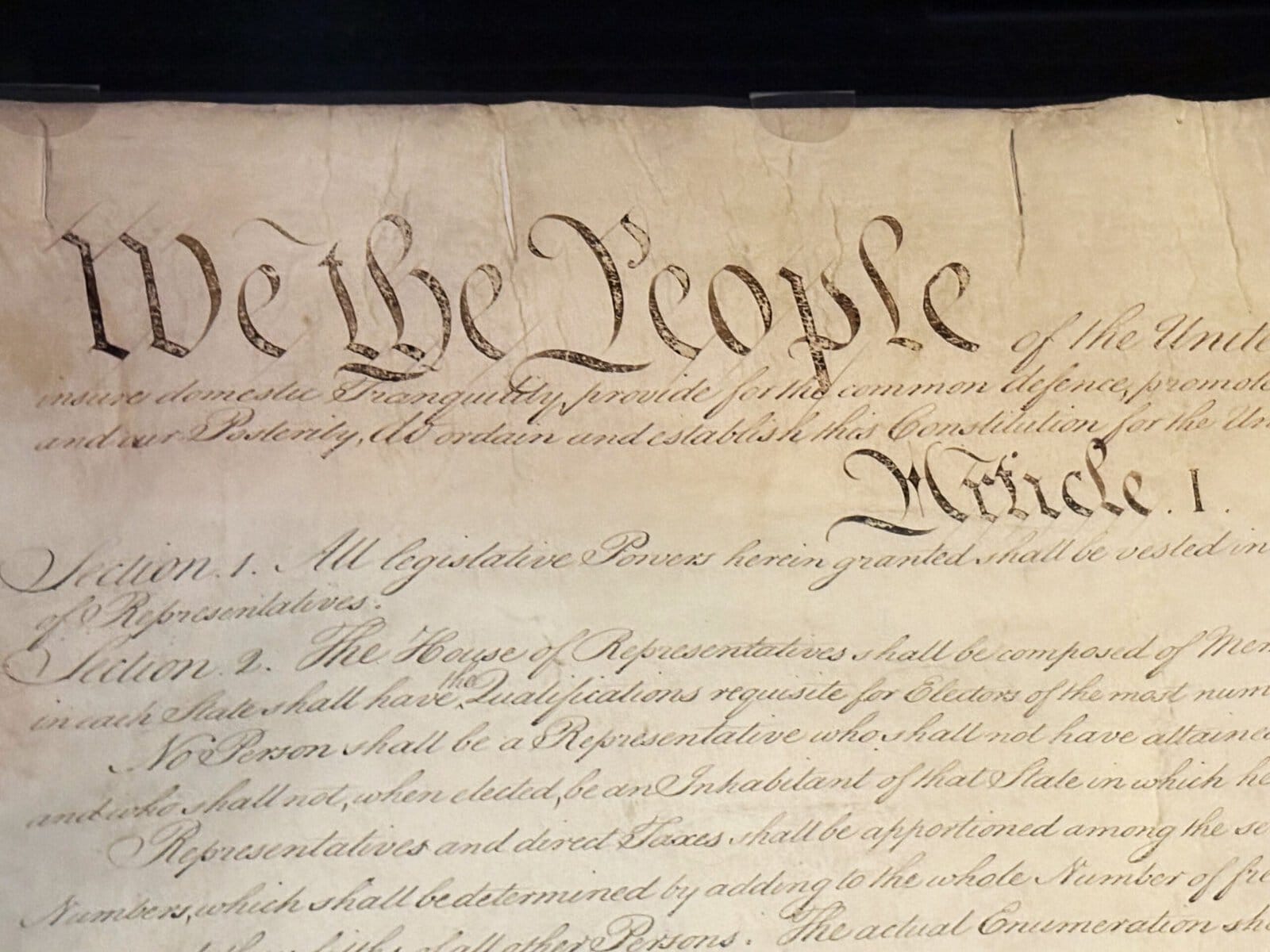
As the American Constitution reaches its 250th anniversary, that design faces its hardest test. The danger is not “a tyrant” in the old sense, because tyranny is often just the symptom.
The goal of modern authoritarians is simpler: theft. Capturing a wealthy nation requires weakening oversight so public wealth can be redirected into private hands.
Think of the founders’ system as a scale. A simple scale needs two equal weights to stay level. A three-arm scale with three equal weights is even more precarious: it can wobble, but it should not topple.
The American Revolution’s famous tricorn hat — designed for maximum visibility — became a symbol of independence. It can also serve as a reminder of the founders’ three-part design:
three institutions meant to balance one another so that no single arm grows heavy enough to obstruct the vision, to tip the whole republic.
The founders left one more safeguard beyond constitutional checks and balances. Even the grandest pillars and monoliths stand useless without a foundation. The scale must stand on something solid, wide, and permanent. The American founders named that foundation in the first words of their project: “We the people…”
So, the world waits on a simple question: can the foundation hold? Can “the people” restore balance as leaders shift the weights to their side of the scale?
Boasts aside, the authoritarian holds only a single card — the joker’s trick of chaos and distraction. The real deck is large. Americans hold roughly 340 million cards. The rest of the world holds billions more, each representing a human stake in liberty, dignity and truth.
When I try to cut through the fog of our time, I sometimes recall snippets of poetry, because poetry can do what argument often can’t: it plants clarity like a waking dream. Bob Dylan put it simply in “Forever Young”: “May you have a strong foundation when the winds a-changin shift.”
The winds have shifted. The bet — by good people in their billions — is that the foundation will hold: the human quest — the need for agency, freedom of thought, equity, justice and liberty.
Authoritarians may claim they hold all the cards. But I know whose hand I’m betting on.
Niagara-on-the-Lake resident Keith McNenly was the chief administrator of the Town of Mono for 41 years.